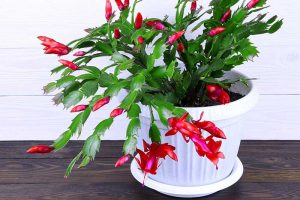
Episcia spp.
A uniquely showy houseplant with attractive, velvety foliage and small, fiery flowers, growing flame violets is an easy way to add long-lasting color to any indoor location.
These South American natives grow in rosettes and have a creeping or trailing habit as they spread, their stolons dripping with baby plantlets, making them an adorable choice for hanging baskets, shallow containers, and terrariums.

We link to vendors to help you find relevant products. If you buy from one of our links, we may earn a commission.
Prized for their captivating and colorful foliage which sports a crinkly texture, they display a variety of veined patterning in hues of copper, chocolate, green tones, lavender, maroon, and pink – all with an iridescent sheen that gives these plants an irresistible appeal!
Flame violets have a bit of a reputation for being difficult to grow, particularly over the winter months. But as with most plants, if you give them the right conditions, they’ll thrive.
So if you’re fired up for an intriguing houseplant with outstanding foliage plus brightly colored flowers, let’s throw a light on how to grow flame violets!
Here’s a peek at what’s ahead:
What You’ll Learn
There are 10 species of tropical herbaceous perennials in the genus Episcia, popularly grown as small, colorful houseplants.
The common name flame violet refers to the brightly colored flowers flickering in a bed of leaves that can resemble glowing coals.

The unique and showy foliage has year-round appeal and is enhanced with tubular flowers of red, orange, pink, or white that bloom mainly in spring and summer, but with adequate lighting can flower all year.
Quick Look
Common name(s): Flame violet
Plant type: Herbaceous perennial
Hardiness (USDA Zone): 10-12 (outdoors)
Native to: Central and South America
Bloom time / season: Spring and summer
Exposure: Bright, indirect light
Soil type: Loose, well draining
Soil pH: 6.0-7.0, slightly acidic to neutral
Time to maturity: 2-5 years
Mature size: 12-24 inches wide x 7-12 inches high
Best uses: Hanging baskets, houseplant, wide planters, terrariums
Taxonomy
Order: Lamiales
Family: Gesneriaceae
Genus: Episcia
Species: Cupreata, reptans, lilacina
These cold-tender charmers grow in a rosette much like their kinfolk, African violets (Streptocarpus) but they also have a creeping or trailing growth habit.
Spreading by stolons, they send out runners tipped with baby rosettes that cover planter surfaces and are beyond cute when trailing from a hanging basket!
The ovate or rounded leaves are covered in fine hairs that give a downy or velvety look.
Breeders have produced numerous cultivars, but the majority of hybrids come from the two species E. cupreata and E. reptans.

When mature, they have a height of seven to 12 inches and spread 12 to 24 inches.
In tropical habitats, in Zones 10 to 12, Episcia can be grown as bedding plants, ground cover, or as spillers from outdoor hanging baskets and window boxes.
In temperate regions, they need to be grown indoors as houseplants.

Flame violets have a large habitat that ranges throughout tropical regions of Central and South America.
How to Grow
Flame violets are best enjoyed where their attractive trailing or sprawling habit can be appreciated.
As a trailer, they add charm and color to hanging baskets or anywhere they can cascade freely, like on a bookshelf or the corner of a counter or desk.

For a sprawling look, try growing them in a wide shallow planter or as a specimen in a mixed terrarium.
Let’s have a look at their cultural requirements in more detail:
Light
Episcia plants need an abundance of bright light, but they can’t tolerate direct, strong sunshine as their showy leaves are sensitive to intense sunlight and are easily sunburnt.

For vigorous growth and a steady stream of flowers, provide them with at least eight hours of bright, indirect light each day.
If you don’t have adequate natural light, they respond well to artificial light sources like grow lights.
Soil and Containers
Flame violets have shallow roots and a spreading habit, so containers that are wide and shallow work well, and hanging baskets are a great option to showcase their trailing habit.
Make sure whatever pot you choose has drainage holes in the bottom.
To keep the water moving freely, I like to add a layer of porous material at the bottom of the pot over the drainage holes, such as broken pottery or pebbles.
For vibrant health and regular flowers, flame violets need a fertile potting mix that’s airy, fast draining, and with a slightly acidic pH of 6.0 to 7.0.
A soil blend formulated for African violets works well, particularly if it’s amended with one part of sphagnum moss and one part of perlite or vermiculite.

You can find African violet soil in two- and eight-quart bags available at Perfect Plants.
Sphagnum moss as a soil amendment helps to acidify the soil’s pH and it holds water extremely well without becoming soggy.
Perlite and vermiculite are nontoxic, natural minerals that have good water-retentive properties and also help to aerate the soil – and Episcia roots need plenty of oxygen in the soil to thrive.
Temperature and Humidity
These plants appreciate a warm environment. Average house temperatures in the range of 65 to 80°F are fine, but they do better at the warmer end of that range.
Avoid temperature fluctuations by locating plants away from heating and AC ducts – warm drafts can cause the leaves to dry and curl while cold drafts can cause dieback.
Flame violets also need high humidity and can be gently misted on a daily basis, or you can place your pots on a tray of pebbles and water.
As the water evaporates, the leaves soak up the vapor. Another option is to have a humidifier running nearby for a few hours each day.
Water
Water your plants as needed but aim to keep the soil lightly moist while avoiding oversaturation – allow the soil surface to barely dry between applications.

And never use cold water. Cold water is too chilling for the delicate roots and can quickly lead to dieback or root rot – use room temperature water only.
Also, don’t splash water on the leaves. Standing water on the foliage can cause staining and decay.
Use a long-spouted watering can to reach under the leaves so they stay dry and unblemished.
Fertilizing
Flame violets can be fertilized during the growing season using a balanced houseplant formula such as 10-10-10 NPK or one that has a slightly higher level of phosphorus, such as 10-15-10.
Fertilizers formulated for African violets are a good choice. I like to use the Shultz African Violet Plus Plant Food, available via Amazon, which has an NPK ratio of 8-14-9.
Cultivars to Select
There are many interesting Episcia cultivars that offer unique coloring and patterned leaves – here are a few favorites to get you started!
Picasso
With bold, unexpected color combinations and delightful abstract patterning, ‘Picasso’ is a charming variegated cultivar with vibrant coral pink flowers.

The ruffled leaves have a random coloration in both clear and dusty shades of mauve, coral pink, rose, and green tones of chartreuse, forest, and olive – plus distinctive veins in pink or silver.
Starter plants in two-inch pots are available at Walmart.
Pink Brocade
Prized for its plush, variegated patterns, ‘Pink Brocade’ weaves a stunning display in shimmering, metallic colors.
The foliage shines in hues of celery, lime, and mint greens with vibrant, contrasting borders of raspberry pink, and bold, cream to silver veining.
Highlighting the delightful foliage are flowers of burgundy, orange, or scarlet, it’s the perfect choice to add a sumptuous swatch of color to any indoor setting.
Pink Panther
Colorful as Inspector Clouseau, the velvety leaves of ‘Pink Panther’ have hearts of kiwi to lime green with wide borders in burgundy, chocolate, or deep pink, and a frosty silver finish.
Pink or red flowers add to the vibrant display, adding charm to hanging baskets, planters, shelves, and terrariums.
Pink Smoke
Add a little atmosphere to your interior spaces with the dusty tones of ‘Pink Smoke.’ This cultivar features smoky, dark green to mahogany leaves, neon pink edges, and kiwi green veins.

Prolific stolons with small plantlets grow at regular intervals and hot pink flowers finish off the smoldering look.
Starter plants in two-inch pots are available at Walmart.
Silver Screen
Always ready for a closeup, the downy leaves of ‘Silver Screen’ are celery green to silver, bordered in mahogany or forest green, and finished in a slight copper or red tint.

Bright pink or red flowers give a final colorful touch to this cultivar that shimmers with a metallic sheen.
Four-packs of starter plants can be found at Walmart.
Maintenance
Flame violets are low maintenance, but these fast growers benefit from regular grooming to keep them tidy and to prevent a crowded, overgrown appearance.

Use clean, sharp scissors to trim away dead or damaged leaves as they occur. And cutting back spent blooms as they fade and dry encourages more flowers.
For any kind of delicate work like grooming houseplants or propagation, I like to use pruning snips that give good dexterity and have sharp blades.
I particularly like these Fiskars Softouch Micro-Tip Pruning Snips.
Fiskars Softouch Micro-Tip Pruning Snips
You can find them available via Amazon.
To prevent them sprawling, snip off stolons as desired and use the trimmed baby rosettes to start new plants.
Repotting
Flame violets also appreciate repotting every couple of years to refresh the soil and give the roots more room.
The best time to repot is in late winter or early spring – provide plants with a new container that’s two to four inches larger than its current home.
Propagation
Although flame violets can be propagated from seed, if you want a clone of the parent plant, it’s best to use leaf cuttings or stolons, which produce reliable and fast results.

Propagation via stolons is basically the same as propagating stem cuttings.
- In spring or summer, select stolons with healthy plantlets at the stem tips that have at least four leaves.
- Use clean, sharp snips to cut off plantlets with two or three inches of the stolon stem attached, then dip the stem in rooting hormone if desired.
- Prepare small pots with moistened potting soil and carefully push the cut end into the medium, firming it gently around the stem.
- Set the pots in a location with bright, indirect light and maintain lightly moist soil.
- Rooting should happen in three to four weeks.
Leaf cuttings is another easy propagation method that produces reliable results.
Just follow the step by step instructions in our guide to propagating African violets from leaf cuttings.
Managing Pests and Disease
If you give your flame violets the conditions they thrive in, problems with pests and disease will be few and far between.
But it’s always wise to be on the lookout for any issues that may crop up.
Aphids or mealybugs are the main pests that might feed on your plants.
Flame violets have delicate, water-sensitive leaves and stems, so avoid using a strong jet of water to blast the bugs away.
Instead, a cotton ball soaked with alcohol or neem oil can be wiped on infected areas to send any unfriendly bugs packing.
Dieback, the curling and browning of leaf edges along with a loss of vigor, can occur if plants are watered too much or if there’s not enough air circulation.
To avoid dieback, keep the soil lightly moist but not wet, and place plants in a location with free air movement.
Also, you can train the stolons to climb, drape, trail to spread them out and help improve air circulation.
Fungal leaf spot can appear as dark, unsightly blotches on the leaf surface, usually as a result of splashing water onto the foliage.
Root rot is a common issue that causes houseplants to wilt and collapse when the soil is too wet, or if conditions are cold and moist.
To keep root rot at bay, use well-draining soil and allow the surface to dry out between waterings, keep your plants in a warm, draft-free location, and use room temperature water.
Simply Irresistible
Plants with an iridescent sheen to their foliage are few and far between, and when combined with the outstanding colors, patterns, textures, and trailing habit, they’re simply irresistible!

Provide the plants with a warm, cozy spot away from cold draughts and where they’ll receive plenty of bright, indirect light.
Keep the soil lightly moist but not wet, and always use room temperature water. Cold tap water is a sure way to make them sulk!
And be sure to place them where their trailing habit can be showcased – the baby rosettes dripping from a hanging basket or over a desk corner are too adorable to be missed!
Are you growing flame violets? Let us know in the comments section below and feel free to share a picture!
If you’re looking for more iridescent houseplants to brighten your living space, add these guides to your reading list next: