Matteuccia struthiopteris
Maybe it’s because I grew up in the desert, where ferns are all but unheard of, but I think there’s something magical about these plants.
When I picture a fairytale-perfect environment, it always has heaps of feathery ferns.
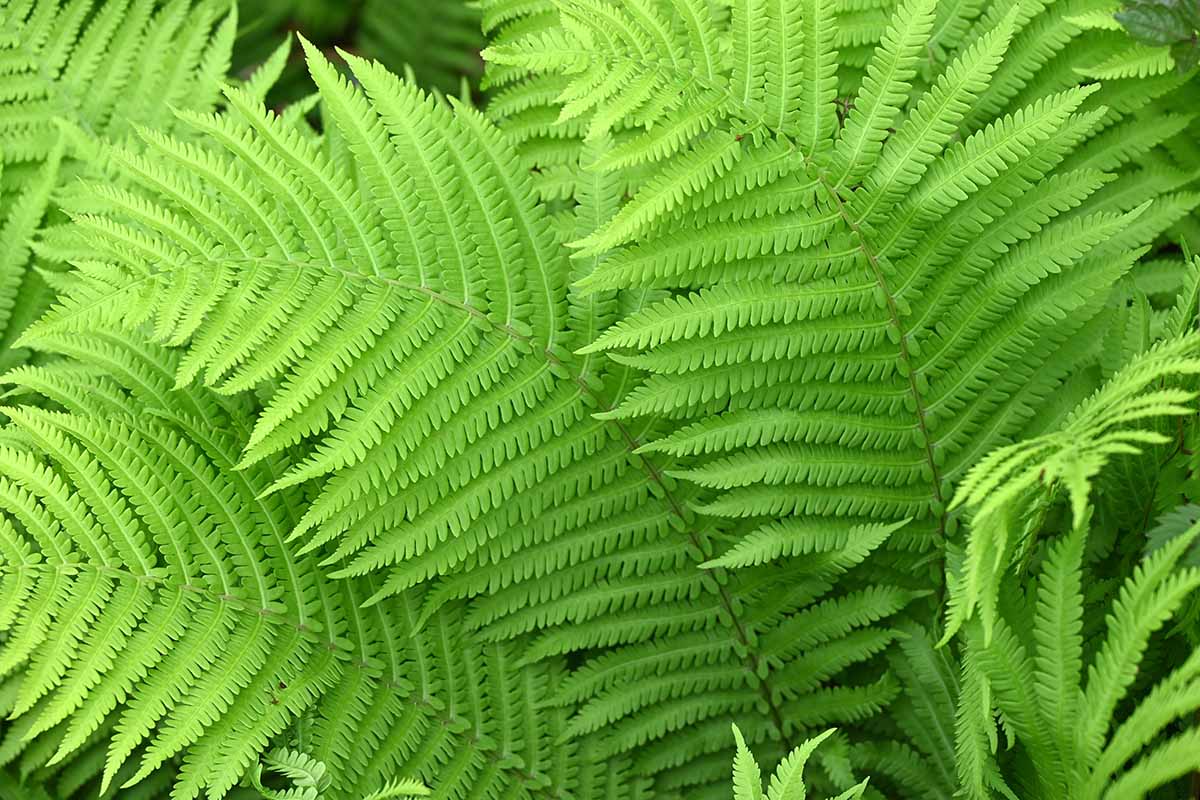
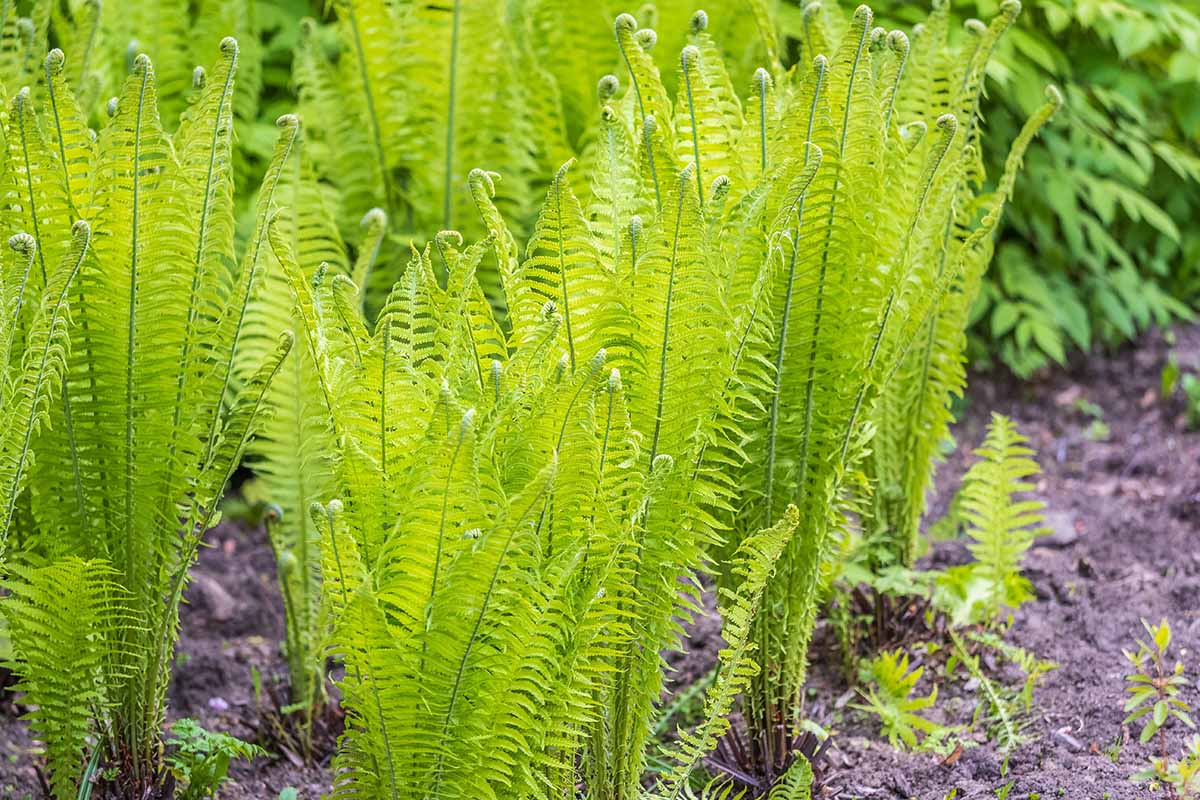
Living up to their common name, the fronds resemble a large, feathery green ostrich plume. Plus, the plants can grow taller than an adult human!
We link to vendors to help you find relevant products. If you buy from one of our links, we may earn a commission.
They fill in shady areas where other plants falter and fail, and they add charming color and texture to what might otherwise be a bare spot.
If you’re intimidated by growing ferns, Matteuccia struthiopteris is a great place to start. They’re not too fussy and will forgive gardening mistakes and mishaps.
Ready to break out the shovel and get digging? Great! Here’s what you’re going to learn along the way:
What You’ll Learn
The binomial starts with Matteuccia, which honors Carlo Matteucci. He was a physicist and a pioneer in bioelectricity.
The second part, struthiopteris, is made up of two words: Struthio is the genus that the ostrich bird is categorized in, and pteris comes from Greek “pteron,” which means wing.
It’s part of the Onocleaceae family, sometimes known as the “sensitive fern” family. All sensitive ferns grow in the ground (not on trees or rocks) and have separate fertile and sterile fronds.
Quick Look
Common name(s): Fiddlehead, ostrich, shuttlecock fern
Plant type: Vascular deciduous fern
Hardiness (USDA Zone): 3-7
Native to: Asia, Europe, North America
Bloom time / season: Spring and summer foliage
Exposure: Partial to full shade
Soil type: Sandy to clay, well-draining
Soil pH: 6.0-7.0, slightly acidic to neutral
Time to maturity: 1 year
Mature size: Up to 6 feet tall and wide
Best uses: Shaded areas, cottage garden, beds, borders, woodland
Taxonomy
Order: Polypodiales
Family: Onocleaceae
Genus: Matteuccia
Species: Struthiopteris
You will find ostrich ferns pretty much everywhere in the Northern Hemisphere.
They grow throughout Europe as well as northeastern Asia, northeastern United States, and all of Canada.
They can grow up to six feet tall, but that’s rare. Typically, they remain under two feet in cultivation.
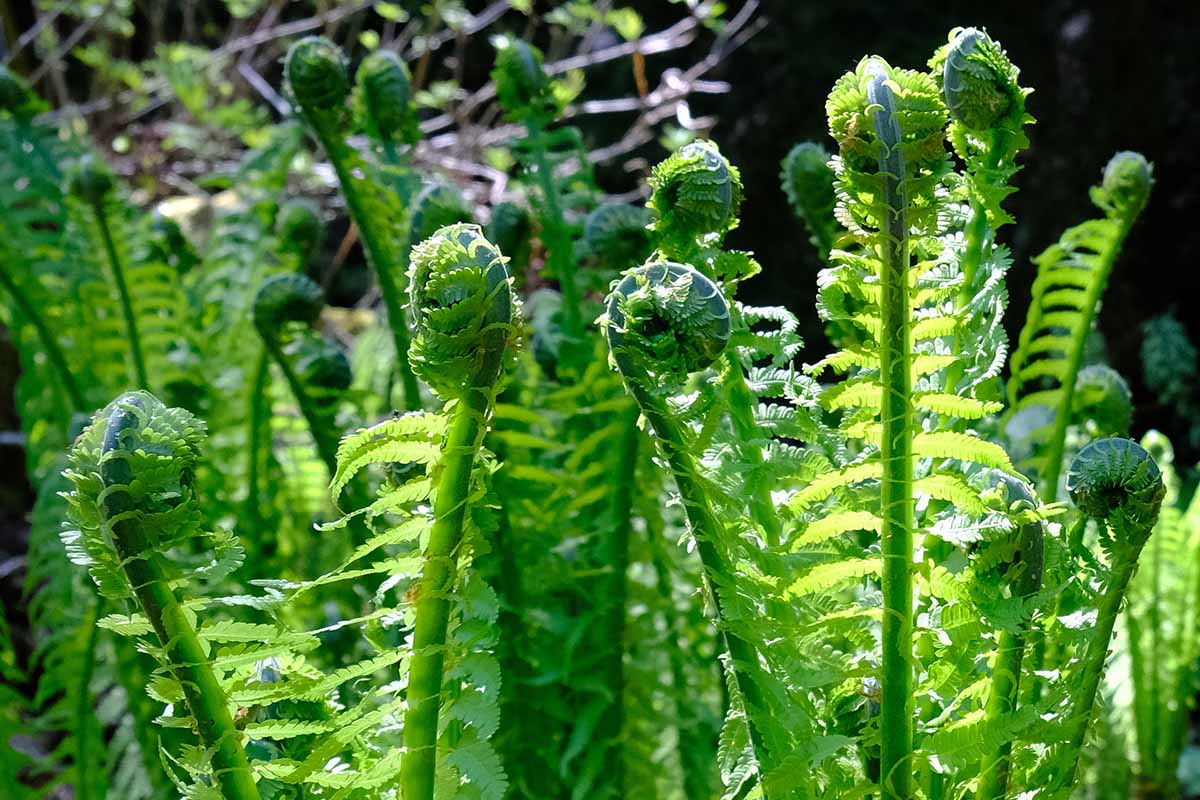
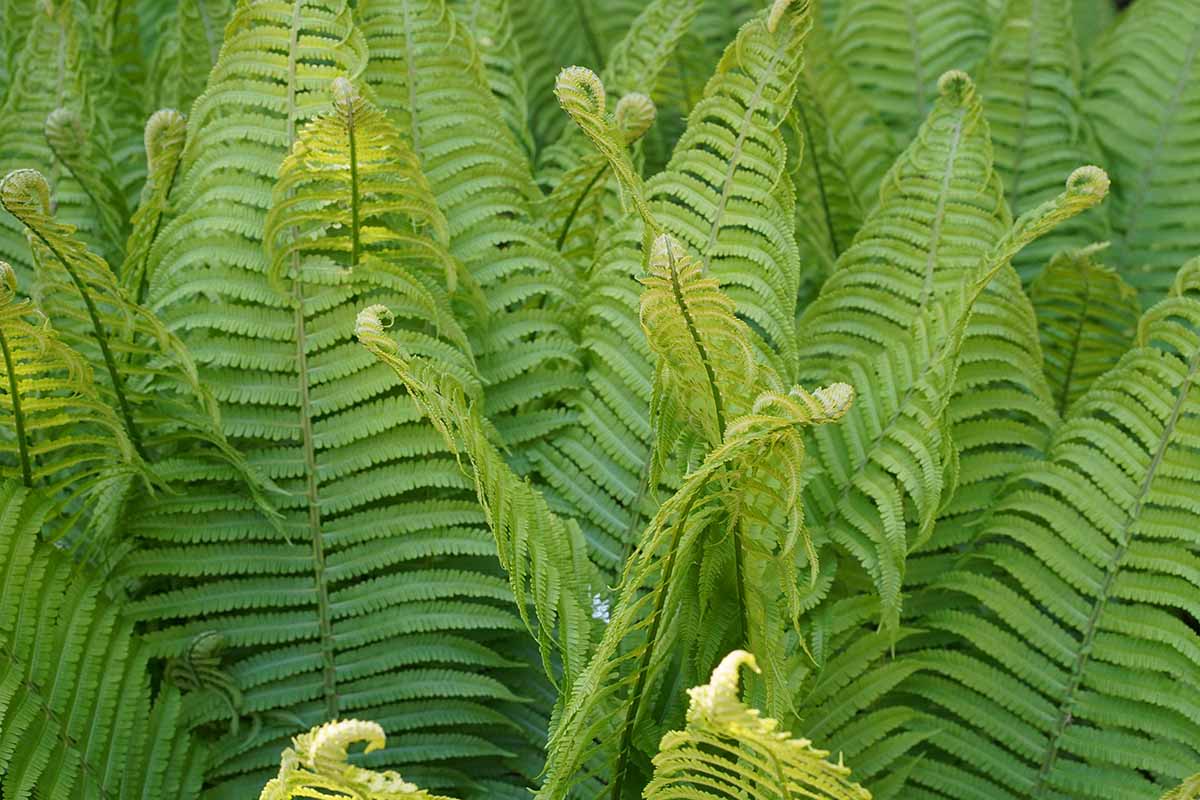
In the spring, the sterile vegetative fronds emerge from the ground at the base of the plant.
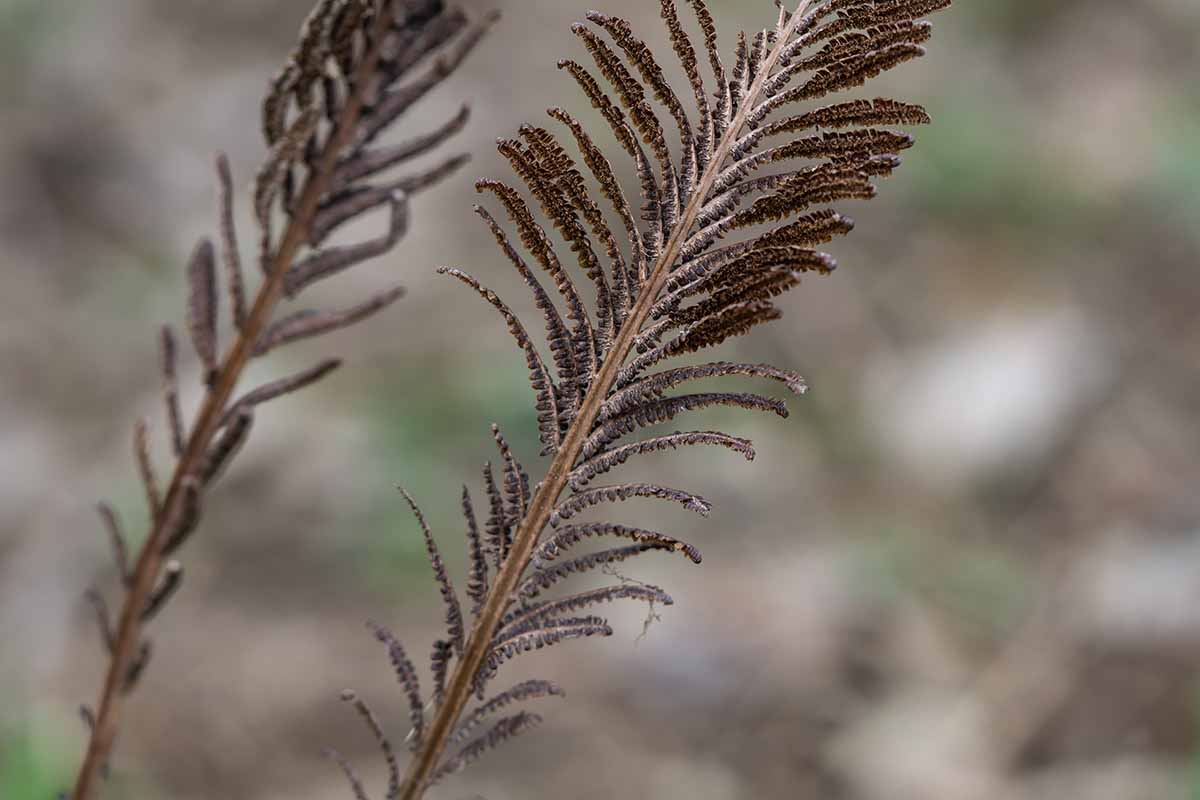
These are the so-called fiddleheads that you can harvest and eat. In the middle of summer, the dark brown, spiky fertile fronds appear.
Plants that have separate fertile and vegetative fronds are known as being dimorphic.
The vegetative fronds will die off in the winter, but the fertile ones stick around and release their spores in the early spring.
Young or stressed plants won’t produce these fertile fronds. I like to use the fertile fronds in winter floral displays when there is little else to add to my arrangements.
The vegetative leaves are pinnate-pinnatifid, which means that the leaflets are arranged on either side of the petiole, and the leaflets are further divided into segments.
There can be up to 50 leaflets, giving them a lacy, feathery look.
Let’s talk about those fiddleheads really quickly. There’s a debate about how much you can safely eat with all edible ferns.
They might be carcinogenic in large enough quantities and can possibly cause intestinal distress and nausea. They should always be cooked, regardless of how much you consume.
I eat them every year in small amounts and always cooked, and I’ve never experienced stomach issues, but I’m a study group of one, so eat at your own risk.
Ready to dive into the nitty gritty?
How to Grow
Also known as fiddlehead or shuttlecock fern, this species thrives in cold areas, in USDA Hardiness Zones 3 to 7.
It won’t do well in hot, humid areas like the American South.
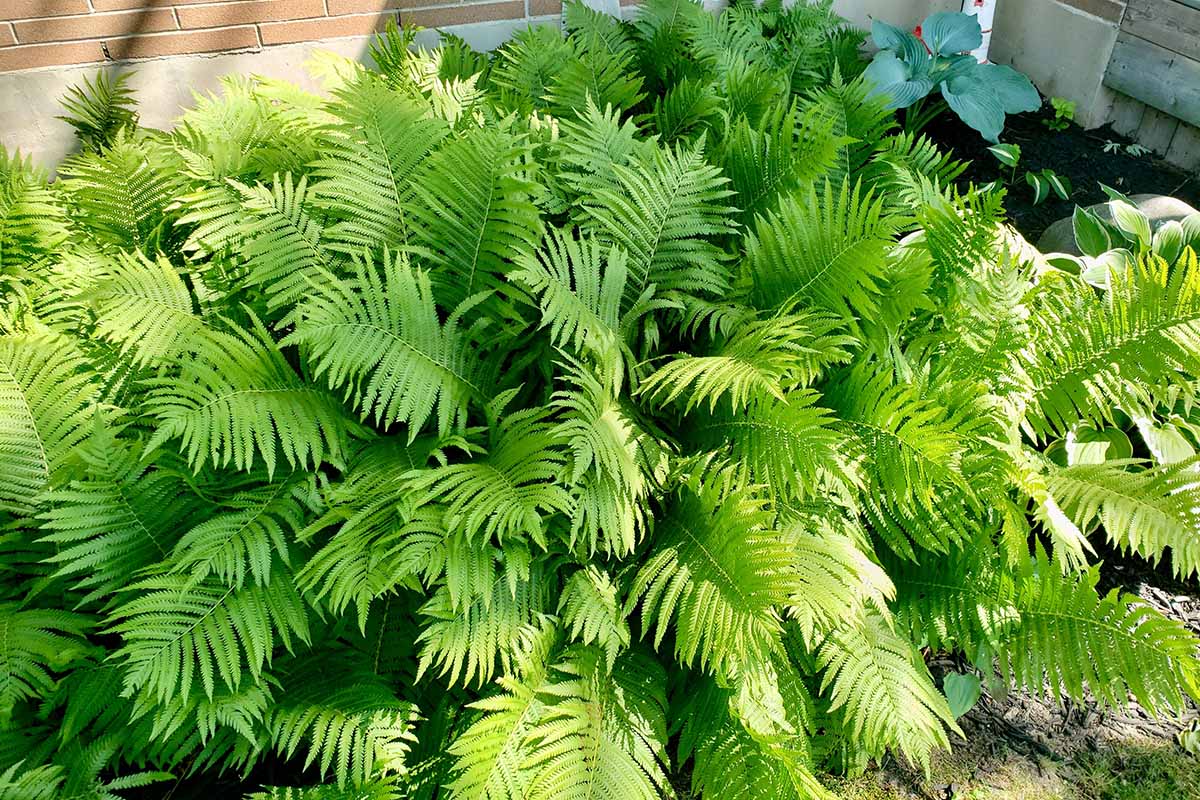
It does grow in some areas of Zone 2, but in these regions it’s best to provide some winter protection, like planting by a south-facing wall or fence, and out of frost pockets.
I like to plant my ferns with spring ephemerals. Since many ferns take a while to wake up in the spring, they leave a bare spot in the yard.
So, cuties like trilliums, bleeding hearts, trout lilies, wood anemone, or dutchman’s breeches can fill in the space, and then when they are fading, the ferns take over.
Light
Most ferns thrive in some amount of shade, and that’s true of this species as well.
Exposure from part to full shade will work. The hotter your climate, the shadier the location should be.
Soil
The soil doesn’t need to be anything special. So long as it isn’t pure clay or pure sand, pretty much anything in between will do.
Slightly acidic to neutral is ideal. A pH between 6.0 to 7.0 is about right. But again, these plants are adaptable.
Water
These plants need moisture at all times. They’d rather the soil be too wet than too dry, so take this into account when choosing a planting spot.
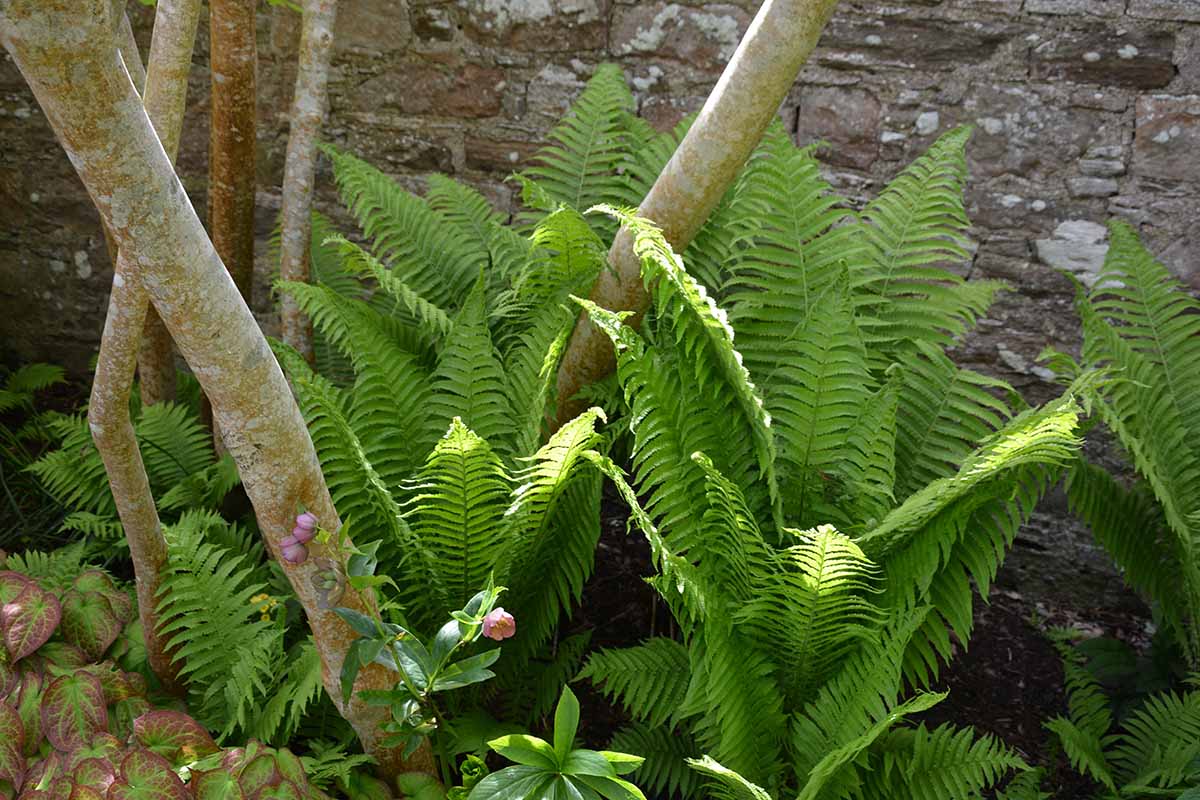
In the wild, they thrive in soil that is shaded by trees and dries out slowly. You’ll also find them in cool locations near streambeds.
Maintain consistent moisture in the soil at all times and don’t allow it to fully dry.
Fertilizer
The best way to feed our frondy friends is to mimic their natural environment.
In the forest, leaves and other organic matter is constantly falling from the canopy and biodegrading into the soil.
Heap well-rotted compost around your plants (but not touching the plant itself) in the spring.
There’s no need to apply additional fertilizer as this can cause the fronds to grow fast, making them weak.
Where to Buy
There are a few cultivars out there, but they aren’t extremely common.
‘The King’ aka ‘Jumbo’ is one of the most well-known. It looks just like the species except it’s a bit larger at up to seven feet tall and more heat-tolerant.
Beyond that, you’ll usually find the species itself listed for sale.
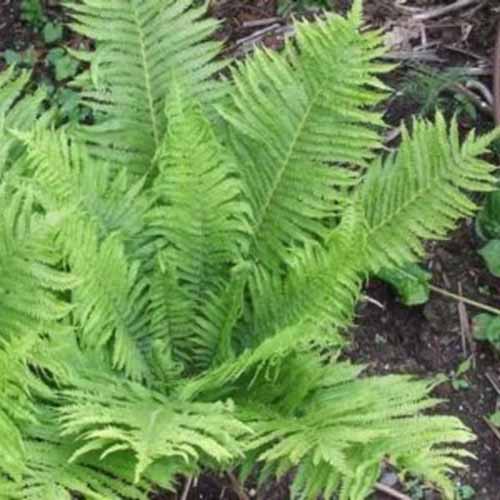
For example, Nature Hills carries plants available in #1 containers.
Maintenance
The fronds are going to start looking sad by the end of the summer or early fall. By winter, they will die back to the ground.
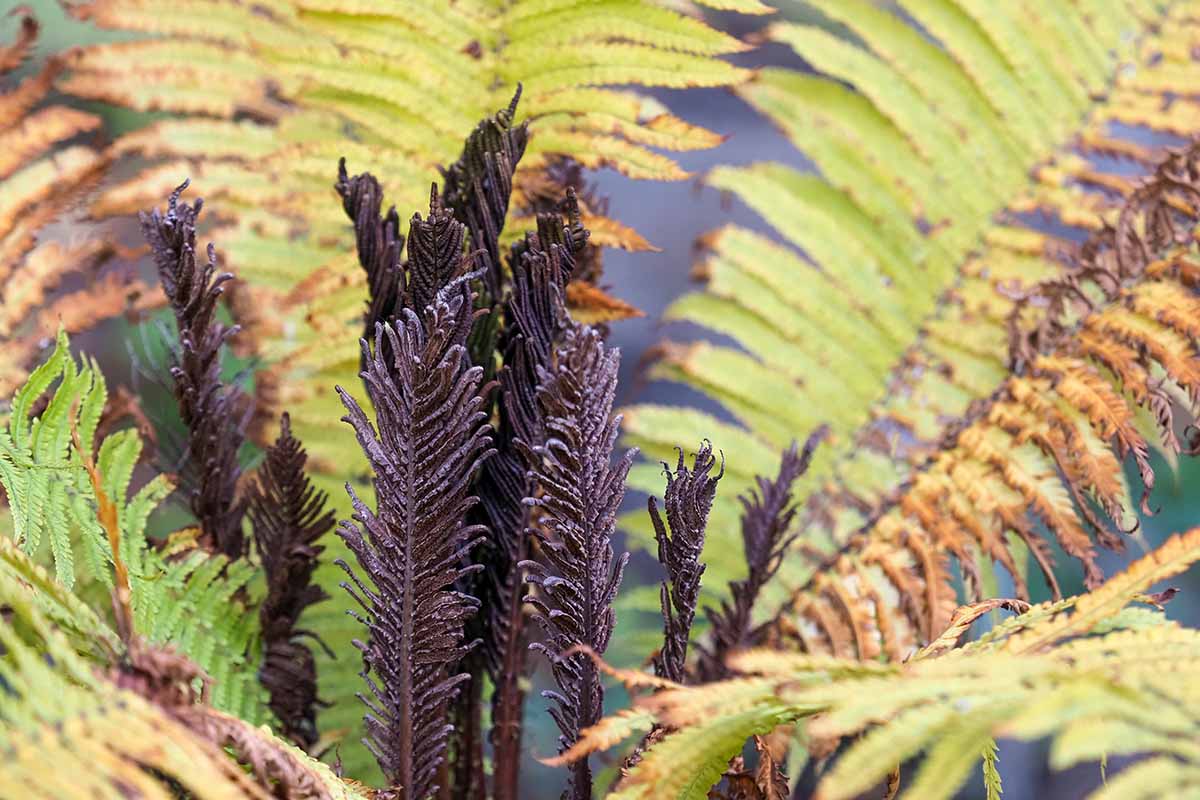
You can mitigate this by keeping the soil moist throughout the season and by protecting the plant from wind, but you can’t always prevent it from happening.
Resist the urge to trim off the ragged leaves. The plant needs these to feed nutrients into the roots to help it grow the following year.
Let them die to the ground naturally.
Propagation
While they have different reproductive parts, ferns can be propagated in the same ways as other plants. Namely: by division, from plantlets, spores (seeds), and cuttings.
If you want to start from spores you’ll need special equipment and it takes some careful work, but it’s so rewarding.
Division and digging up plantlets are the easiest and quickest methods. Underground, the roots will often form rhizomes and you can dig these up and replant them.
You can also divide up the fibrous root mass and move a section of the plant somewhere else.
Plantlets are little individual plants that can develop and you can tuck these into the soil where you want them.
Cuttings work pretty well, too. They take a little longer, but it involves taking a piece of a frond and setting it in some soil.
Whichever method you divide to go for, read our guide to propagating ferns for more information.
Pests and Disease
After a summer of dealing with problems on my roses (is that more black spot forming!?), all I want is a plant that isn’t full of drama.
And ostrich ferns fit the bill. They have no serious common pest or disease problems.
Plus, these plants offer a lot more for wildlife than you may realize. Birds make their nests in them, deer will hide their fawns in patches, and moths and birds feed on them.
A deer might occasionally chomp on a fiddlehead, but other than that, they typically use them for shelter not food.
The ostrich fern borer moth (Papaipema hesseli, syn. P. sp. 2 near pterisii) might be described as a pest since its larvae burrow into the base of the fronds to pupate.
But it’s actually a beneficial noctuid moth that needs this species to survive. They don’t do much damage so don’t worry if you see orange, cream, or brown moths around your plants.
Add Magic to Your Garden
Maybe it’s growing up in a place where sagebrush and cacti were common, but you’ll never convince me that ferns aren’t a little bit magic.
You don’t see prickly pears dotting the landscape of most fairytales, after all.
It’s hard not to love ostrich ferns, with their ostentatious display coupled with a surprisingly easygoing nature. Just give them enough water and let them fly.
What draws you to these plants? Looking to turn a neglected shady area into a focal point? Want to bring some magic to your space? Let us know in the comments section below!
And why not check out some of our other fern growing guides next and add to your collection!