Dicentra cucullaria
Early spring is a time of wonder in wooded regions of eastern North America, when the first hellebores, scilla, and snowdrops rise intrepidly through the last remnants of snow.
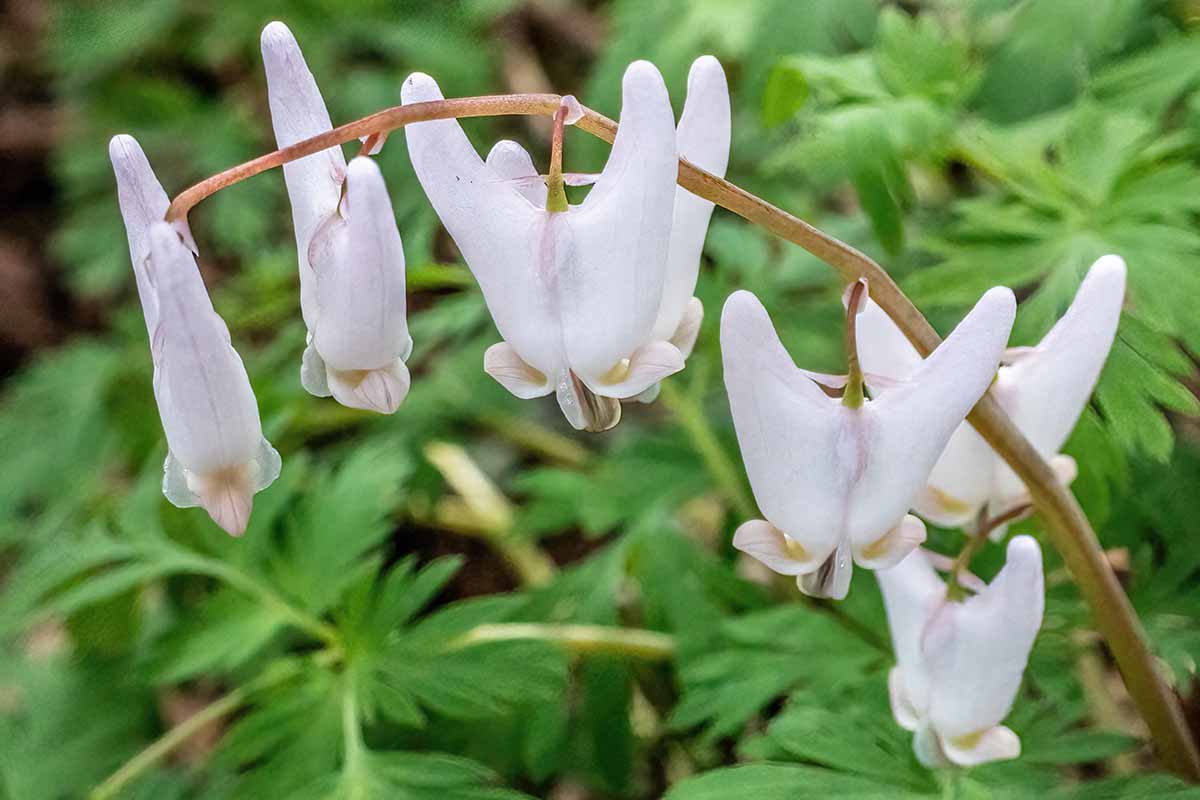
Explorers may also spot plants that look almost like fairy laundry put out to dry. It’s actually a native wildflower called Dutchman’s breeches.
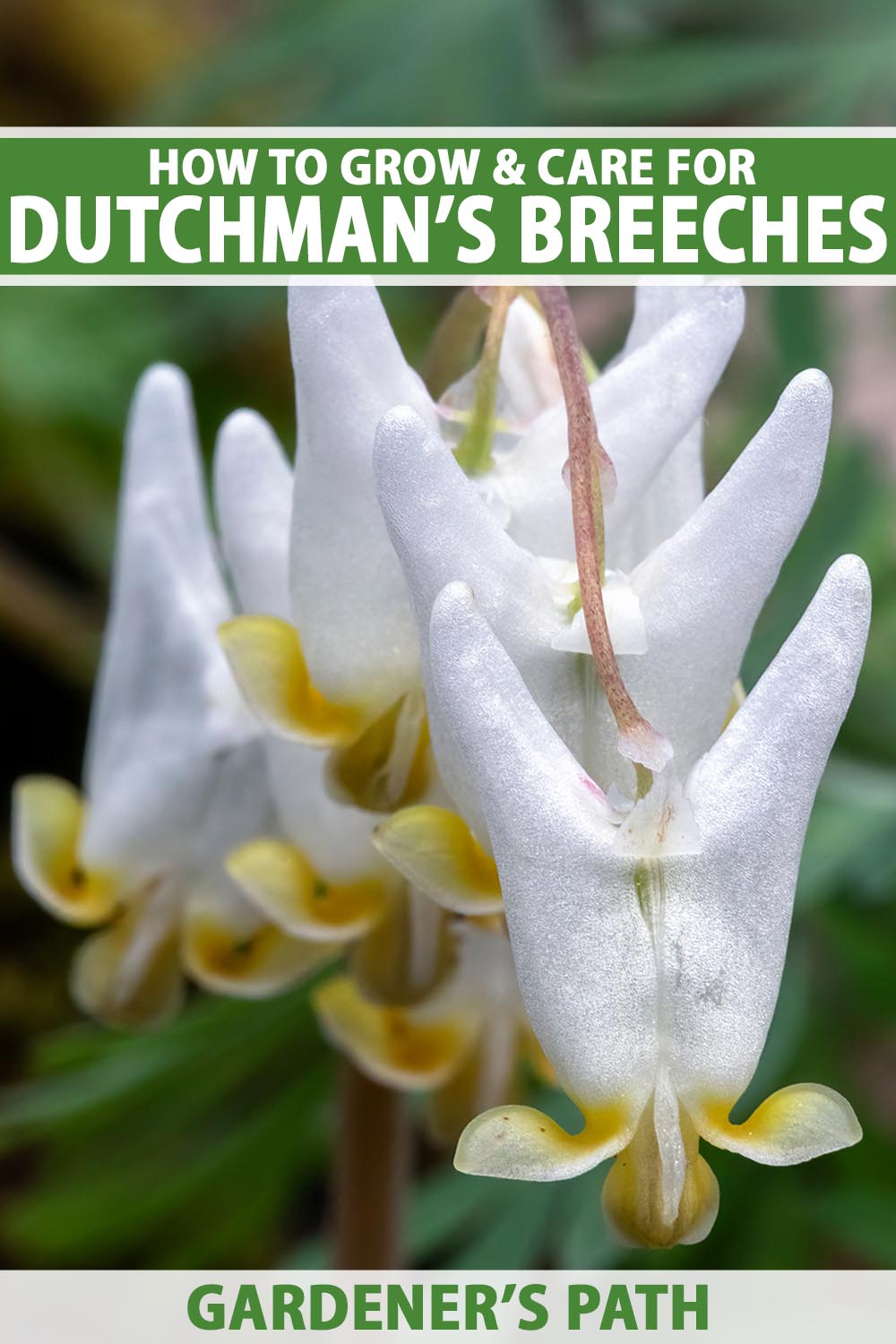
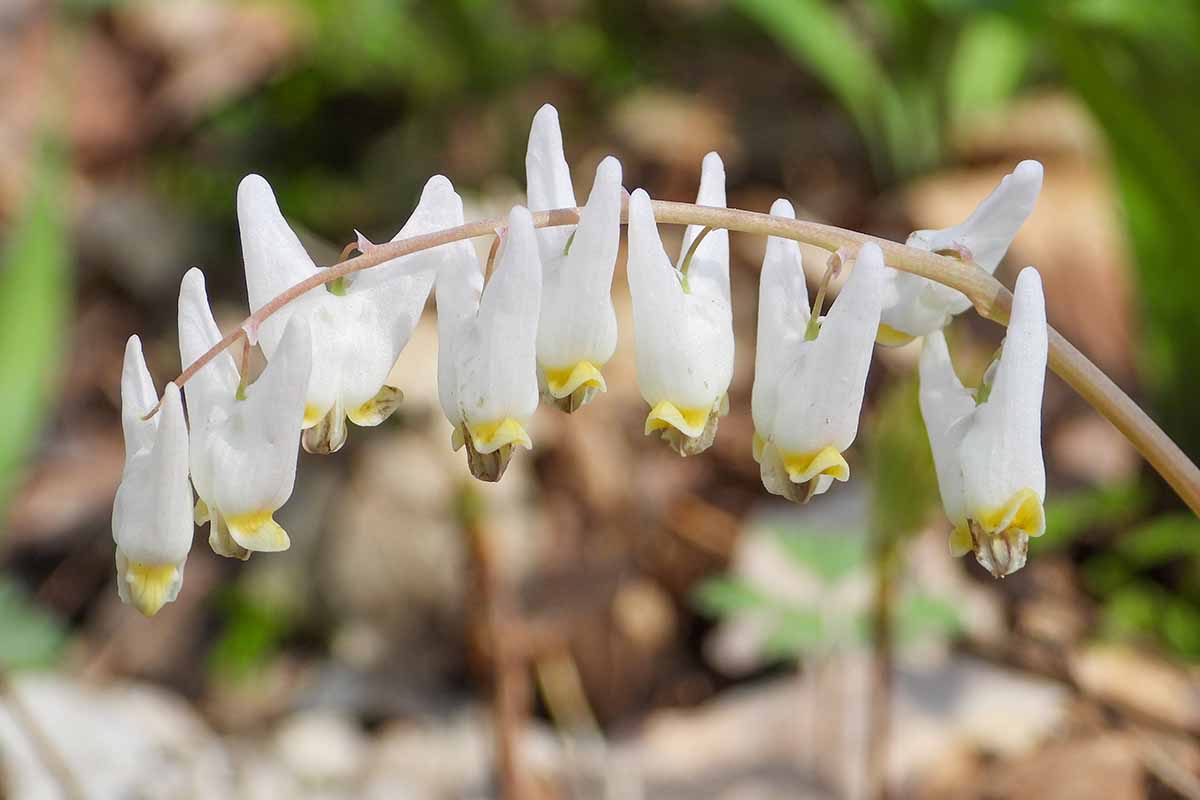
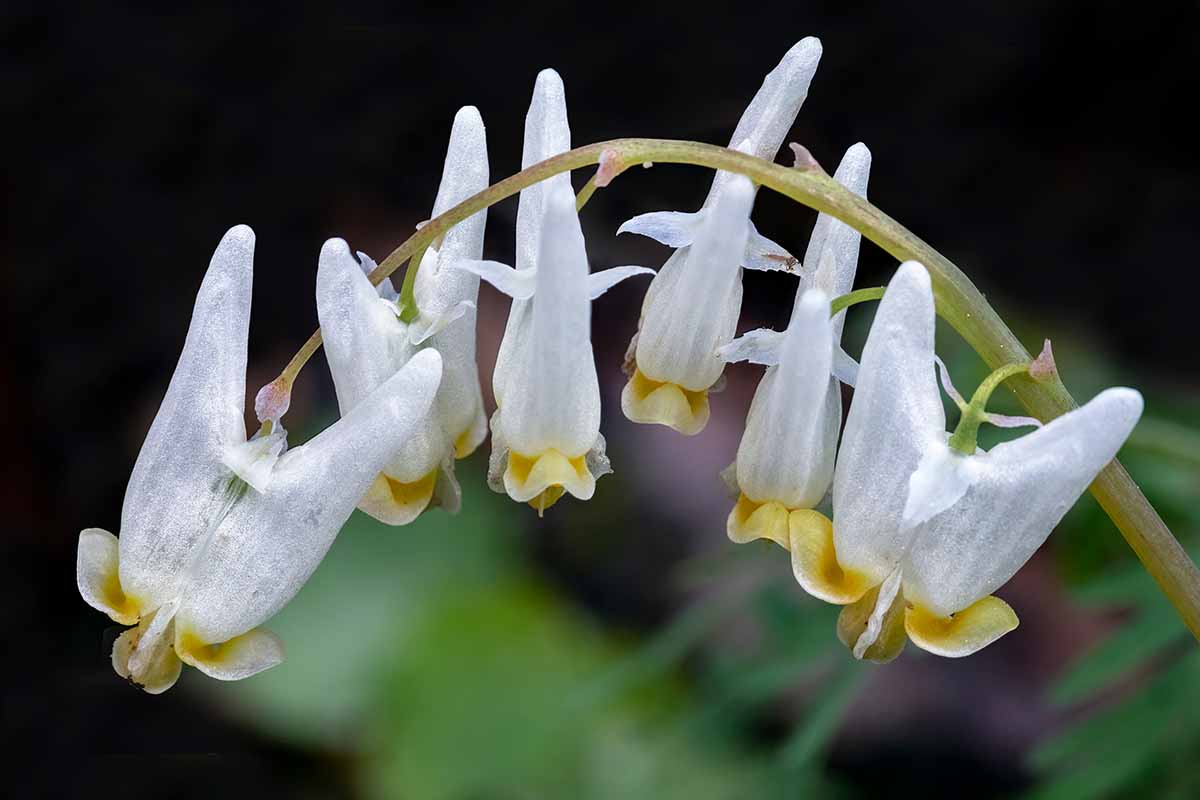
Dicentra cucullaria is suited to cultivation in Zones 3 to 7, with fernlike leaves and arching racemes sporting rows of pendant white blossoms resembling inverted pantaloons.
We link to vendors to help you find relevant products. If you buy from one of our links, we may earn a commission.
The Dicentra genus consists of eight species and includes native bleeding heart (D. eximia) that shouldn’t be confused with the showier non-native bleeding heart, Lamprocapnos spectabilis, a popular garden specimen.
Read on to learn how to grow and care for Dutchman’s breeches in shady areas of your landscape.
Here’s what we’ll cover:
What You’ll Learn
Dutchman’s breeches is known as an “ephemeral” that blooms in spring and fades by summer, leaving no trace of foliage behind as it enters dormancy.
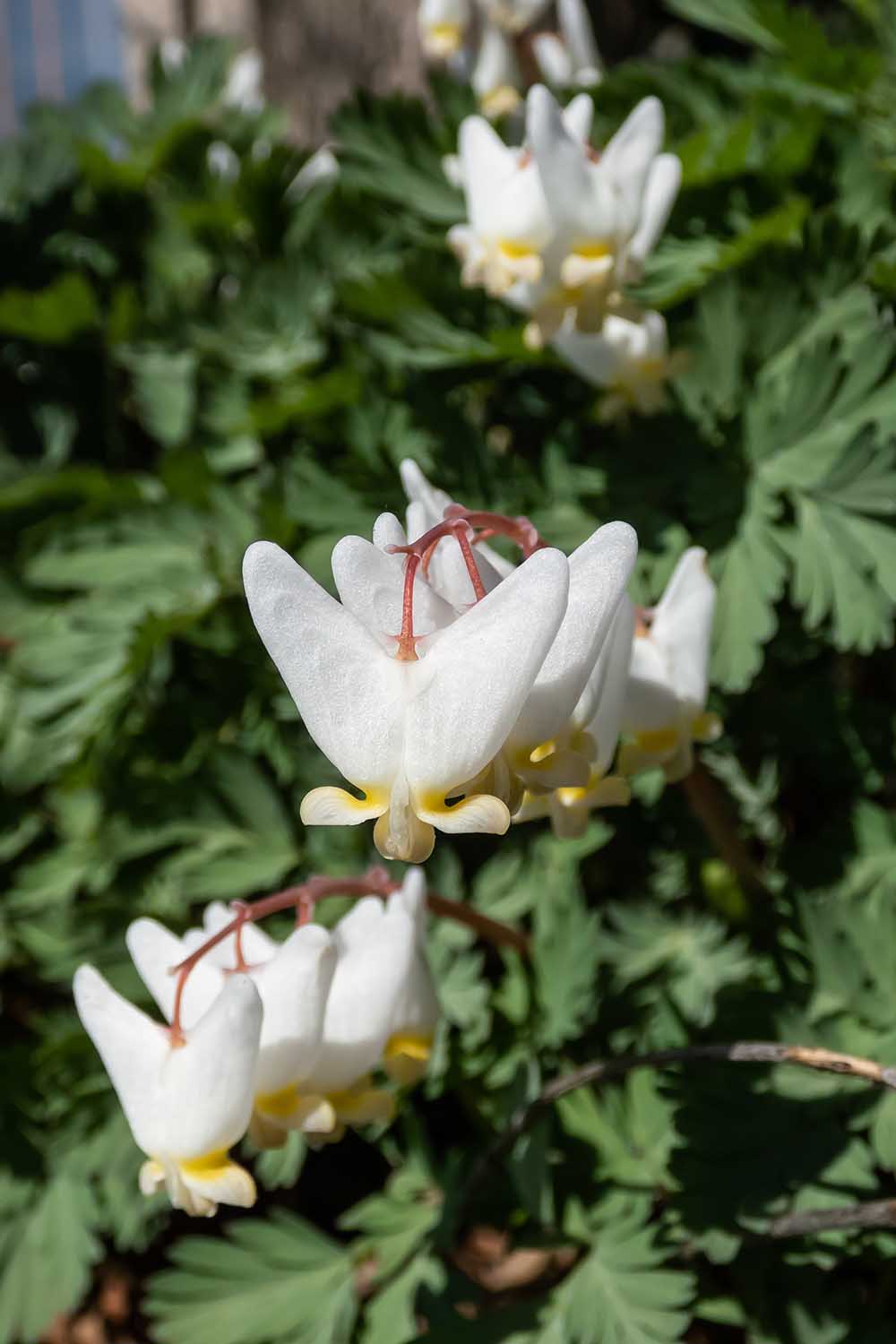
It has modest proportions of six to 12 inches tall and wide.
Self-sowing and the spreading of its fleshy rootstock promote non-invasive naturalization of Dutchman’s breeches.
Quick Look
Common name(s): Dutchman’s breeches or britches
Plant type: Herbaceous tuberous perennial
Hardiness (USDA Zone): 3-7
Native to: Eastern North America
Bloom time / season: Early spring
Exposure: Dappled sunlight to full shade
Soil type: Fertile, moist, well-draining
Soil pH: 6.0-6.5, slightly acidic
Time to maturity: 2-4 years
Mature size: 6-12 inches tall and wide
Best uses: Naturalized planting, shade garden, wildflower garden, woodland
Taxonomy
Order: Ranunculales
Family: Papaveraceae
Genus: Dicentra
Species: Cucullaria
Dutchman’s breeches blooms in the dappled sunlight of deciduous woodlands and thrives in the shade after the trees leaf out.
It performs well on rocky slopes, where it aids in soil conservation, and adds early-season interest to shade and wildflower gardens.
As with many ornamental species, please note that all parts of the Dutchman’s breeches plant are toxic.
Wear gloves when handling it and keep it away from children, pets, and grazing animals.
Let’s find out more about its cultural requirements.
How to Grow
Growing Dutchman’s breeches is easy when you consider its natural habitat and replicate these conditions in the home landscape.
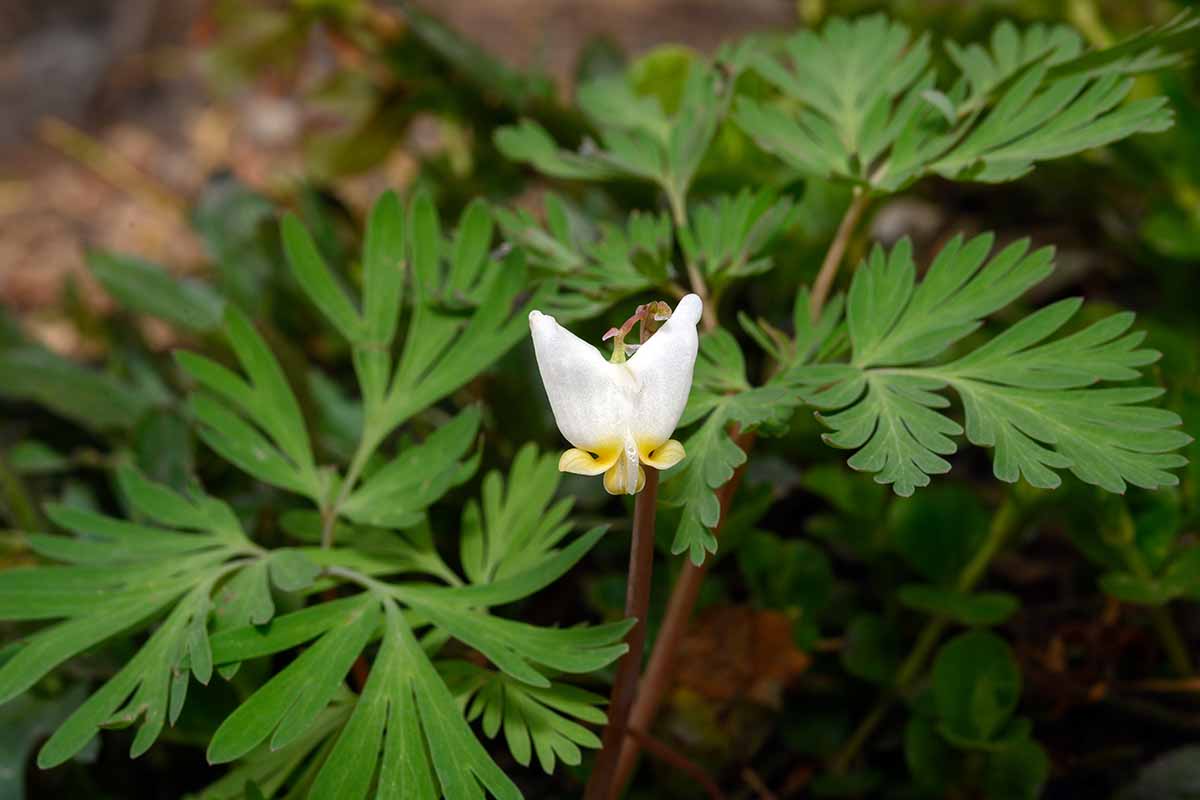
The eastern region of North America is characterized by having four seasons, moderate rainfall and humidity. Spring weather is cool and moist.
Home landscapes with similar conditions are perfect for Dutchman’s breeches.
Light
In the wild, spring sunlight filters through bare forest branches, signaling the time for Dutchman’s breeches to bloom.
Planting beneath a canopy of deciduous trees ensures ample unobstructed early-season sunshine.
Soil
The soil in eastern North American regions is generally slightly acidic. It is organically-rich and usually drains well.
Home gardeners should provide fertile, well-draining soil with a pH of 6.0 to 6.5.
Water
These wildflowers are accustomed to consistent moisture and need the same in cultivation.
Provide an inch of water per week, including rain, beginning in early spring when the first leaves sprout.

Water over the soil and not the leaves to avoid prolonged moisture that may promote fungal disease.
Dutchman’s breeches is not drought tolerant and will fail to thrive without even moisture. In the event of a dry spell, use a moisture meter and water when the top inch of soil is dry.
You can discontinue watering after the plant has finished flowering, when the foliage withers and fades away.
Fertilizer
Dutchman’s breeches plants thrive in the nutrient-rich humus of the forest floor.
No fertilizer is needed for wildflowers grown in fertile soil in the appropriate Zones. Feeding plants unnecessarily may result in leggy stems and poor blooming.
Where to Buy
When shopping for Dutchman’s breeches, you may find potted specimens at local native plant sales. Online, seeds and dormant bare roots are readily available.
Seed packets should bear the current growing season’s date.
These from Everwilde Farms are packed fresh in resealable gold foil packets for optional long-term storage.
Dutchman’s breeches seeds are available from Everwilde Farms via Amazon.
Maintenance
Other than maintaining even moisture, there is little to do to care for D. cucullaria in the landscape.

Post-bloom, the foliage turns yellow and withers, fading away without the need for pruning or disposal.
If you have overcrowded colonies, naturalized clusters of Dutchman’s breeches plants, you can thin them during fall dormancy, as discussed below.
Propagation
To start, you’ll need seeds, dormant bare roots, divisions of existing specimens, or nursery starter plants. Let’s discuss.
From Seed
Direct sow seeds into the landscape in late summer to early fall. Seeds require winter cold-moist stratification and will sprout by the second spring after sowing.

Scatter several every six inches and barely cover them with soil.
Mist the soil lightly each day to keep it evenly moist but not soggy.
Alternatively, you can start seeds indoors in late summer to early fall, six months before the last spring frost date for your region.
Place the seeds in moist sand and maintain a consistent temperature of 80°F for 12 weeks, followed by 12 weeks at 40°F. If they fail to germinate, you may repeat the stratification process.
After stratification, sow one to three seeds in three-inch starter pots filled three-quarters full of sterile seed-starting soil.
Maintain even moisture without oversaturation.
It is not necessary to thin the seedlings as they can be planted individually or in groups of two or three. Avoid larger groupings to prevent overcrowding.
If you collect seeds from existing plants in the fall, try to sow them immediately for maximum viability.
To save them, place in moist sand in the refrigerator and plant them the following spring.
From Bare Roots
In early spring or fall, you can dig up or purchase dormant bare roots, aka corms or tubers. If you dig them, you’ll have to tease the clusters apart to separate the individual tubers.
Plant the tubers singly or in groups of two or three. Bury them an inch deep in garden soil.
Leave six inches between groups to avoid overcrowding.
By Crown Division
Once plants leaf out in the spring, watch the forecast for a couple of days without rain, to avoid oversaturation.
Water the clump you want to divide.
The next day, use a long-handled shovel to dig down about 12 inches around it. Lift the clump out.
The crown is where the stems and roots meet. Tease the individual stems apart at the crown. Each should have a tuberous root.
Prepare the ground soil in the new location(s) by working it to a depth of four to six inches until it is friable and debris-free.
Sow the stems singly or in groups of two or three, burying the rootstock an inch deep. Leave six inches between groupings.
Backfill to hold the foliage firmly upright.
Return the remaining portion of the clump to its original location, backfilling to secure it.
Water the transplants and the original clump to minimize transplant shock.
Transplanting
Seedlings started indoors are ready for transplant when they have two sets of fernlike leaves.
The time to put them in the ground is early spring, after the last average frost date for your region.
Water the pots the day before. Work the garden soil until it is crumbly to a depth of four to six inches.
Unpot and set the contents at the same depth as in the original container, so the rootstock is an inch deep. Space six inches apart.
Backfill to hold the stems firmly in place and water in well.
When transplanting a nursery potted plant, water it the day before.
The next day, set the contents of the pot into prepared garden soil at the same depth as originally, with the rootstock an inch below ground, and at least six inches from neighboring foliage.
Backfill to hold the foliage upright. Water thoroughly.
Note that plants beneath trees must be placed beyond the “root flare,” the visible roots that must remain uncovered by soil to facilitate the gas exchange that sustains trees.
Pests and Disease
Native wildflowers fare well when beneficial pollinators help to control pest populations, and conditions are not overly crowded or moisture stressed.
If night-feeding snails and slugs defoliate plants, sprinkle slug bait pellets around but not touching the foliage.
You may have to battle the occasional aphid, a sapsucking pest that causes discoloration, stunting, and wilting.
The time to be most vigilant is early spring, when the first tender shoots appear – these are the most appealing to this voracious feeder.
In the event of an infestation, firmly spray with the hose to dislodge the pests and then treat the foliage with insecticidal neem oil.
Because you’ll have to wet the foliage, it’s best to do this on a warm, dry day that will evaporate the moisture quickly to avoid activating fungal pathogens.
Fungal diseases can cause the tuberous roots to rot. Proactive measures include avoiding overwatering and overcrowding, and cultivating on a slope to facilitate drainage.
Naturalistic Value
Dutchman’s breeches is an ephemeral early-spring blooming wildflower native to eastern regions of North America.
Its charming, pantaloon-like blossoms are fun to spot on woodland walks through receding snow when a hint of warmth is in the air.
With fertile soil that drains well, and dappled sunshine beneath a canopy of deciduous trees, this is a reliable shade garden species that aids in erosion control and attracts beneficial pollinators, adding value to naturalistic landscapes.
Are you growing Dutchman’s breeches? Let us know in the comments section below!
If you found this article informative and want to learn about more early-spring ephemerals, we recommend the following: