Cerastium tomentosum
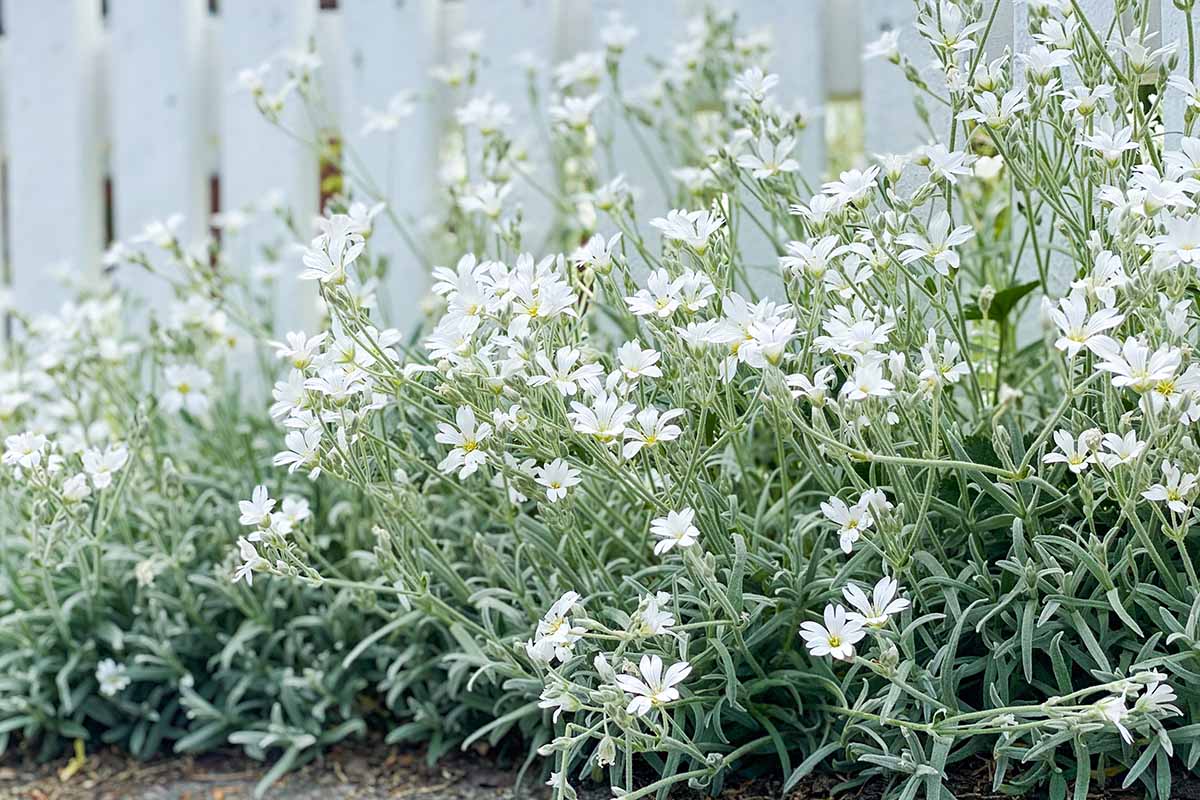
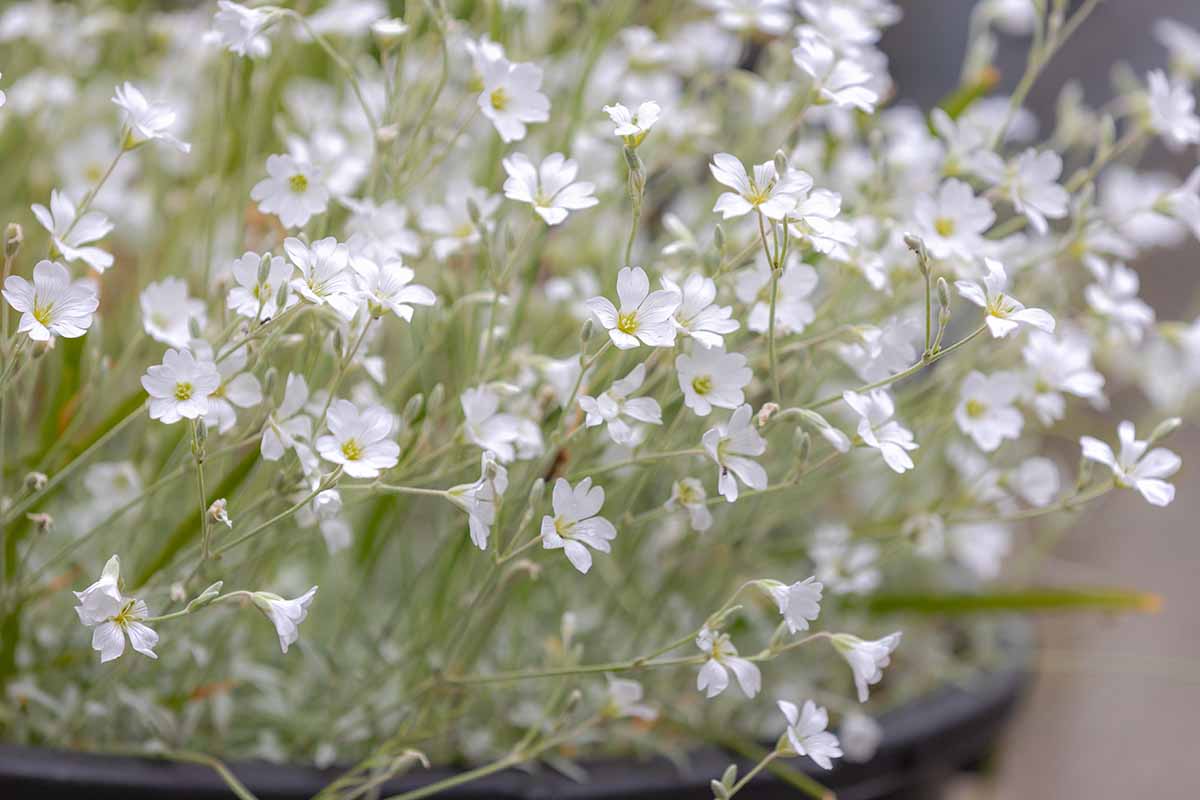
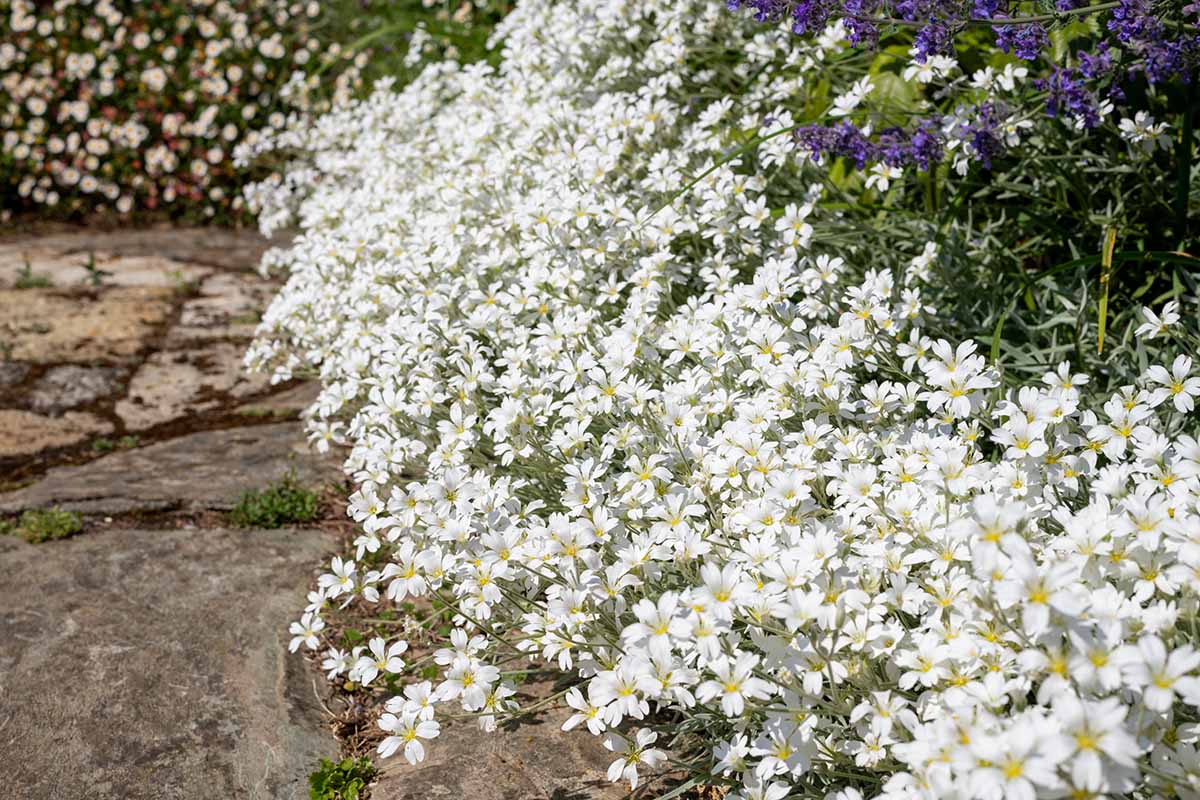
Snow-in-summer (Cerastium tomentosum) is a low-growing, mat-forming perennial with silvery, felted foliage and a heavy flush of small white flowers in late spring and early summer.
It spreads into a dense silver carpet just a few inches tall then sends up flowering stems that coat the plant in white.
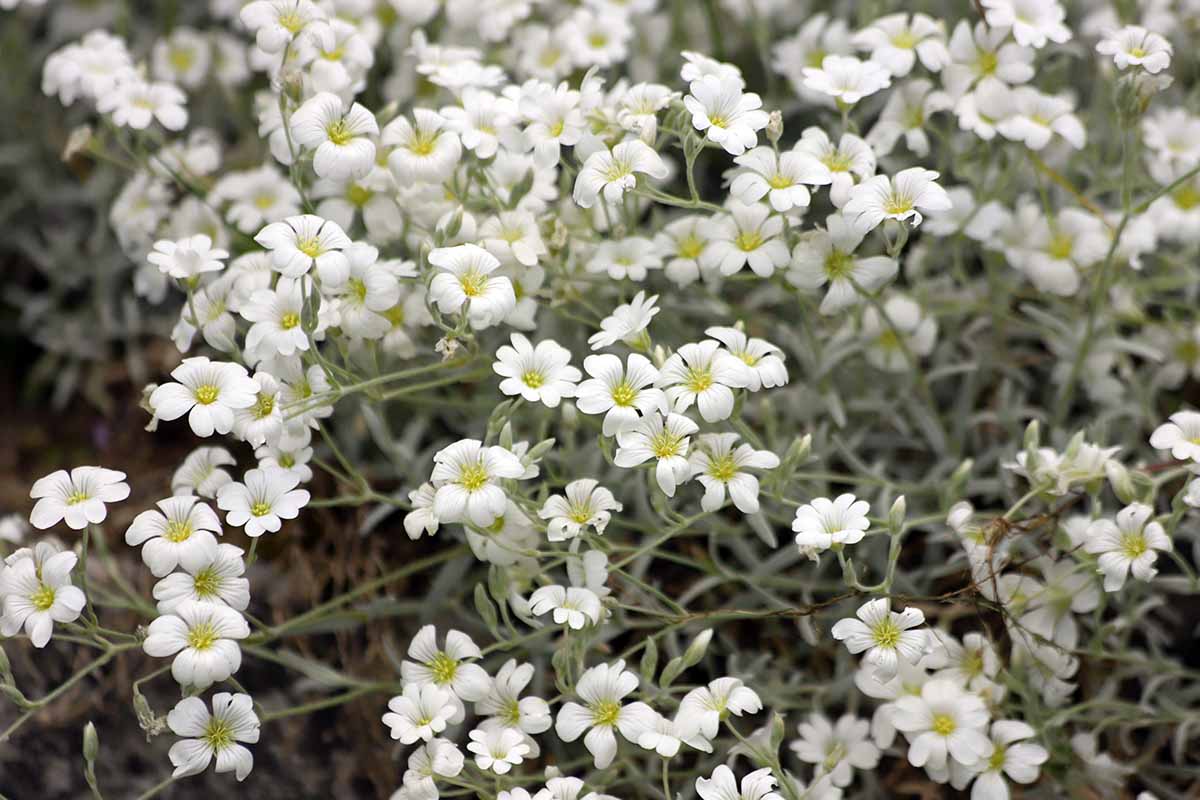
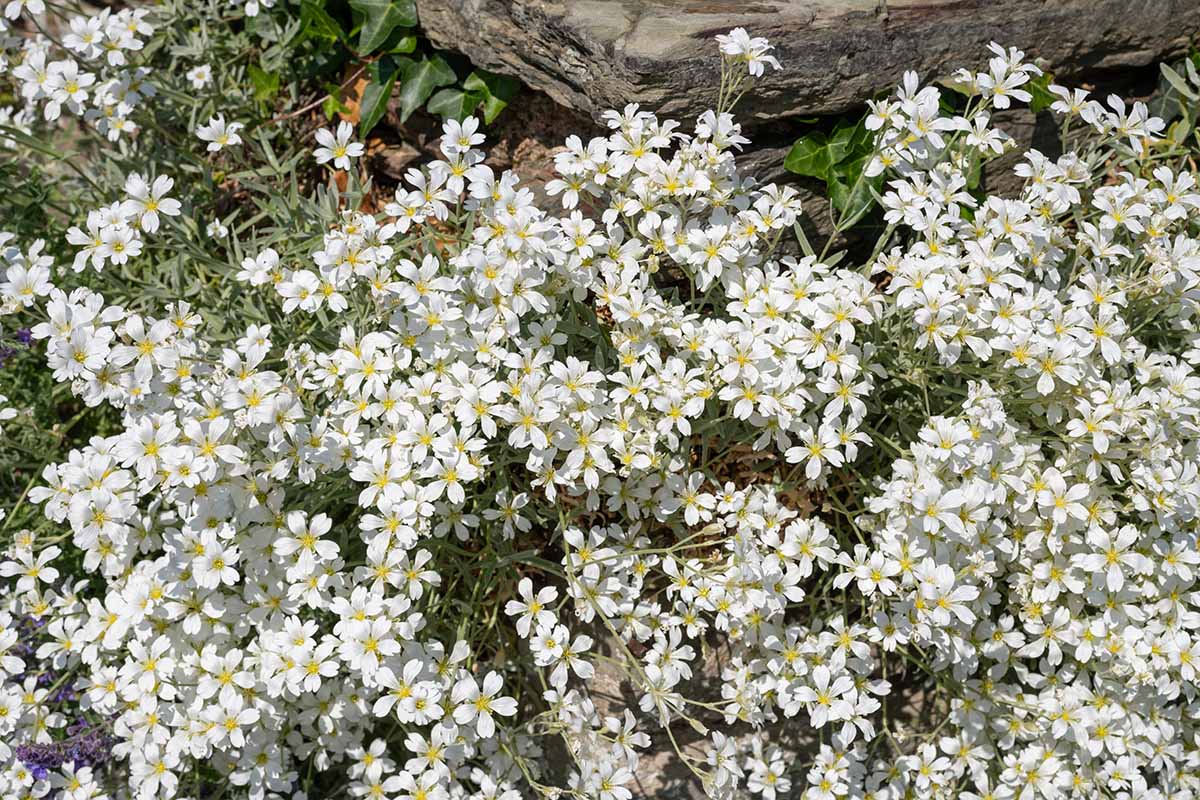
C. tomentosum thrives in sun and well-draining soil, which makes it a natural for rock gardens, slopes, dry walls, and the sun-baked spots where more sensitive ground covers struggle.
Tough and cold-hardy, it’s a low-maintenance addition to the landscape.
So low-maintenance, in fact, that the plant can range out of control if you let it. Spreading by runners and self-seeding, snow-in-summer can overrun neighboring areas.
Keep it in check, and you’ll enjoy this evergreen year-round in Zones 3 to 7.
Here’s what I’ll cover:
What You’ll Learn
This mat-forming, rhizomatous and stoloniferous herbaceous perennial, sometimes described as a subshrub, is a member of the Caryophyllaceae family, related to the popular plants in the Dianthus genus.
Snow-in-summer is native to the mountains of Italy, in the central and southern Apennines, along with Sicily and Corsica, where it grows on dry, rocky ground.
You’ll see it sold under several common names, including Jerusalem star, snow plant, woolly mouse-ear chickweed, and dusty miller.
Don’t confuse this species with Jacobaea maritima, also called dusty miller.
It has escaped cultivation in a number of places, naturalizing across the United States from Alaska through the northwestern states and east to North Carolina, as well as in the United Kingdom and the Iberian Peninsula.
That wandering habit is worth keeping in mind, but snow-in-summer is garden-aggressive, not a listed noxious weed.
Quick Look
Common name(s): Snow-in-summer, dusty miller, Jerusalem star, snow plant, woolly mouse-ear chickweed
Plant type: Herbaceous perennial
Hardiness (USDA Zone): 3-7
Native to: Italy (Apennines), Sicily, Corsica
Bloom time / season: Late spring to early summer
Exposure: Full sun, tolerates part shade
Soil type: Dry, sandy, poor, well-draining
Soil pH: 6.0-8.0, slightly acidic to slightly alkaline
Mature size: 6-inch foliage mat, flower stems 8-12 inches, spread up to 24 inches
Best uses: Ground cover, rock gardens, slopes, edging, dry walls
Taxonomy
Order: Caryophyllales
Family: Caryophyllaceae
Genus: Cerastium
Species: Tomentosum
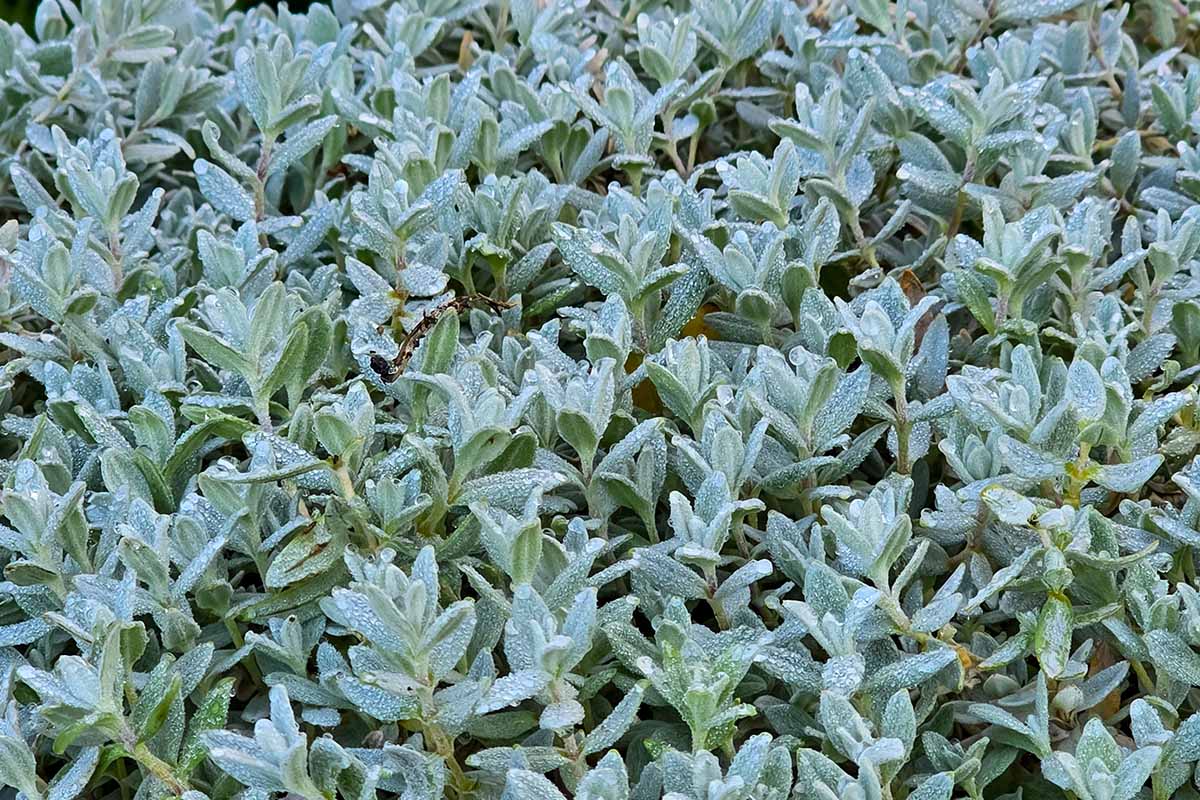
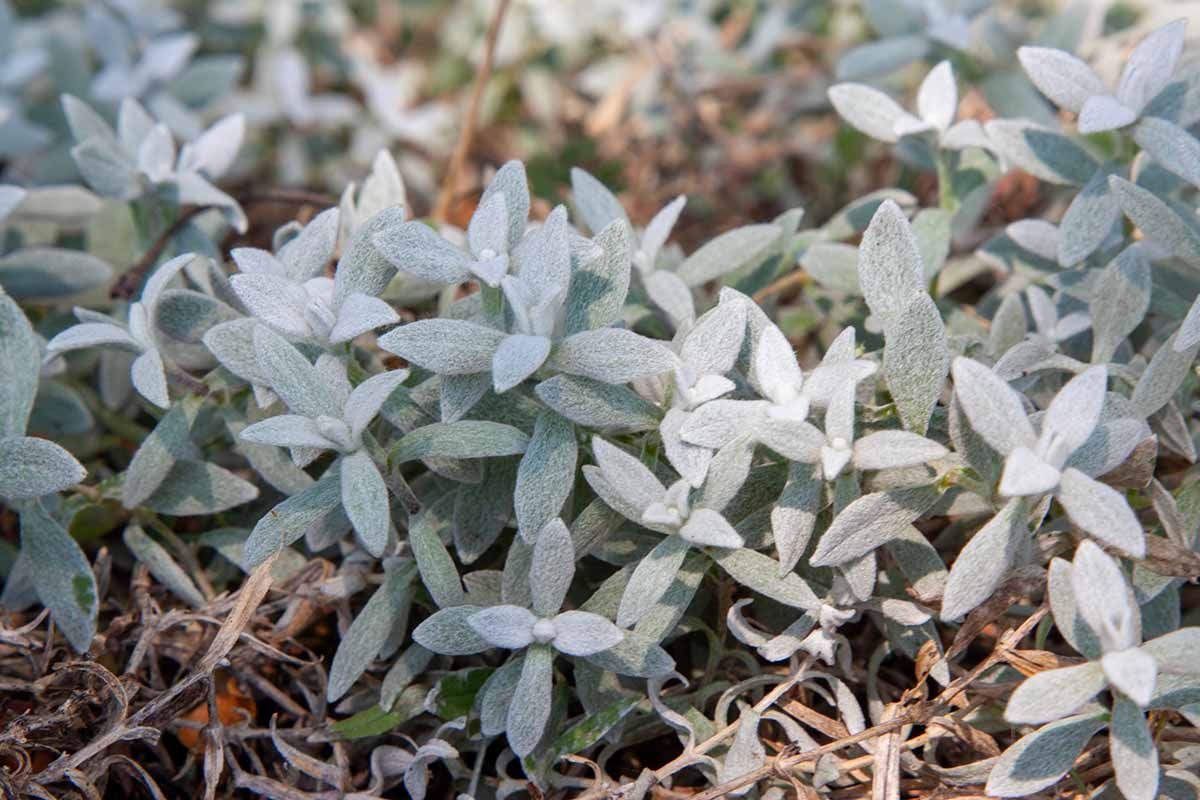
The narrow leaves grow to about an inch long and less than a quarter inch wide, gray-green to silver, and are coated in soft white hairs that give the whole mat a felted, frosted look.
Being evergreen, the foliage persists through winter.
Growing up to six inches tall, the flowering stems rise eight to 12 inches above the foliage.
Ideal for growing as a ground cover in rock gardens, front-of-border placements, edging, and in cottage gardens, snow-in-summer also works well in gravel gardens.
Consider allowing it to cascade over a dry stone wall or provide erosion control on slopes and banks.
The flowers attract bees and other pollinators but snow-in-summer doesn’t tolerate foot traffic so it’s not a good idea to use it as a lawn substitute – try chamomile instead.
How to Grow
Snow-in-summer is easy to grow in locations that receive plenty of sun and in soil with sharp drainage.
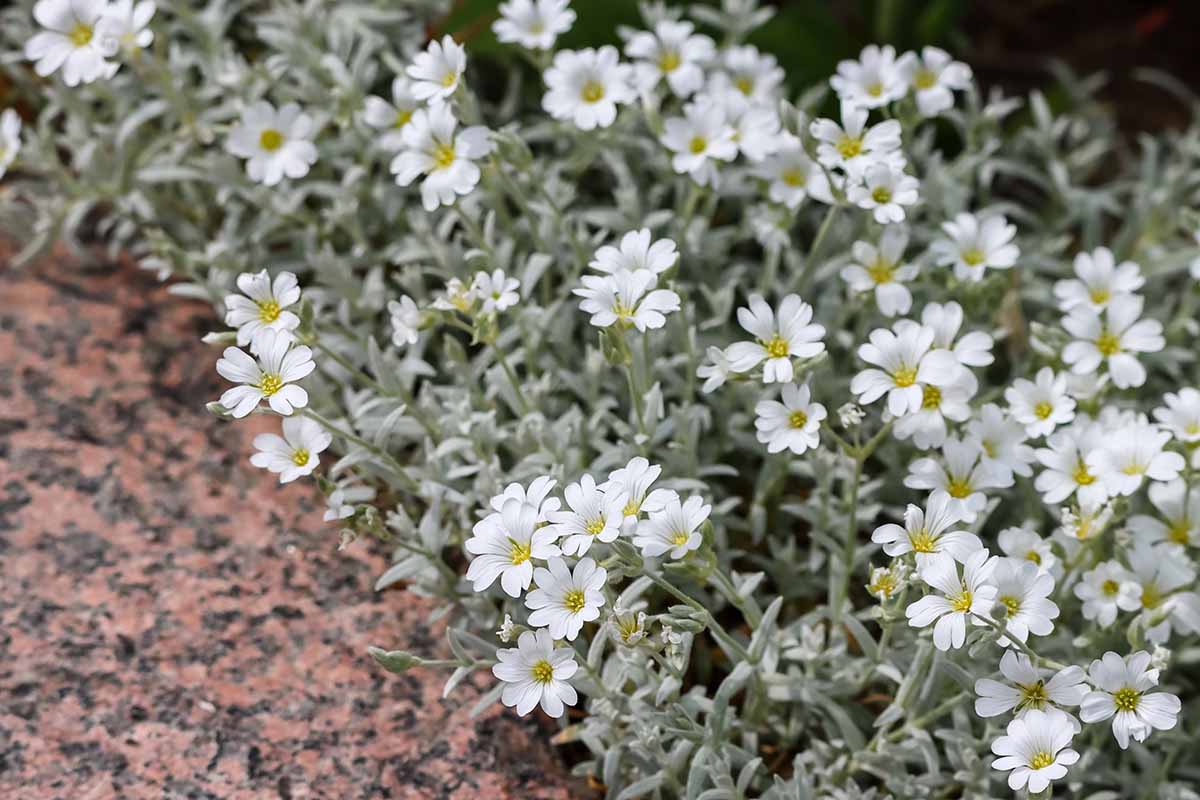
Plant in spring, after the last frost and space starter plants nine to 12 inches apart so they knit together into a continuous cover.
Light
Give this ground cover full sun – at least six hours of direct sun a day, for the best flowering and the most compact, dense growth habit.
In partial shade, snow-in-summer will still thrive but blooming may be reduced and the stems can become rather leggy, giving it a less carpet-like appearance.
A south- or west-facing aspect is ideal.
Soil
Poor, dry, sandy soil is exactly what this plant wants.
It tolerates clay, loam, and sand, and it grows across a wide pH range, roughly pH 6.0 to 8.0.
Drainage is important. Waterlogged soil will end up causing root rot.
Water
Once established, snow-in-summer is drought-tolerant and prefers dry to average moisture.
Overwatering will do more damage than allowing soil to err on the dry side. Supplemental water is rarely necessary except in the case of a prolonged drought or dry spell.
Temperature and Humidity
Snow-in-summer is hardy to Zone 3 and survives temperatures below minus 30°F, so winter cold isn’t a concern in most regions.
In regions with hot, humid summers, the foliage thins out, turns brown in patches, and becomes vulnerable to fungal disease. Shaded sites with poor air circulation make this worse.
Zone 7 is the practical southern limit, if you’re gardening further south, expect the center of the plant to die back by midsummer, even though the roots usually survive.
Fertilizing
There’s no need to fertilize snow-in-summer as it grows naturally in poor, rocky soil and doesn’t need the additional nutrients.
Rich soil and regular feeding encourage faster, more aggressive spreading and weak, leggy growth.
Cultivars to Select
When shopping you may come across C. biebersteinii, often called Bieberstein’s or Taurus snow-in-summer.
This is a separate species, but it lacks the stolons and rhizomes that contribute to the spread.
Its care is pretty much the same as C. tomentosum.
There are a few named C. tomentosum cultivars, generally bred to stay a bit more compact than the straight species.
Here are some to look out for:
Columnae
‘Columnae’ or more properly, C. tomentosum var. columnae is a dwarf variety that tops out at four to six inches tall and spreads to about two feet wide.
It’s denser and less rangy than the species, with white flowers from late spring into midsummer.
Olympia
‘Olympia’ forms a tidy clump with flower stems six to eight inches tall and up to 18 inches wide, flowering in May and June.
It has a more mounding growth habit than the species plant so tends to spread a bit less. It’s also somewhat more heat-tolerant, hardy in Zones 3 to 8.
Silver Carpet
Silver Carpet aka ‘Silberteppich’ is notable for its frosty, silver-gray foliage – more silvery than the species.
This cultivar produces six- to 12-inch flower stems, blooming a bit earlier from March to May in most regions.
Yo Yo
‘Yo Yo’ is pretty much identical to the species plant except that it spreads in a more mannerly fashion.
Maintenance
When the flowers fade, you can shear the spent flowering stems to prevent self-seeding. This isn’t necessary for the health of the plant but it can keep things looking tidy.
For large beds or mass plantings, you can mow on a high setting instead of shearing by hand.
Avoid shearing in fall, if you forget to do it after flowering, leave it until the following spring instead.
If the clump develops dead patches in the center, you can divide the plant to rejuvenate it.
Propagation
Snow-in-summer is easy to propagate from seed, by division, or from stem-tip cuttings.
From Seed
The species plant grows readily from seed and will happily self-sow in place.
You can start seeds indoors six to eight weeks before your average last frost date.
Prepare a seed tray with well-draining seed-starting mix, and press the seeds into the surface of the soil.
They need light to germinate so don’t cover with soil.
Set the tray in a location with bright, indirect sunlight and 65 to 75°F. Keep the soil evenly moist.
You can also direct sow outdoors in spring.
From Divisions
You can divide established clumps in spring or fall. Dig down about four to six inches deep and lift an existing clump or a section.
Carefully tease apart the roots and foliage to create fist-sized divisions. Each division should have one or more rhizomes as well as some foliage.
Replant as desired at the same depth.
From Cuttings
In early summer you can propagate from stem cuttings. Take two- to three-inch tip cuttings and strip the leaves from the lower half of the stem.
Prepare pots with a well-draining potting medium such as a mixture of sand and perlite, and insert the cut ends of the stems into the medium.
You can place a humidity dome over the pot or a plastic baggie propped up to prevent it making contact with the cuttings.
Keep the medium evenly moist but not waterlogged until the cuttings have produced roots, at that point they are ready to transplant.
Transplanting
To transplant seedlings, divisions, rooted cuttings, or nursery starts, prepare the planting area by working the soil four to six inches deep to remove debris and rocks.
Amend as needed to ensure that the soil drains well.
Dig holes the same depth and width as the root ball of the plants and set them nine to 12 inches apart.
Water in well and keep the soil evenly moist but not waterlogged until they are established.
Pests and Disease
Snow-in-summer is generally unbothered by pests and doesn’t tend to suffer from disease if grown in optimal conditions.
Most problems arise from excess moisture in the soil or shady, humid conditions.
The usual garden pests like aphids, spider mites, and thrips may appear in less-than-ideal conditions.
Root rot is a direct result of poorly-draining, waterlogged soil. Symptoms include lack of flowering, foliage dieback, and if you dig up the roots, you’ll find they are black and soggy.
Fungal leaf spots may appear in crowded, humid conditions.
These issues can be avoided by planting in full sun locations and well-draining soil.
A Silver Carpet
The silvery foliage of snow-in-summer forms a low, felted carpet that is covered in a heavy flush of small white flowers in late spring and early summer.
This drought-tolerant ground cover is an easy way to fill sunny, well-drained spots with texture and color for most of the year.
Are you growing snow-in-summer? Let us know in the comments section below!
And for more flowering ground cover ideas, add these guides to your reading list next: