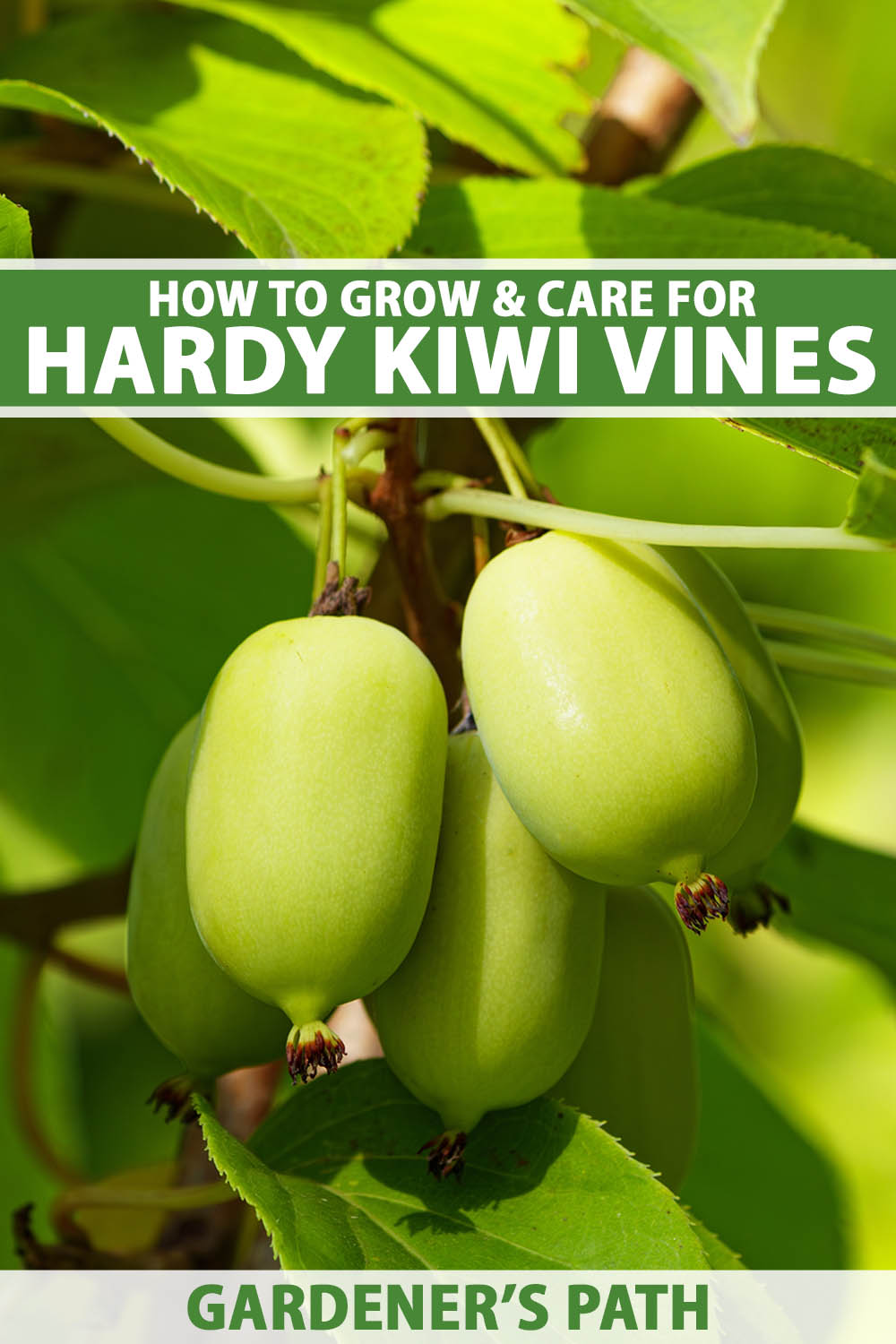
Actinidia arguta, A. kolomikta
The zingy flavor of a kiwifruit is unlike anything else. It’s sweet but also tangy, with notes of strawberry and pineapple, kind of tropical but not quite. And is that a hint of mint?
Take all that and wrap it up in a brown wool sweater, and you’ve basically described a kiwifruit. If you adore kiwifruit but live in a chilly area, you might think you’re out of luck.
Or, at least, that’s what a lot of gardeners think. But then there are hardy kiwis – all the kiwifruit goodness minus the fuzzy sweater and tropical climate requirements.
We link to vendors to help you find relevant products. If you buy from one of our links, we may earn a commission.
The fuzzy kiwifruit you find in supermarkets is Actinidia deliciosa, which can only be grown in Zone 8 and warmer.
Hardy kiwis belong to the same genus but are different, cold-tolerant species.
You can find hardy kiwis that grow all the way down to Zone 3, so between hardy types and tropical types, gardeners almost anywhere can enjoy the fruits.
In this guide, we’ll focus on how to plant and care for the hardy types, which includes Actinidia arguta and A. kolomikta. Here’s what’s coming up:
What You’ll Learn
Not only are the fruits delicious, but some of these plants are so beautiful that they can be used purely as ornamentals. Consider them an ornamental with a fruit bonus, if you’d like.
Hardy kiwis are deciduous, twining woody vines native to temperate forests of eastern Asia, including Japan, Korea, northern China, and the Russian Far East.
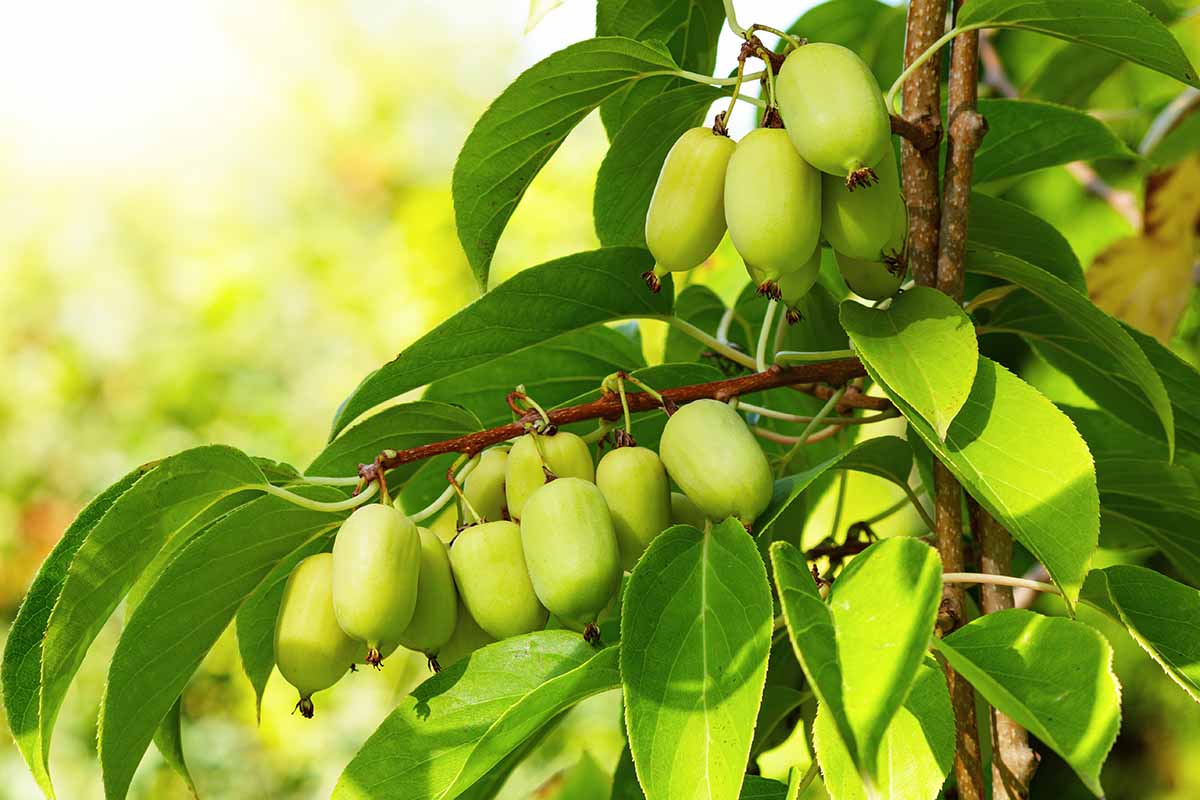
A. arguta, commonly called hardy kiwi or kiwiberry, is a vigorous grower that can climb 25 to 30 feet in cultivation, though in its native habitat it may scale trees up to 100 feet.
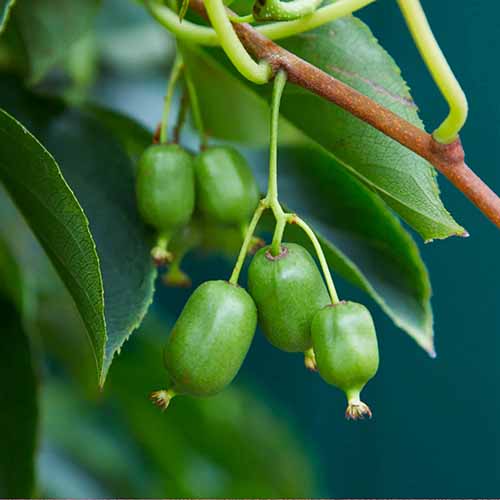
The smooth-skinned, grape-sized fruits are significantly smaller than the fuzzy kiwifruit sold in supermarkets.
Quick Look
Common name(s): Arctic, baby, cocktail, dessert, grape kiwi, hardy kiwifruit, kiwi berry, northern kiwi, Siberian gooseberry, Chinese gooseberry, or Siberian kiwi
Plant type: Perennial creeping vine
Hardiness (USDA Zone): 3-9
Native to: China, Japan, Korea, Russia
Bloom time / season: Flowers in spring, fruits in fall
Exposure: Full sun
Soil type: Loose, rich, loamy, well-draining
Soil pH: 5.5-7.5, slightly acidic to neutral
Time to maturity: 5 years
Mature size: 20 feet tall and wide
Best uses: Ornamental or edible vine
Taxonomy
Order: Ericales
Family: Actinidiaceae
Genus: Actinidia
Species: Arguta, kolomikta
A. kolomikta, known as Arctic kiwi or super-hardy kiwi, is the hardiest species in the genus, tolerating temperatures down to -40°F once fully dormant.
This makes it suitable for USDA Zone 3. This species is less vigorous than A. arguta, typically growing 15 to 20 feet, and produces even smaller fruits.
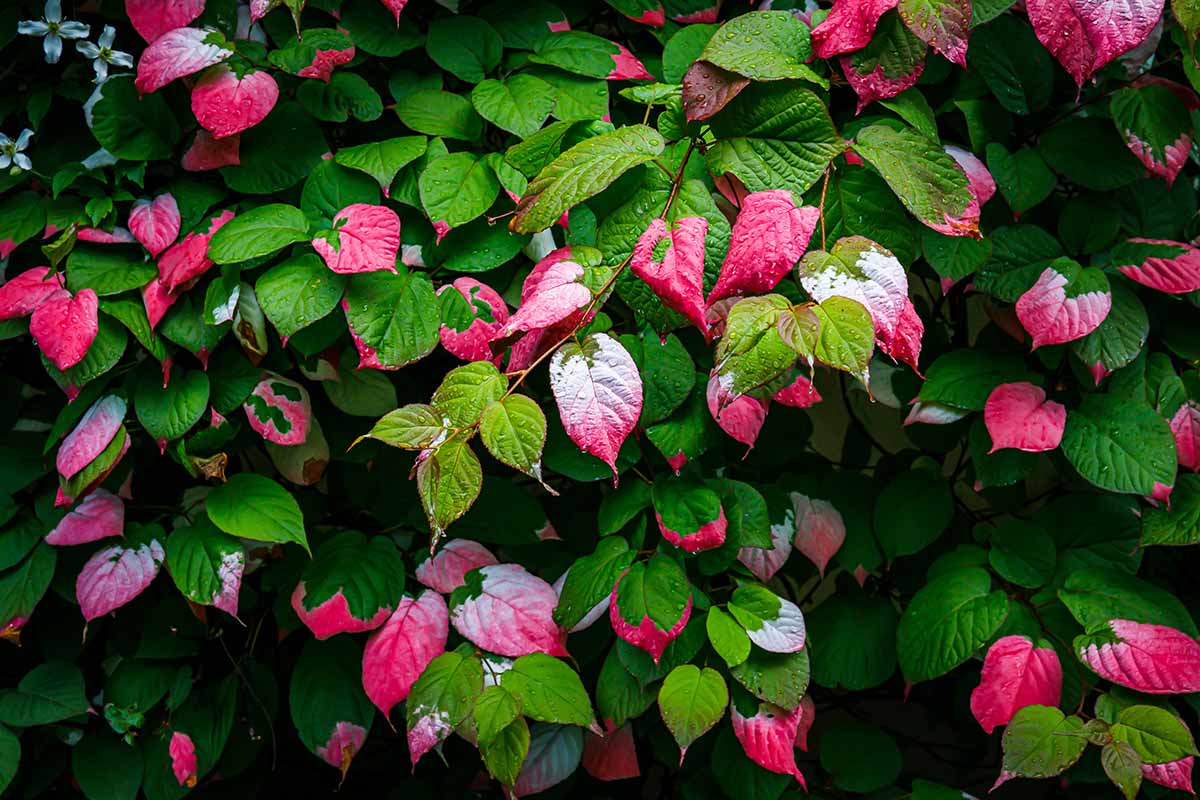
This plant is particularly valued as an ornamental for its striking variegated foliage, with leaves that develop random patches of pink and white coloration, especially on male plants.
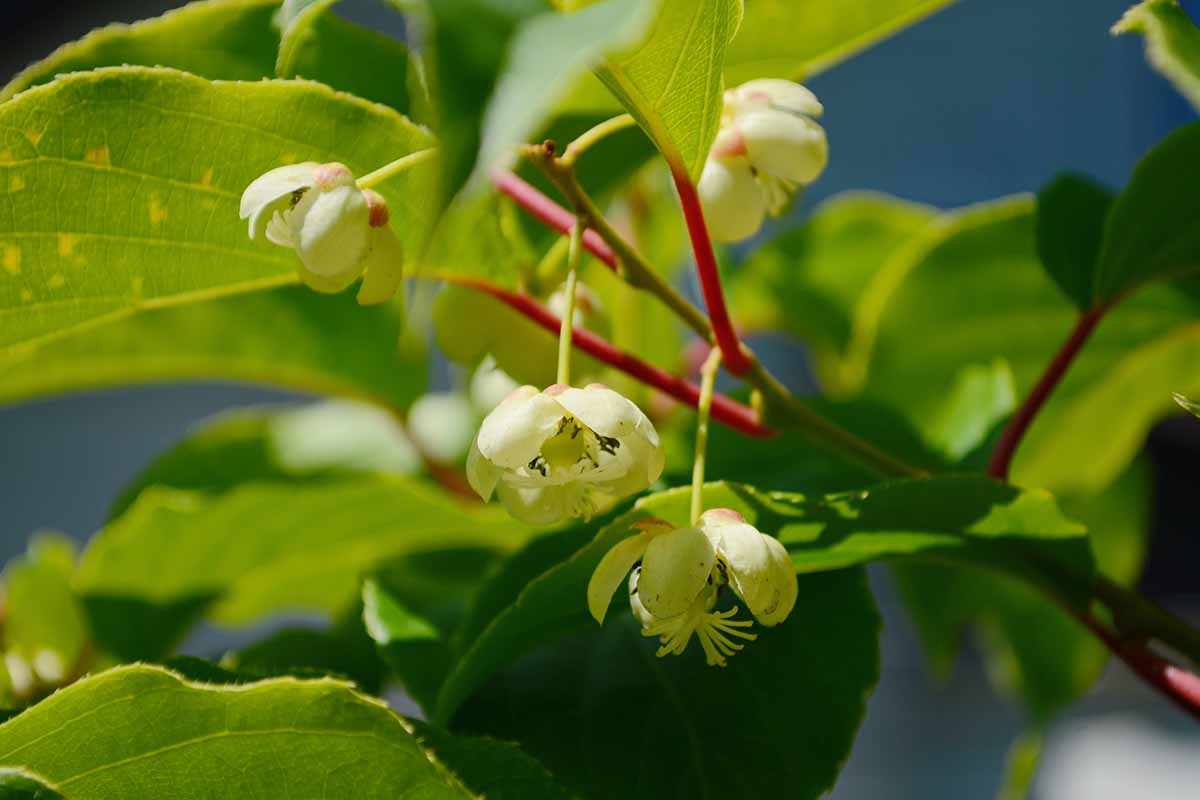
Hardy kiwis are dioecious, which means male and female flowers grow on separate plants.
You’ll need at least one male plant for five or six female plants to ensure pollination and fruit set.
Even though the fruits of hardy kiwis are smaller, they’re even sweeter than the tropical types. So, if you prefer a sweet treat, you’re going to love these.
How to Grow
Because these are vines, you definitely want to give them something to climb – whether that’s a fence, trellis, old pallet, or anything else you have handy.
It’s easier to have the support in place before you plant, but if you forgot, put it in place as soon as you can.
Make sure the structure you choose will support the weight of the vines and fruit.
Light
Give these plants full sun for the best fruit production. They may tolerate partial shade, but flowering and fruiting will be reduced in the absence of sufficient sunlight.
Soil
The soil should be loose, rich, and loamy, with a slightly acidic to neutral pH between 5.5 and 7.5. When I say well-draining, that’s no joke. Even remotely heavy soil will kill these plants.
Typically, they’ll survive the first season and won’t return the next.
Temperature
Hardy kiwis are tough and some can even survive down to -40°F during dormancy.
They can obviously tolerate cold weather, but aboveground growth can be damaged by a surprise frost or freeze.
You might want to protect your plants if there is an unexpected frost in the forecast.
When it comes to heat, they’re pretty adaptable. They won’t suffer up to 90°F and even briefly above that.
Water
Keep the soil moist at all times during the growing season. The top inch or so can dry out, but don’t let it get drier than that.
Hardy kiwis are particularly susceptible to root rot in waterlogged conditions.
Fertilizer
Feed the vines with an all-purpose fertilizer in the spring and again as the fruits start to develop.
A product like Down to Earth’s All Purpose food has the right mixture to keep fruiting vines happy.

Down to Earth All Purpose Food
Grab some at Arbico Organics in one-, five-, or 15-pound boxes.
Cultivars to Select
Remember I mentioned that kiwiberries are dioecious? When shopping, make sure you choose at least one male plant for every five or six females.
The male plant won’t produce fruit, they are in charge of making the pollen that pollinates the flowers that will turn into the fruit. Keep the male within 50 feet of the female plants.
Anna
“Anna” is technically named ‘Ananasnaya,’ but that’s a mouthful so she goes by Anna for short.
Ananasnaya is Russian for pineapple-like, an homage to the fruit’s flavor.
This cultivar is flavorful, but I think it’s particularly cool because the skin turns purple-red in full sun exposure.

Anna is one of the most popular options out there, both because it’s tough and the fruit has an excellent flavor.
You can find Anna vines available at Fast Growing Trees in two- and three-gallon containers along with the male pollinator ‘Meader’ (described below).
Arctic
Arctic kiwi isn’t a cultivar, it’s the common name for the species A. kolomikta. This vine can tolerate extremely cold temperatures, surviving down to -40°F.

There are numerous cultivars like the females ‘Emerald’ and ‘September Sun,’ and the male ‘Pasha.’
Many cultivars are grown as ornamentals for their striking pink, green, and white leaves.
The fruits aren’t as flavorful as the A. arguta cultivars, but they’re still quite good.
Think of it as an ornamental that offers up some tasty treats rather than an edible and you’ll be in heaven.
If, like me, you’re interested in plants that do double-duty in the garden, I can’t recommend an Arctic cultivar enough.
Issai
We talked about needing a male pollinator, but that’s actually not true with this one. ‘Issai’ is self pollinating, which means no second plant is needed.

This cultivar is a hybrid of A. arguta and A. polygama, and it isn’t the most vigorous and the fruit is smaller than average, but you’ll be enjoying the sweet treats even with a single plant.
Plus, it tolerates the heat and humidity that would make other hardy kiwis struggle.
You can find plants in #2 containers at Nature Hills Nursery for your singleton growing needs.
Geneva
‘Geneva’ is a prolific producer of medium-sized, round fruits with a sweet, honey flavor.
This cultivar was discovered at Hedrick Hall, home of agricultural research at the Cornell Experiment Station in Geneva, New York.
It’s resistant to pests, tolerates heat, and doesn’t even flinch at high humidity.
There are actually several “Geneva” plants in the series, and ‘Geneva 3’ is considered the best. But any of them are good options.
Meader
Good old ‘Meader’ is a reliable and vigorous male plant. You’ll often find it paired with female plants.
On its own, it’s a vigorous grower with heaps of flowers. It was named for its breeder, Dr. Edwin Meader, a botanist from New Hampshire.
Prolific
While most hardy kiwis need a pollinator, ‘Prolific’ lives up to its name even without a pollinator.
If you give it a male friend, you will have more fruits, but you will still have tons regardless.
The sweet, oblong fruits can take on a beautiful blush tinge, so they’re as pretty as they are delicious.
You can find ‘Prolific’ vines available at Fast Growing Trees in two-gallon containers.
Maintenance
While these plants are certainly able to survive in low temperatures, it doesn’t mean you’re completely in the clear when it comes to inclement weather.
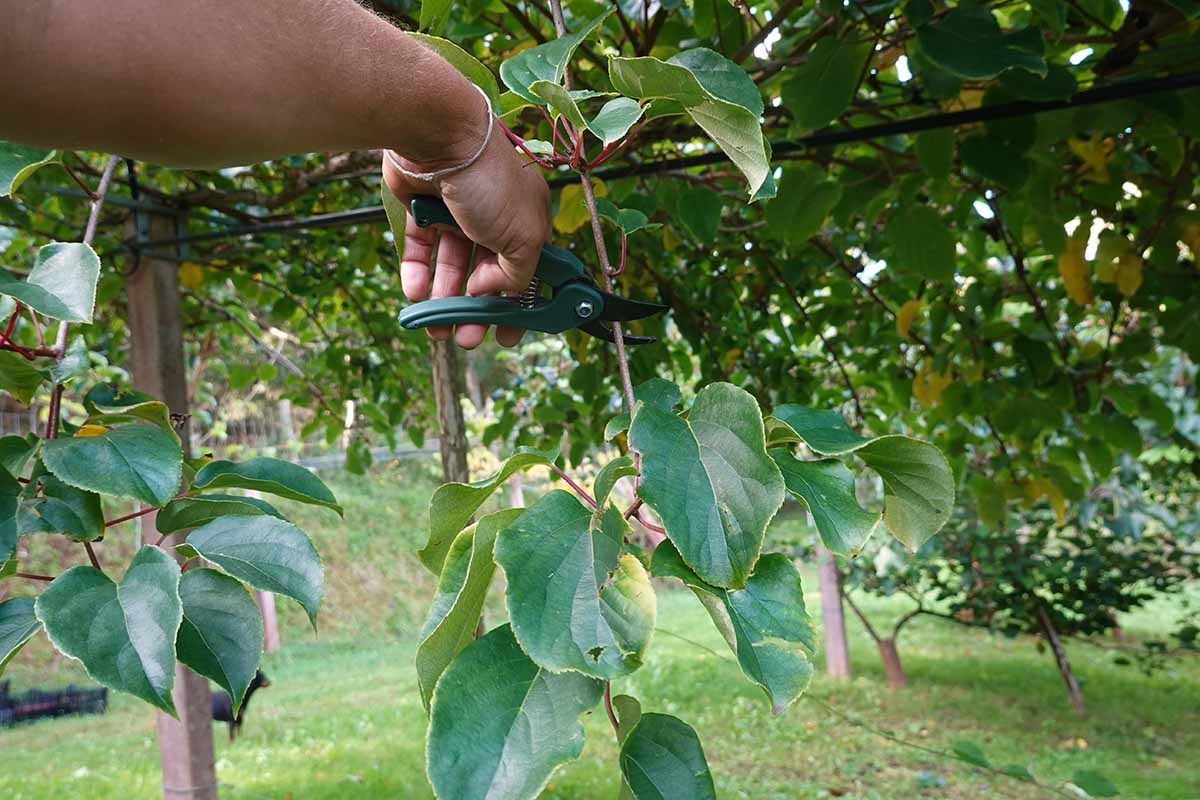
In the spring as the vines start developing shoots, they’re sensitive to frost.
If the young shoots have started developing and there’s frost in the forecast, cover your plants with frost cloth or you risk shoot damage.
If that happens, you will need to trim off the dead areas. The plant will put on new growth and will flower and develop fruits, but the production will probably be reduced.
The flowers are also susceptible to frost.
They develop later than the shoots and usually dodge late frosts, but if there’s cold weather in the forecast when the plant is in flower, be sure to cover them or fruit may be reduced.
During the dormant winter remove most of the wood that produced fruit in the year prior. Leave first year canes in place. Male plants can be cut back nearly to the ground.
Propagation
Hardy kiwis can actually be a bit aggressive in some areas.
That can be bad if you’re trying to control the spread, but it also means it’s an easy plant to propagate. And hardy kiwis are definitely easy to propagate!
Seeds have been the least successful method for me, so let’s get that out of the way.
From Seed
If you choose this route, you’ll need to stratify the seeds in moist sand in a sealed container in the refrigerator for two months.
Then sow them on the surface of trays filled with potting medium. Set in a bright location and keep the soil moist.
Once seedlings develop several true leaves and all risk of frost has passed, harden them off for a week before planting outside.
From Cuttings
In the spring, you can use softwood or hardwood to start new plants. Look for a healthy, pliable stem that is about six inches long.
The diameter doesn’t really matter so long as the wood is pliable but firm. Take cuttings of six to eight inches long.
Strip off all but one or two leaves and keep the cuttings in water until you’re ready to plant.
Fill pots of any size with potting medium. If you use large pots, you can put multiples in each pot. A four-inch pot is good for one cutting.
Poke a hole in the medium and insert the cutting. Firm the soil around the stem and water the soil well. Place the cuttings outside in a sunny spot and keep the soil moist while they grow.
It usually only takes a few weeks before the cuttings will develop roots and new growth.
Once you see new growth, gently remove the cutting and look for roots. If roots are present, you can transplant into the garden.
Transplanting
The method for transplanting a hardy kiwi started from seed, cuttings, or one that you purchased at the store is all the same.
Wait until the last predicted frost date has passed before you put your plants in the ground.
Dig a hole in the ground that is about the size of the growing container.
Remove the plant from the pot and loosen up the roots a bit. Put the plant in the hole, fill it in, and firm the soil around the base. Water well and add more soil if it settles.
Place your plants about 15 feet apart.
Pests and Disease
Spider mites are the only serious pest you’ll encounter, and you usually only see these in the heat of a dry summer.
They suck the sap out of plants, causing yellow stippling and reduction in plant vigor.
You can address a spider mite infestation in several ways, including spraying the plant with water to knock them loose or applications of insecticidal soap.
Learn more in our guide to spider mites.
Occasionally, Japanese beetles will feed on the leaves, but they aren’t a serious problem.
On the disease front, Phytophthora crown and root rot is the one to watch for. New shoots will die, and developing leaves will turn yellow and stop growing.
Underground the roots will rot and the plant will likely fail.
I mentioned growing in well-draining soil, and this disease is the reason why. It only happens in overwatered or heavy soils.
So if you plant in the appropriate soil and avoid overwatering, you won’t have to worry about it. Infected plants will need to be dug up and disposed of as there is no cure.
Harvesting
The vines don’t mature and start producing fruit until they’re at least five years old, but they might take even longer. Some don’t produce until they’re 10 years old.
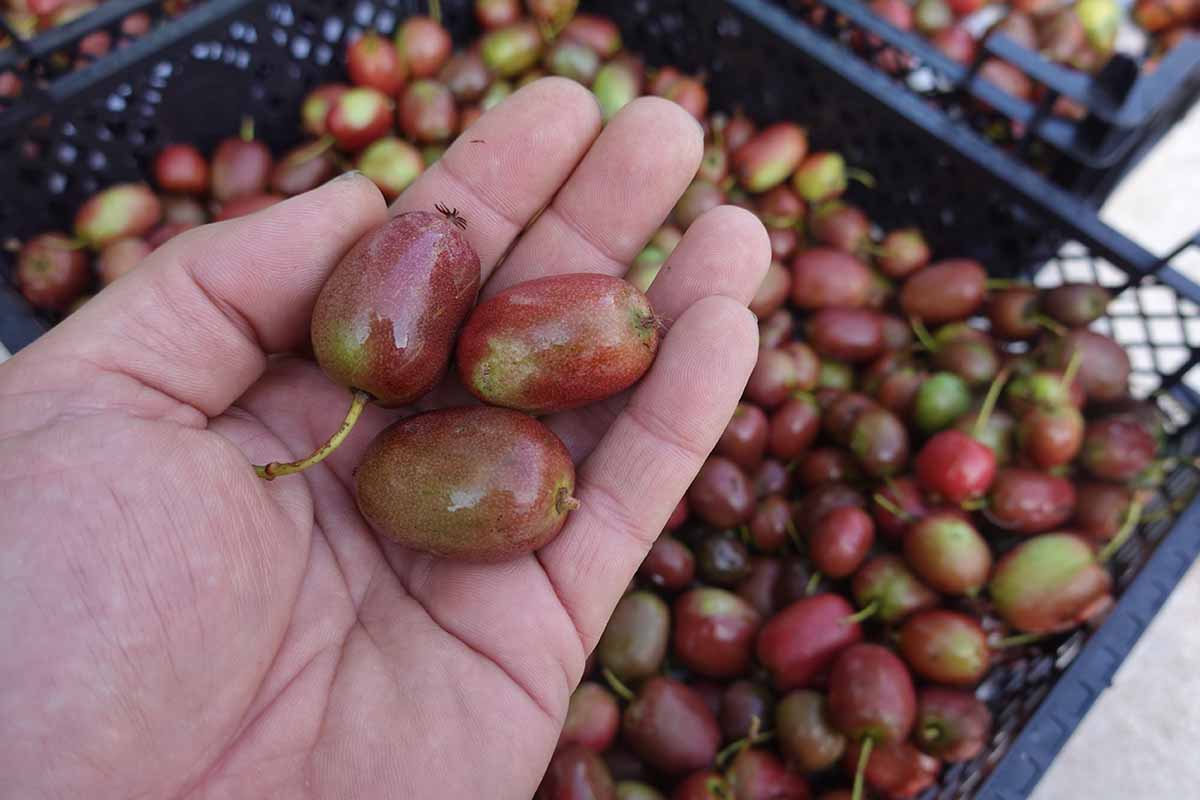
The fruit will reach its mature size during the summer, but you have to wait until it fully matures before harvesting for that sweet, sweet flavor.
You can test to see if the fruits are ready by plucking one or two and leaving them on the counter for a few days. Then, pop one in your mouth.
Does it taste incredible? If so, it’s harvest time! If they aren’t super sweet, give them a few more days and try again.
These fruits will keep for up to a week in the refrigerator in the crisper drawer. Don’t wash them before putting them in storage.
Cooking Ideas
I know this makes me exceptionally lazy, but I hate peeling fruit. What I love about hardy kiwi is you can pop them right into your mouth, no peeling required.
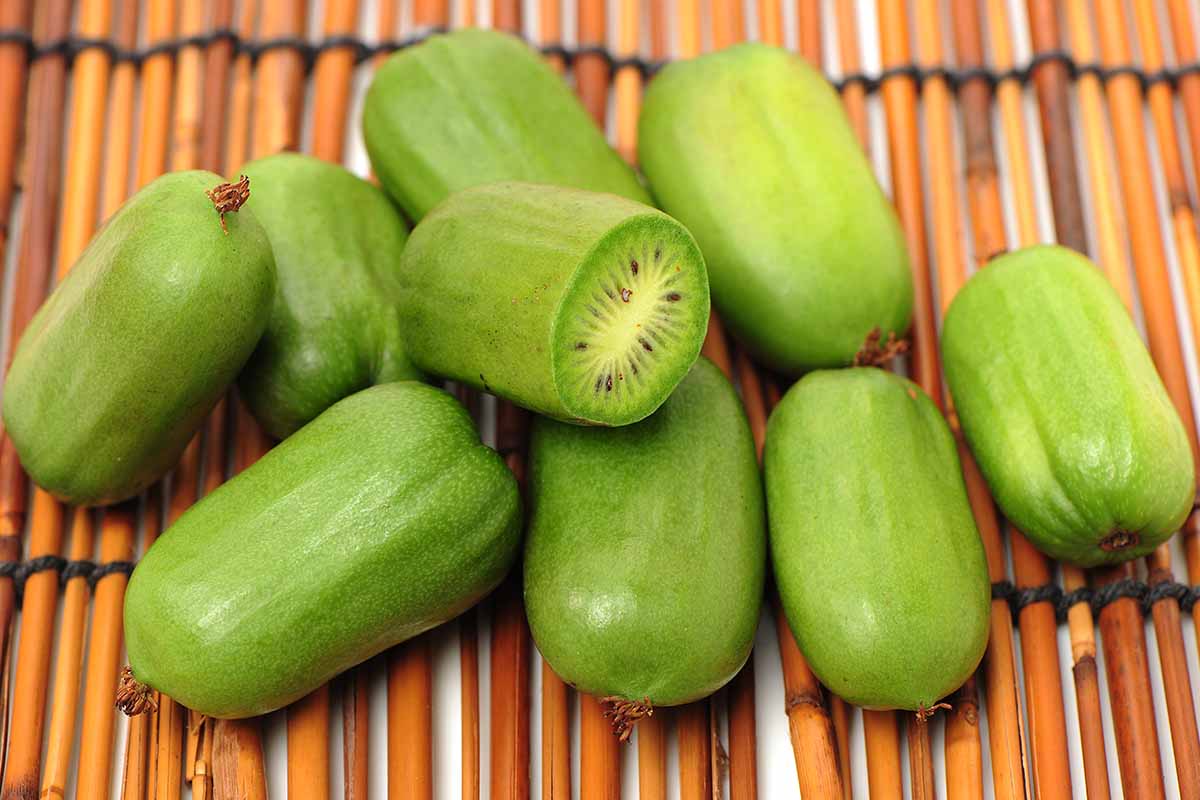
I also love using them to make fruit leather. They can be cooked onto the stove into a quick jam, chopped on top of deserts, or baked into cakes.
Tropical Flavor in Practically Any Climate
If you have tropical dreams in a temperate region, hardy kiwis are the solution. They’re low-maintenance vines that return year after year with heaps of super sweet fruits.
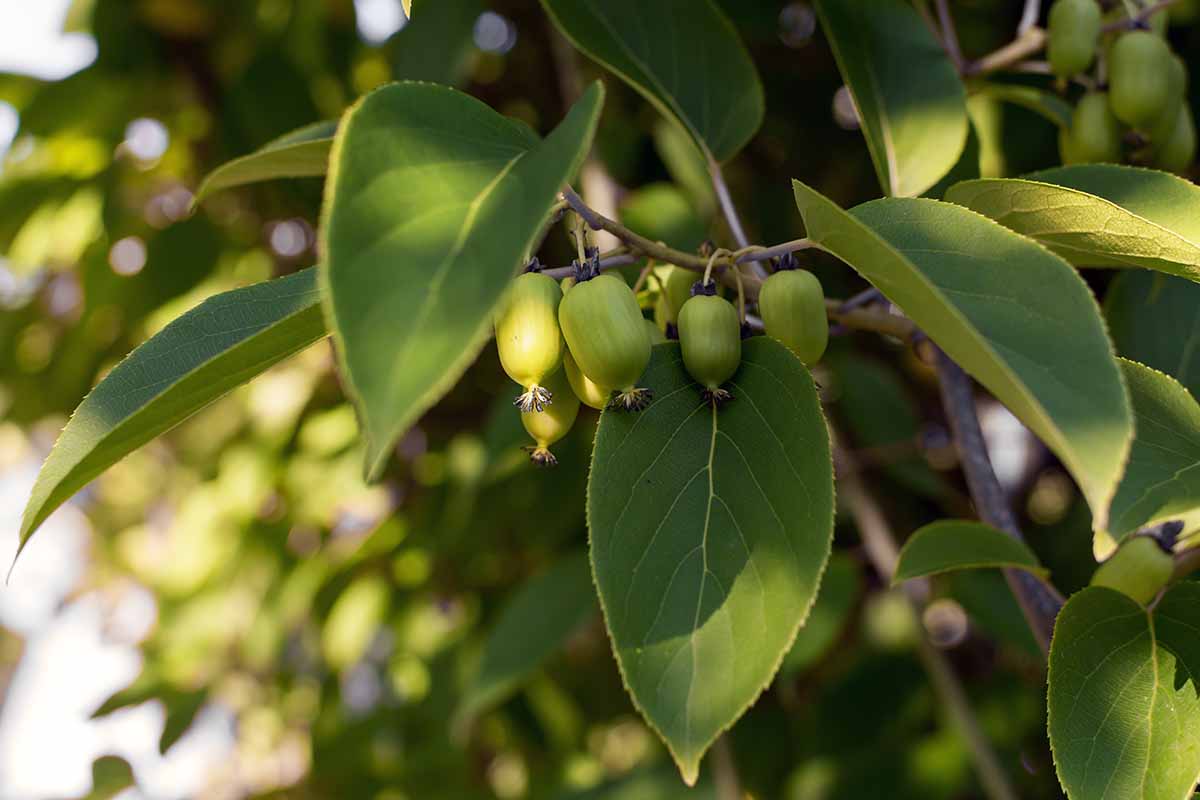
Are you growing hardy kiwi? I’d love to hear your recipe ideas. Please share with us in the comments section below!
And for more information about growing fruit in your landscape, check out these guides next: