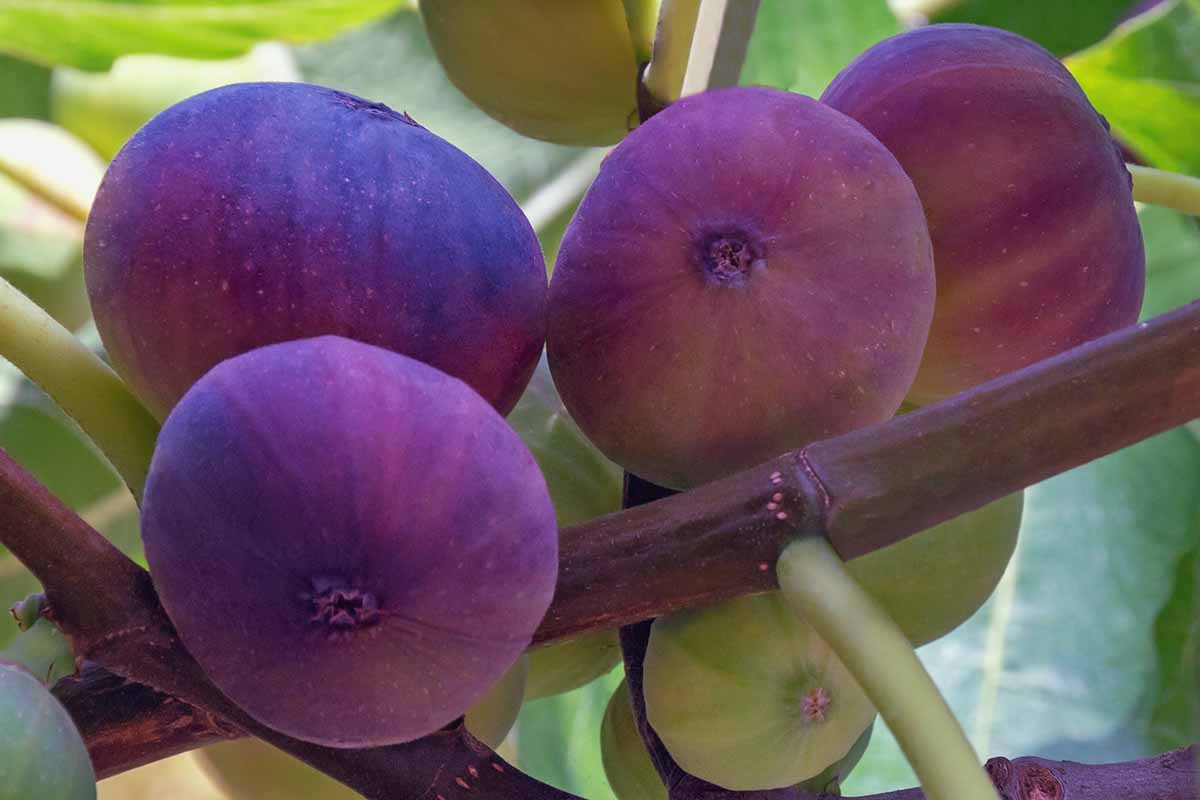
Figs (Ficus carica) are amazing fruits, with sweet flavors, a jammy texture, and surprising crunch – and in the right conditions they’re easy to cultivate in the home garden as well.
They grow readily in full sun with only a little maintenance and have decent cold hardiness, typically falling in the range of USDA Zones 7 to 10 with some varieties suitable for Zone 6.
We link to vendors to help you find relevant products. If you buy from one of our links, we may earn a commission.
Our guide to the best cold hardy figs dishes on solid performers for colder climes.
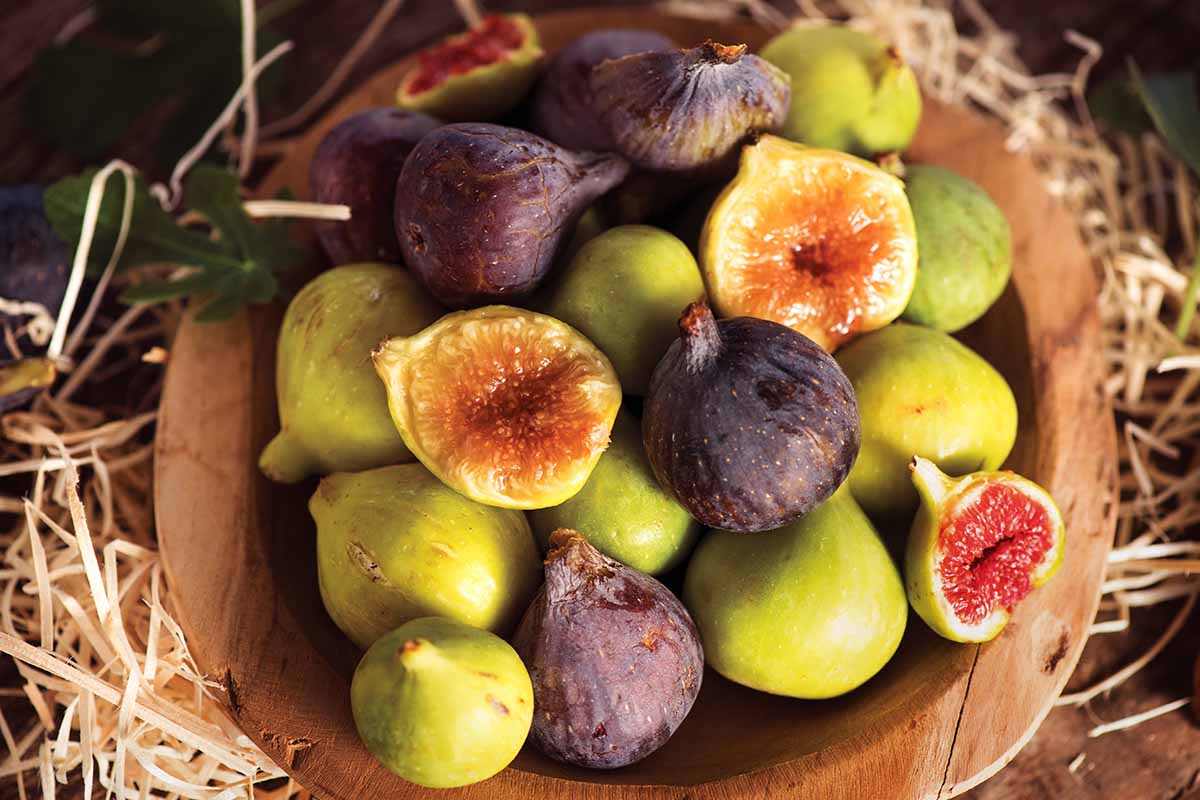
The fruits are available in a wide array of colors, shapes, and sizes, with each variety offering its own unique flavor and texture.
Standard trees grow from 12 to 30 feet tall but there are also noteworthy compact cultivars in the range of six to 12 feet that are ideal for smaller gardens or container cultivation.
Most varieties grow in a range of climates, but some are susceptible to cracked or spoiled fruit when exposed to high humidity or heavy rainfall.
So, to narrow the list, I’ve honed the many cultivars to some of the most reliable and productive performers to help you find the one(s) that are perfect for your needs!
Are you ready for a feast of Ficus fruits? Then let’s jump into 13 of the best fig varieties for the home garden.
13 of the Best Fig Tree Cultivars
For the best fig tree experience, there are a few factors to consider before choosing the cultivar you want to grow.
The first is your local climate. This is because during the final ripening stage, the fruits are affected by environmental factors.
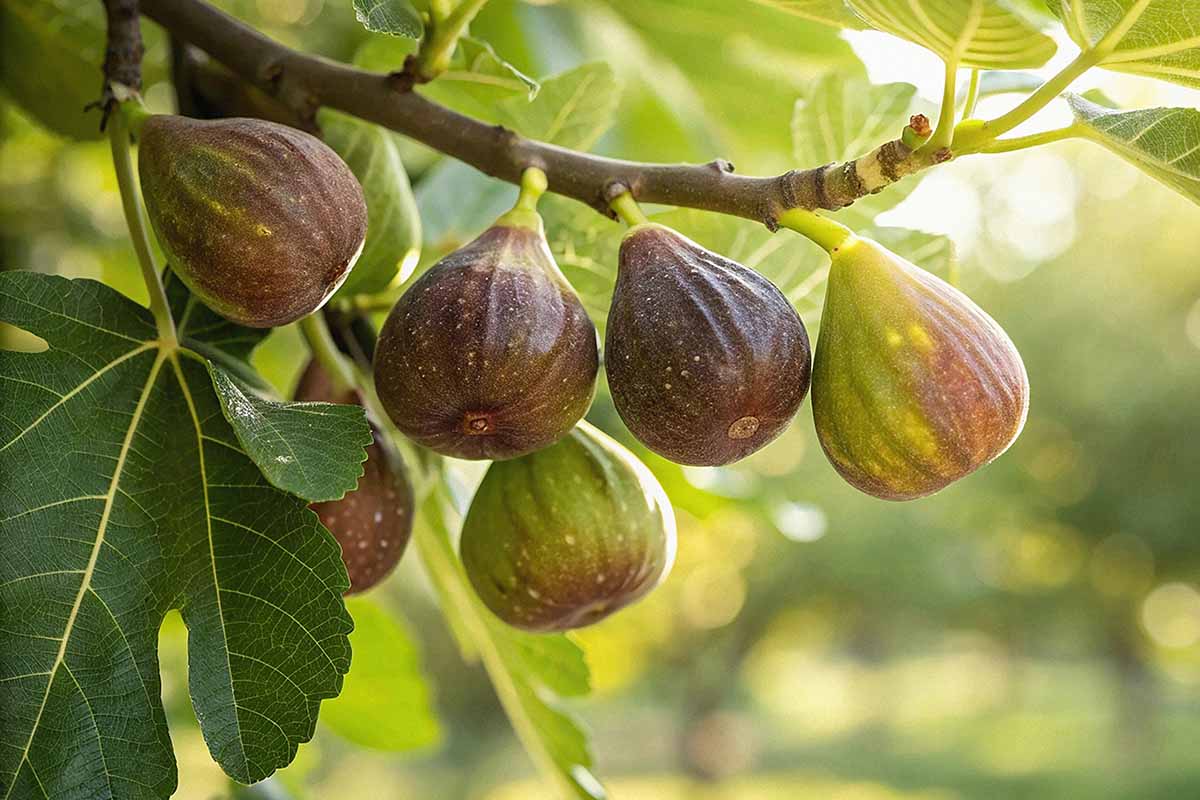
Their soft skin and an open eye (the spot at the blossom end or bottom of the fruit) can absorb water from humidity or rainfall, leading to issues such as on-the-tree fermentation, mold, and splitting.
For those who garden in areas with high humidity or rainfall, cultivars with a closed eye and resistance to cracking and moisture are the best option.
And for those who’d like to give a fig about growing figs, but live outside of their hardiness range, the compact varieties make excellent potted plants.
After the harvest, move the plants into a suitable sheltered spot for winter. Our guide to growing figs has all the care and cultivation details.
The final factor to consider is taste.
Depending on the cultivar, flavors are generally sweet with notes of brown sugar, caramel, or honey.
They’re fruity as well, often with an overture of berries, cherries, grapes, or melons. And some can have nutty or spicy hints! Choose those that work best with your palate.
Also, Ficus trees are self-pollinating, so they don’t need to be grown in multiples – a single tree is all that’s needed for an abundant harvest.
Many varieties produce two crops if your growing season is long enough.
The first, or breba crop is typically a light offering at the start of summer and the second, or main crop ripens anytime from midsummer to mid-fall.
Now it’s time to look at some favorites and their characteristics!
1. Black Mission
‘Black Mission’ features medium sized fruits with thick purple skin, light red flesh, and a delectable flavor combination of caramel, melon, and strawberry.
These figs are ideal for baked goods, fresh eating, and drying.
The large trees grow 15 to 30 feet tall and produce a heavy breba crop plus a main crop in late summer through early fall.
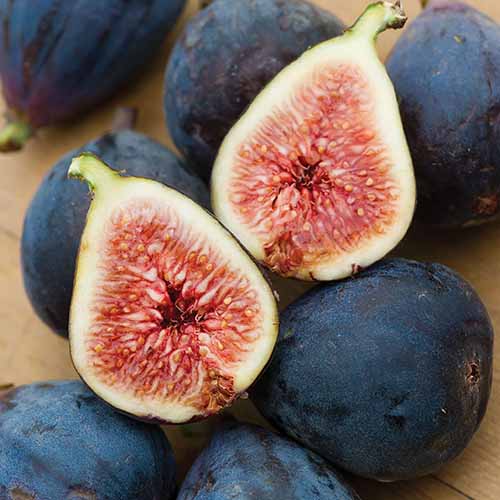
‘Black Mission’ fruits can crack in areas with high moisture but are well-suited for hot, dry climates. Hardy in Zones 6 to 10.
You can find potted plants available at Burpee.
2. Brown Turkey
Highly popular with home gardeners, ‘Brown Turkey’ sets two crops, with trees generously bearing a heavy, midseason main crop of large mahogany-purple fruits with orangey-pink flesh.
Flavors are mild and slightly nutty with tones of brown sugar, caramel, and peach, making these figs a popular choice for baked goods, canning, and jams.
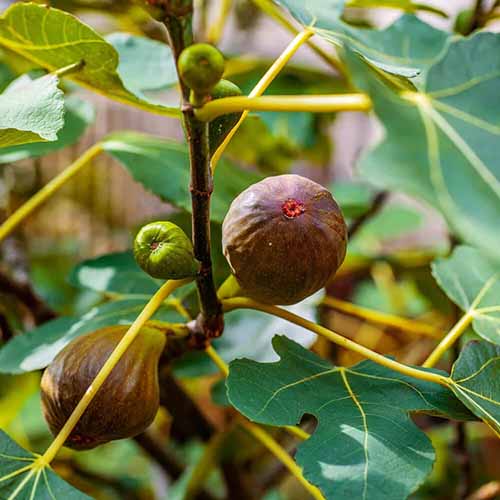
Performing best in hot, dry climates, high humidity and rainy conditions can cause splitting and spoilage.
Trees grow 20 to 25 feet tall and are hardy in Zones 7 to 10.
Small saplings in two-and-a-half-gallon pots are available at Plants By Mail.
3. Celeste
An early ripening variety, ‘Celeste’ produces small fruits with a blue, brown, or grey skin and amber to dark raspberry red flesh.
The sweet fruits ripen early to midsummer with a mild, sugary flavor and notes of melons or concord grapes.
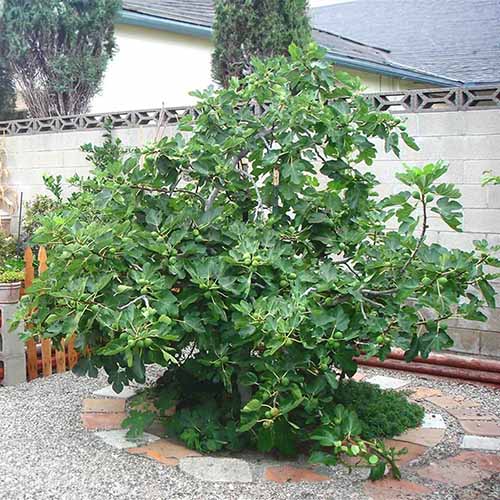
‘Celeste’ is noted for its resilience, with fruits that rarely split – a good choice in areas with high humidity. Hardy in Zones 6 to 10.
Trees in one- and three-gallon pots are available at Perfect Plants Nursery.
4. Chicago Hardy
Prized for its outstanding cold hardiness, ‘Chicago Hardy’ aka ‘Bensonhurst Purple’ produces small to medium-sized fruits with a mahogany skin and wine red flesh.
Fruits are typically harvested in late summer to early fall and feature sweet and fruity flavors with notes of brown sugar, cherry, or raspberry.
These figs are ideal for baked goods, drying, fresh eating, savory dishes, plus jams and preserves.
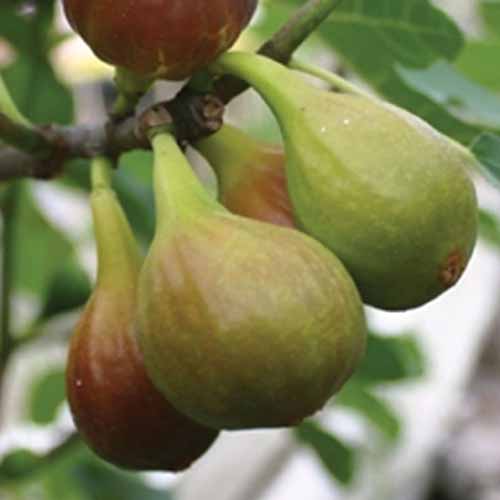
Adaptable to a range of climates, trees grow up to 20 feet tall and are hardy in Zones 6 to 10.
Young saplings are available at Burpee.
Learn more about growing ‘Chicago Hardy’ here.
5. Desert King
A good choice for every climate, ‘Desert King’ develops medium-sized, apple-green fruits with dark red flesh.
Producing a breba crop and early main crop, the flavors are sugary with mild notes of blueberries and grapes and are widely used for canning, drying, and fresh eating.
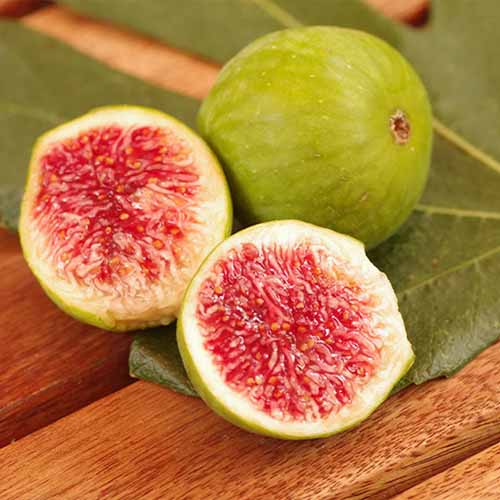
Trees grow up to 20 feet tall and are hardy in Zones 6 to 10.
Potted trees two- to three-feet-tall are available at Fast Growing Trees.
6. Fignomenal
Compact and productive, ‘Fignomenal’ develops large, late-summer crops of mid-sized dark brown fruits with carmine pink flesh.
The sweet fruits have a complex berry flavor with nutty notes that makes them well suited for chutney, fresh eating, preserves, and savory or sweet dishes.
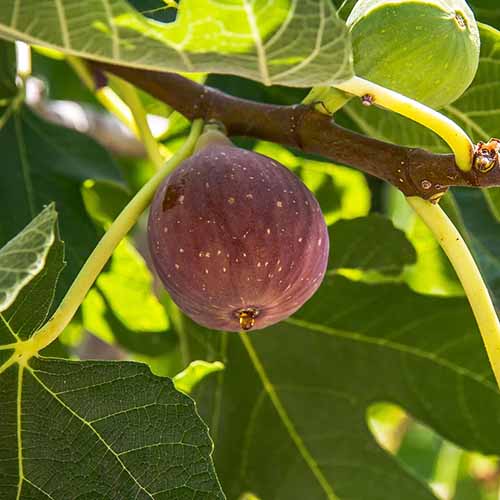
‘Fignomenal’ has good resistance to rain and splitting and the compact size of three to five feet is ideal for containers. Hardy in Zones 7 to 9.
Trees in one- or three-gallon pots are available at Perfect Plants Nursery.
7. Kadota
One of the oldest cultivated varieties, ‘Kadota’ produces medium sized fruit with a thick chartreuse skin and rich amber flesh.
Producing a dual crop with an early main crop harvest, they feature a classic honey flavor that’s delicious for baked goods, canning, drying, and fresh eating.
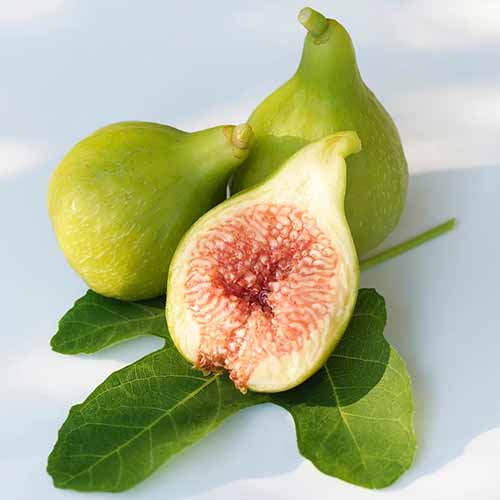
Trees reach 15 to 25 feet tall and perform best in hot, dry climates. Hardy in Zones 6 to 10.
Plants in one- or three-gallon containers can be found at Perfect Plants Nursery.
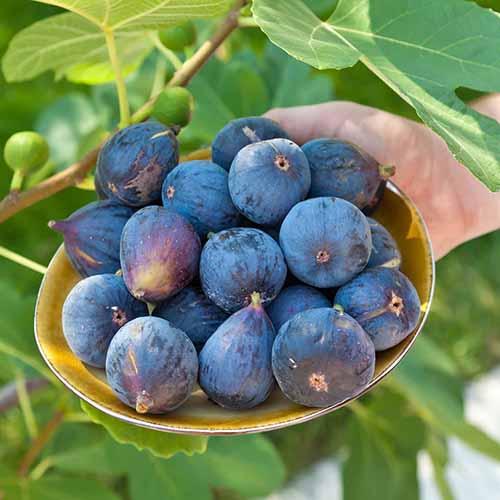
8. LSU Purple
‘LSU Purple’ gives a heavy harvest in early to mid-season, developing medium sized fruits with a mahogany to purple skin and amber or strawberry colored flesh.
The tasty fruits have notes of berries, melon, and brown sugar with a hint of spice that can be enjoyed in baked goods, jams, preserves, relishes, and savory or sweet dishes.
‘LSU Purple’ is one of the few varieties resistant to root-knot nematodes, making it a good choice for gardens where these pests are problematic.
However, they need more water than other varieties and the soil must be kept moist for fruits to ripen.
Growing up to 10 feet tall, trees have good heat resistance and fruits are resistant to cracking. Hardy in Zones 7 to 10.
Plants in one- or three-gallon pots are available at Perfect Plants Nursery.
9. Letizia
A good choice for temperate climates, ‘Letizia’ provides bountiful, midsummer harvests of medium size, dark purple fruits with amber to grapefruit colored flesh.
The delicious figs have berry notes with hints of caramel and are ideal for baking, drying, fresh eating, and jams.
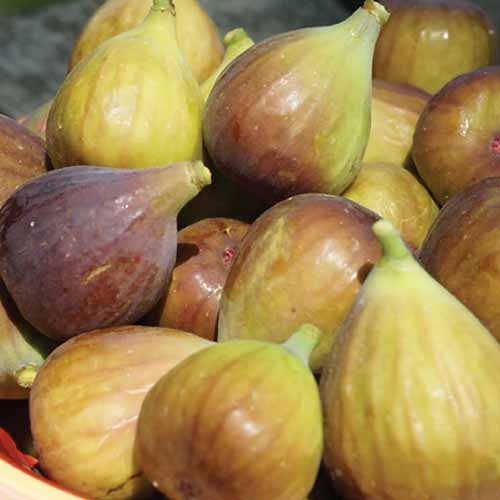
Trees grow eight to 12 feet tall and are hardy in Zones 6 to 10.
Container plants are available at Burpee.
10. Little Miss Figgy
A compact plant that’s an ideal choice for small gardens or containers, ‘Little Miss Figgy’ produces an abundance of small to medium fruits with a purple skin and amber flesh.
The main crop is harvested in late summer and early autumn, with fruits offering a complex berry flavor that works with savory and sweet dishes or in jams and preserves.
‘Little Miss Figgy’ also has good heat and split resistance.
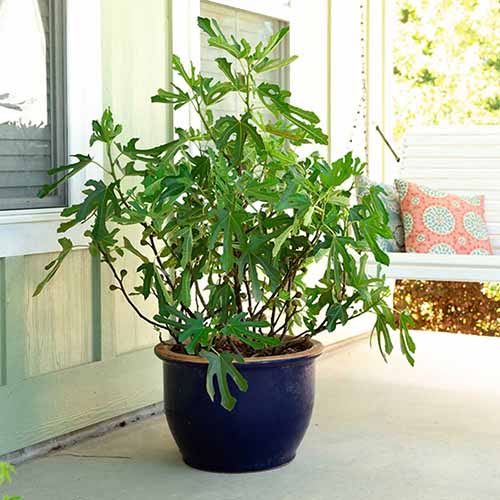
Trees reach a mature height of only four to eight feet and are hardy in Zones 7 to 10.
Plants in two-gallon pots are available at Plants By Mail.
11. Olympian
A compact champion for temperate climates and containers, ‘Olympian’ produces a copious main crop that’s harvested in late summer through early fall.
The large figs have a deep purple skin with pink-red flesh and are noted for their sweet flavor of berries and honey – a delectable choice for desserts, fresh and dried snacks, or chutney and preserves.
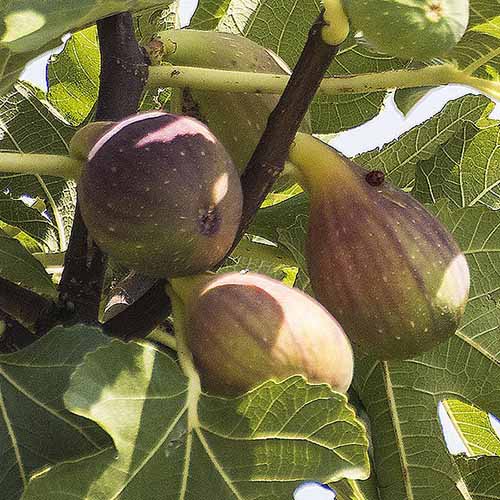
Trees grow six to 10 feet tall and are hardy in Zones 6 to 10.
Plants in #3 containers are available at Nature Hills Nursery.
12. Violette de Bordeaux
With a well-deserved reputation as being one of the finest tasting figs, ‘Violette de Bordeaux’ features small to medium fruits with a dark, purple black skin and strawberry red flesh.
Flavors are sweetly rich with notes of blueberries, cherries, and molasses and these figs make an excellent choice for fresh eating, drying, and preserves.
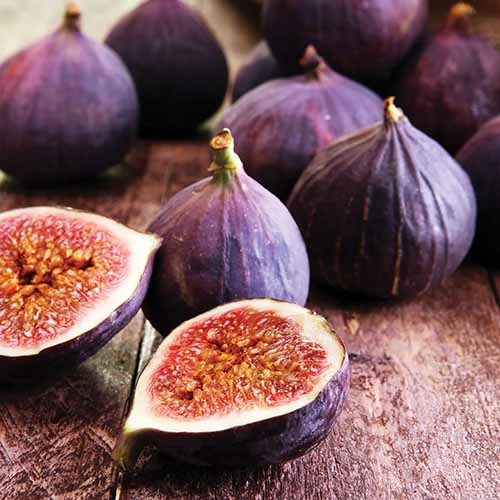
Resistant to drought, high heat, and humidity, this reliable producer gives an abundance of fruits with breba and midseason main crops.
The compact trees grow six to 10 feet tall and are hardy in Zones 6 to 10.
Nursery plants are available at Burpee.
13. White Marseilles
A trusty heirloom variety, ‘White Marseilles’ produces a big midsummer harvest of medium to large chartreuse fruits with golden amber flesh.
This cultivar may develop a second crop in areas with long growing seasons.
The warm, rich flavors have notes of brown sugar, honey, and melon making them ideal for baked goods, drying, fresh eating, and jams.
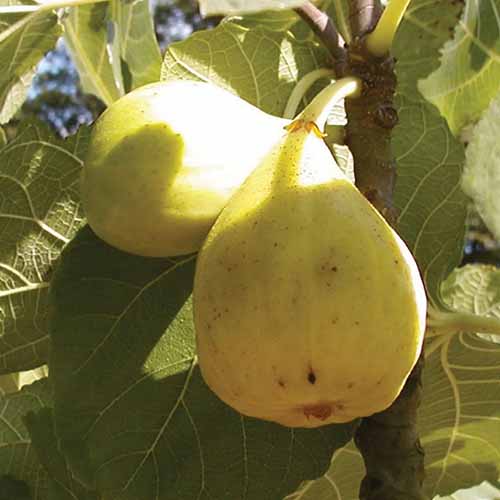
The smallish trees grow 10 to 12 feet tall and make good container specimens. Hardy in Zones 7 to 10.
Potted nursery plants can be found at Burpee.
Versatile and Delicious
Sweet and flavorful, figs are highly versatile and can be used for baked goods, drying, fresh eating, and savory dishes, as well as in chutney, jams, or preserves.
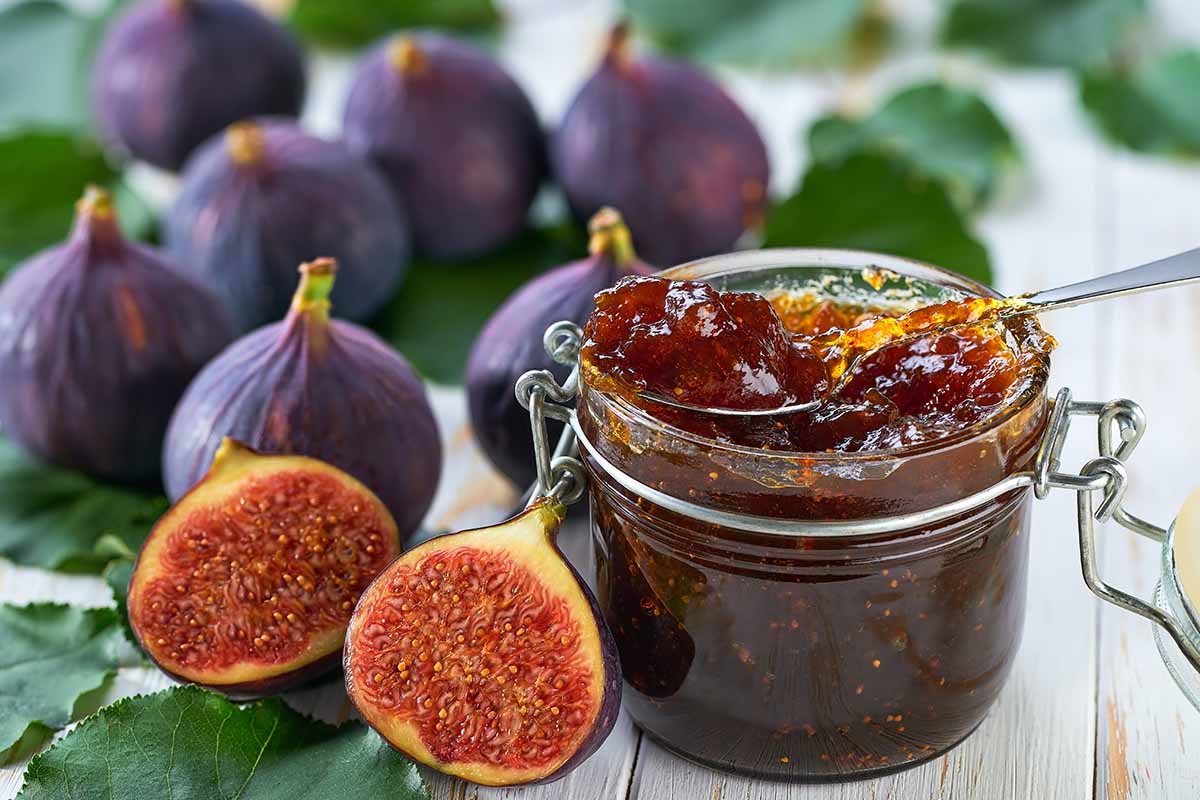
Whatever variety you choose for your garden, give them plenty of sunlight, water regularly, and add a dark mulch to warm the soil for improved bud set.
After that, you can relax until it’s time to enjoy a sumptuous harvest!
Which fig variety are you growing? Let us know in the comments section below.
And for more know-how on growing species in the Ficus genus, add these guides to your reading list next: