Viola spp.
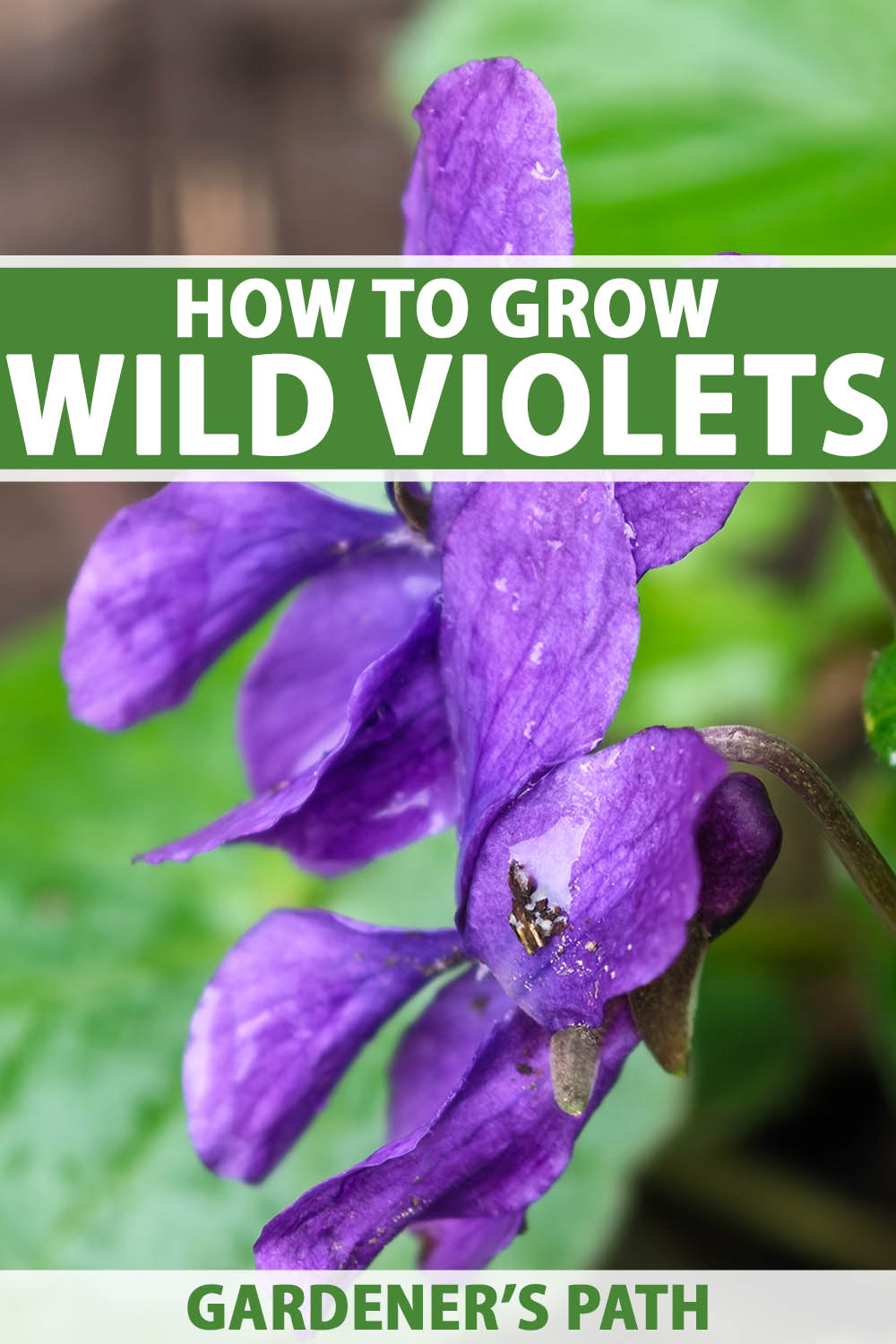
I have never met a violet I didn’t fall in love with.
They aren’t the showiest flowers, grabbing your attention like roses and they won’t show off like bougainvillea. Violets grow and bloom humbly in the background without much fuss.
You really only see the true beauty of violets when you look at them closely. The subtle color variations and patterns are incredibly striking if you stop for a minute and pay attention.
This is doubly true for wild violets.
We link to vendors to help you find relevant products. If you buy from one of our links, we may earn a commission.
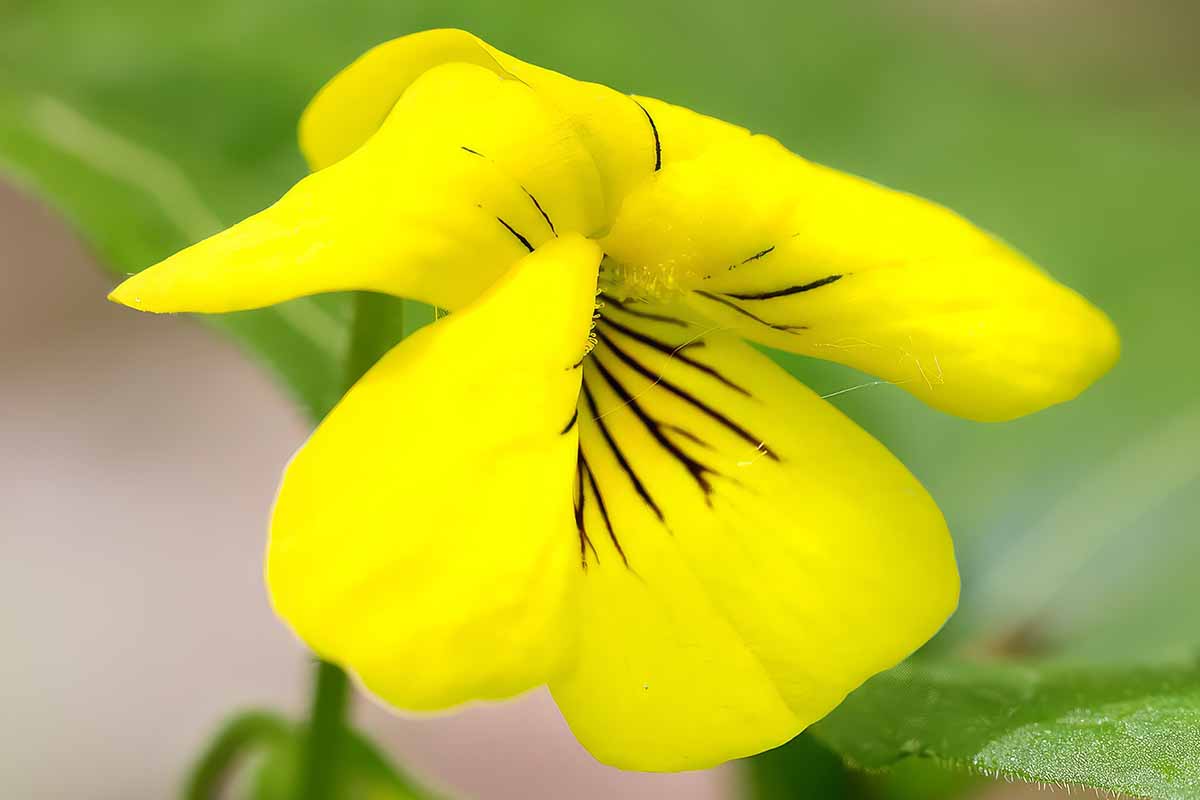
The flowers of wild species aren’t usually as large or colorful as cultivated types. They’re a bit more subtle, but that doesn’t make them any less special.
If you choose species that are indigenous to your area, the local fauna will be especially delighted.
In our guide to growing pansies, we cover how to grow the hybrids and cultivated varieties of species in the Viola genus.
This guide zeroes in on the wild species from which all modern pansies and violas are derived.
Ready to bring the magic to your garden? Awesome! Let’s talk about the following to help make that happen:
What You’ll Learn
When we talk about “wild violets,” the term can refer to any species that hasn’t been cultivated by humans to grow in our gardens.
Wild violets grow throughout the Northern Hemisphere, typically in temperate regions.
There are several species that love to pop up in our lawns. Some gardeners hate them, others (like myself), welcome them with open arms.
These include common blue (V. papilionacea or V. sororia) and downy (V. pubescens). All these are native to North America.
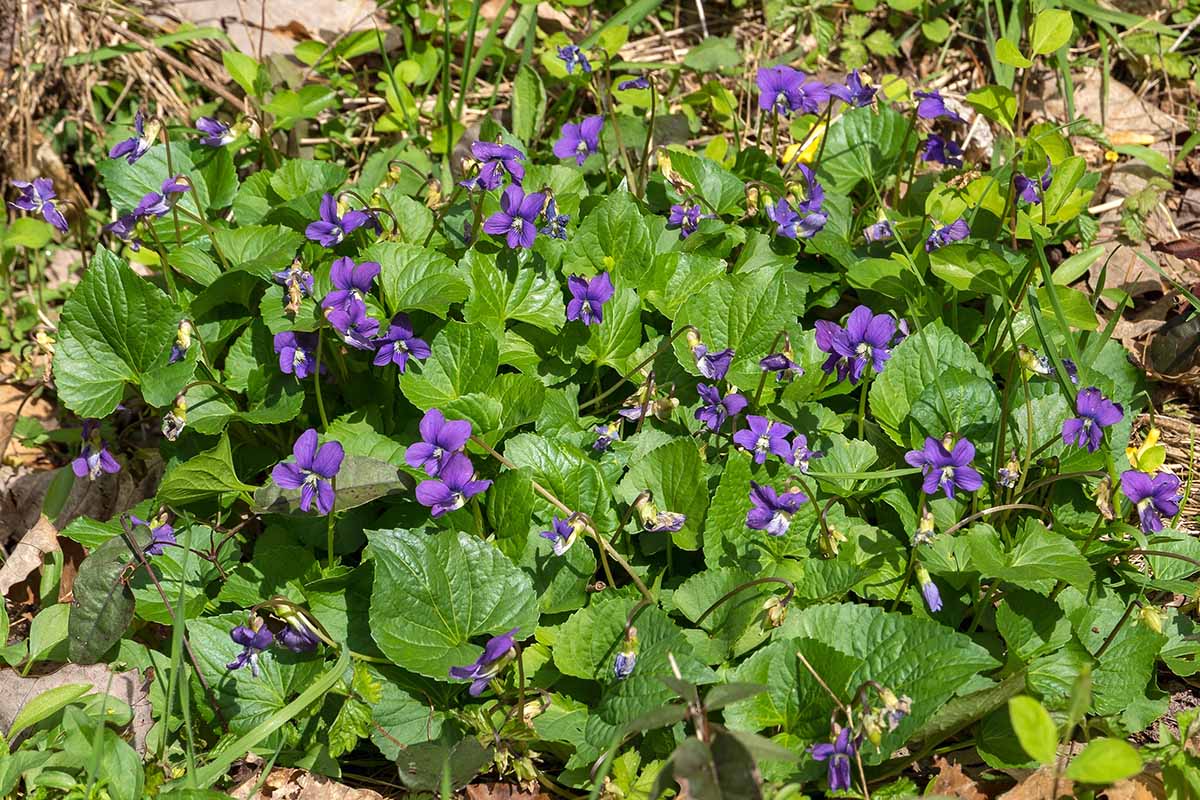
Then there are the less prolific types that grow in the wild around us. The specific species native to your area may vary and may include those mentioned above, as well as others.
For example, in the Pacific Northwest where I live, there are more than half a dozen indigenous wild violet species that you’ll commonly find – and even more that are rarely seen.
I grow stream (V. glabella), evergreen (V. sempervirens), Olympic (V. flettii) and early blue (V. adunca) in my garden.
This is in addition to the three I mentioned above, which aren’t native to my area, but grow here in abundance.
In the Rockies, you’ll find Utah (V. utahensis) and Canadian (V. canadensis).
New England (V. novae-angliae), coast (V. brittoniana), and round leaf (V. rotundifolia) all grow natively in northeastern United States.
In Europe (and North America), sweet violets (V. odorata) are common.
A lot of wild violets are actually hybrids as these species hybridize with one another readily.
Quick Look
Common name(s): Wild violet
Plant type: Herbaceous flowering evergreen or perennial, biennial, or annual forb
Hardiness (USDA Zone): 3-10
Native to: Northern Hemisphere
Bloom time / season: Spring and summer (some year round)
Exposure: Full shade to full sun
Soil type: Loose, organically-rich, well-draining
Soil pH: 6.0-8.0
Time to maturity: 6 months
Mature size: 3 inches tall by 6 inches wide
Best uses: Rock gardens, cottage gardens, shade gardens, moist areas, pots
Taxonomy
Order: Malpighiales
Family: Violaceae
Genus: Viola
Species: Adunca, canadensis, flettii, glabella, rotundifolia, sempervirens, odorata, papilionacea, pubescens, utahensis
You can eat the flowers and leaves of violets, though the flavor varies. I think the flowers are some of the tastiest of the edible blossoms out there.
Just be sure they haven’t been sprayed with any chemicals before digging in!
How to Grow
Depending on which species you’re growing, you will have an easier or tougher time.
Downy violets, for example, are pretty impossible to kill. Literally. Gardeners spend a lot of time and money trying to get rid of them in some places.
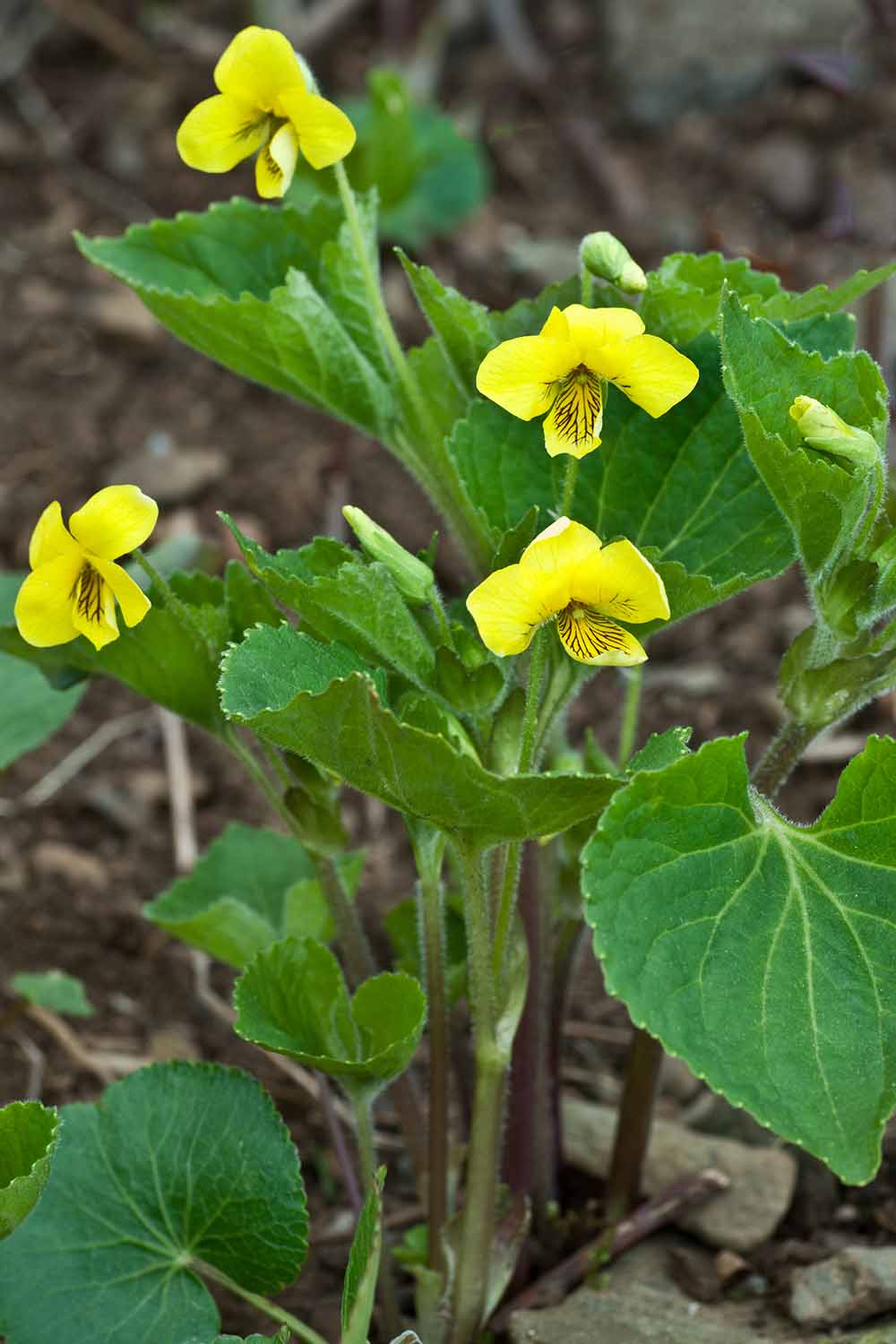
My lovely stream violets, on the other hand, aren’t so tough. I have literally cheered them on as I walked by because they were finally starting to take off after two years of pampering.
Generally, those with rhizomatous roots, like common blue, are pretty easy to grow and care for. Similarly, those that grow wild in your area should be straightforward to cultivate.
Climate
Violets grow wild throughout the Northern Hemisphere, but no matter where they grow, they prefer cool temperatures.
Some are more adapted to warmer climates, but they still tend to pop up in cooler spots like under trees or near water.
In your own garden, look for places that stay a bit cooler than the rest of the yard. You’ll often find these locations on the north side of a building or near trees.
Light
Almost all violets prefer dappled sunlight. Some will tolerate heavier shade while others will even creep into full sunshine.
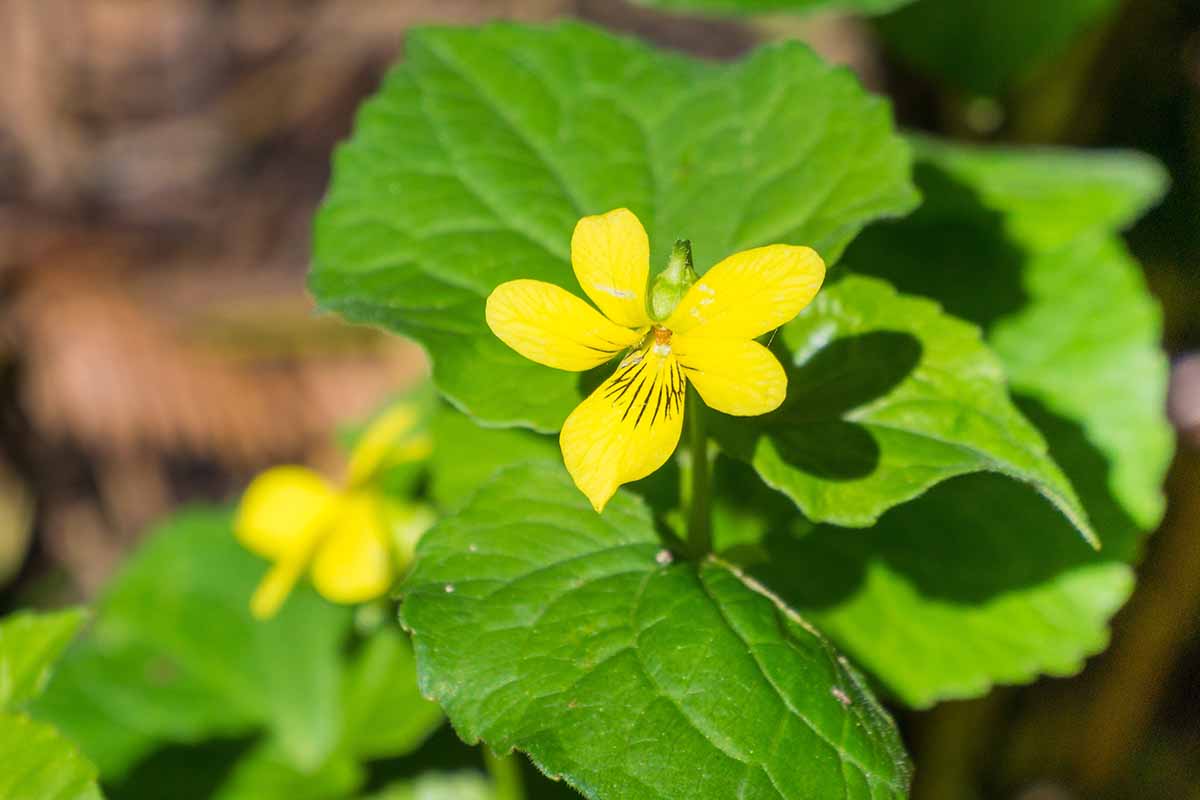
If you live in an area that gets really hot in the summer, err on the side of too much rather than too little shade.
Soil
Wild violets aren’t too fussy about soil composition. Some clay is fine, some sand is fine, and everything in between is fine, too.
What isn’t fine is soil that is poorly draining. If water tends to collect around the roots, it will cause them to rot. You’re better off planting in a container, if this is the case.
They do especially well in containers and I love to tuck them into mixed groupings to fill the edges and bare spots.
Water
Try to keep the soil moist but not wet and soggy at all times. That said, most wild violets will tolerate some dryness.
If you’re growing a species found along streams or ponds in the wild, it will probably require more moisture than others.
These species will typically go dormant during dry stretches and then will pop back up when the rains return.
At any rate, if you stick your finger in the soil and it feels dry to the first knuckle, it’s time to add water.
Fertilizer
Violets aren’t particularly greedy when it comes to food.
I like to heap well-rotted compost around the plants in the spring and again in the late summer.
As well as providing nutrients this also acts as a layer of mulch to help the soil retain water and stay a bit cooler.
Species to Select
If you want a wild violet that’s nearly impossible to kill and can even become a bit overbearing, common blue (V. papilionacea or V. sororia) should be your first choice.
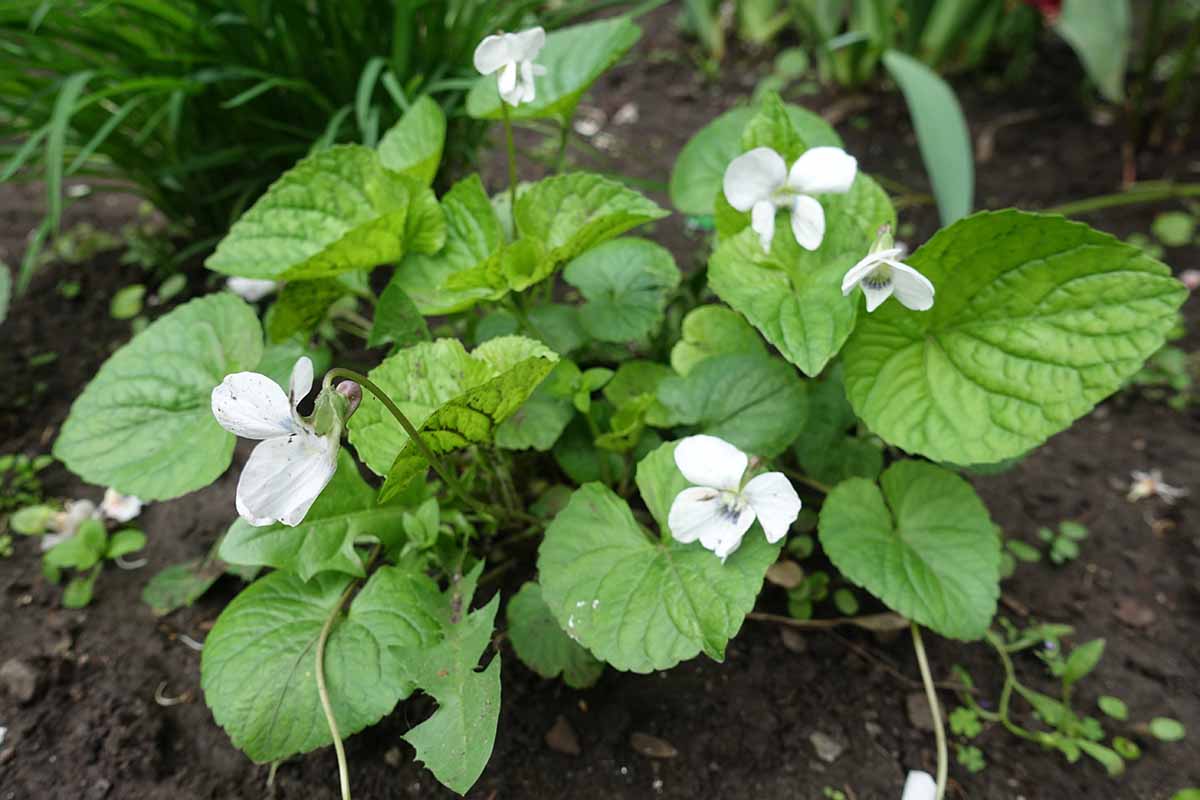
The rhizomes spread readily and the plants adapt to anywhere from heavy shade to full sun, though when the summer heat arrives, they tend to stop growing until temperatures cool down.
Otherwise, pick a species that grows indigenously in your area. It’s more likely to be adapted to your local climate and will serve as a food source for native bees and other pollinators.
Propagation
Once you have your wild violets in the ground, they will keep coming back on their own.
Even if they’re annuals or biennials, they’ll reseed and spread as long as the growing conditions are right.
Of course, you need to put them in the ground in the first place. Here are your propagation options:
From Seed
Wild violets start easily from seed. Check with local nurseries as they’ll often carry types that are native to your area. You can start seeds indoors or out.
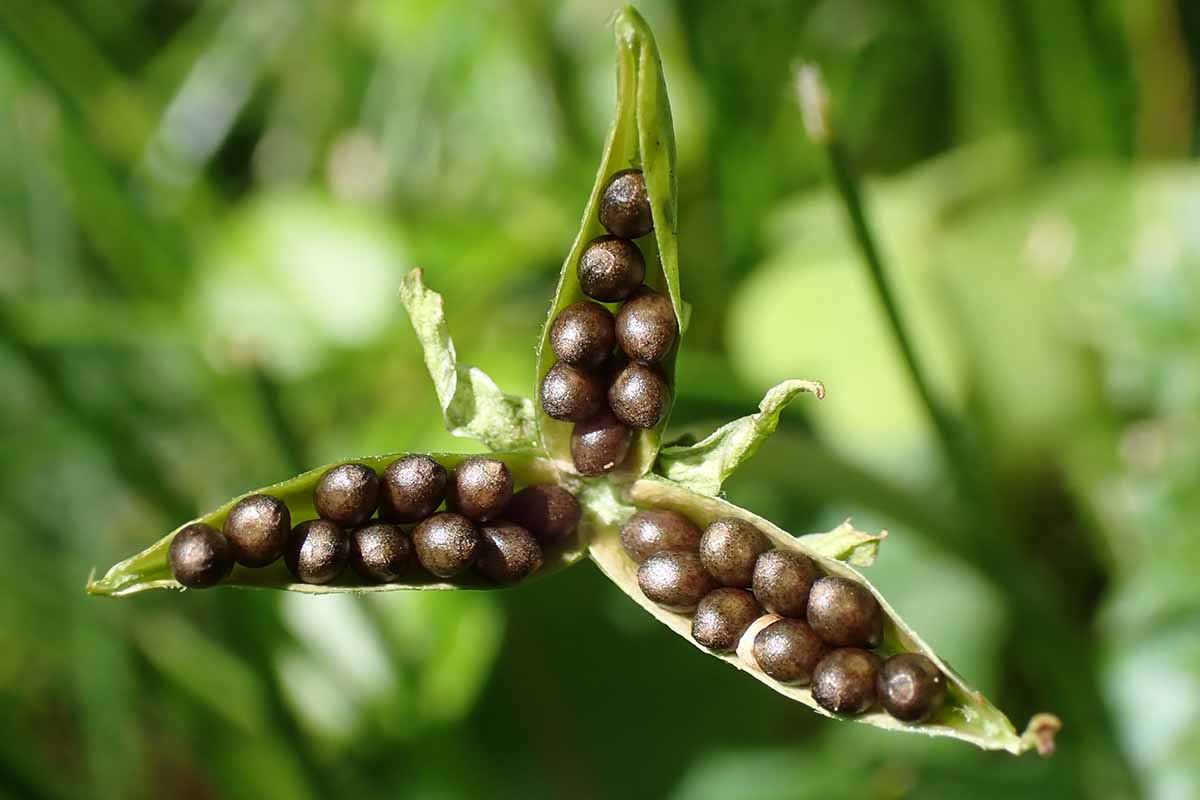
If you start indoors, do so about two months before you want to transplant the seedlings outside.
You can sow seeds or transplant seedlings even if there is a light frost on the horizon, but avoid planting if deep freezes are common that time of year.
Indoors:
- Fill seed packs or planting trays with moist seed starting medium.
- Sprinkle seeds on top of the medium so that they are about an inch apart.
- Sprinkle a fine layer of medium on top of the seeds.
- Keep the soil moist at all times. You can use the bottom watering method or a mister to prevent displacing the seeds.
- Place the tray near a window or other source of light, but not in bright, direct light.
- After germination, thin the seedlings to two inches apart.
Once the seedlings have several sets of leaves you can plant them out.
Outdoors:
Loosen up the soil if it is compacted and sprinkle the seeds over the surface.
Cover with a thin layer of soil, then moisten and keep the soil evenly moist while you wait for the seeds to germinate.
By Division
Happy wild violets will spread in beautiful little clumps via runners. You can dig these up in the spring and divide them to make more plants.
In the spring before flowering, dig up a clump of violets, taking care to get a wide margin around the plant.
Gently tease apart some greens with attached roots.
Dig a hole the size of the rootball.
Plant the clump in the hole and firm the soil up around the roots.
From Cuttings
In the spring when new shoots are emerging, you can take a few cuttings to propagate new plants.
Look for young shoots. Those that are in flower won’t work.
Cut a healthy shoot just below where a leaf joins or another stem emerges. The cutting should be between an inch and two inches long.
Fill a seed tray or small pots with seed starting medium and moisten well.
Insert the cutting about halfway into the medium.
Set the cuttings in bright, indirect light and keep the soil moist at all times.
When new growth develops, you can safely transplant the cuttings.
Transplanting
You can find seedlings in most specialty nurseries or you can start them on your own as described above. Plant anytime of year so long as there isn’t a deep freeze in the forecast.
Dig a hole the size of the root ball or the container the plant is currently growing in.
Gently remove the plant from the container and lower it into the hole.
Firm the soil around the roots before watering in well and adding more soil if needed.
Pests and Disease
Mammals like deer and rabbits will eat the plants, and you can hardly blame them, since violets are delicious.
For the most part, insect pests don’t cause much trouble.
Watch out for aphids and slugs in addition to hungry herbivores. Slugs, in particular, can be a problem.
They’ll nibble holes in the leaves and have even been known to devour an entire plant. That said, I find they prefer my cultivated violets to the wild ones.
Learn more about dealing with slugs and snails here.
Disease
There’s really only one disease that consistently troubles wild violets and it’s very common: powdery mildew.
Violets love cool, moist conditions. Do you know what else does? Fungi.
Particularly the ones that cause powdery mildew like Podosphaera fuliginea, P. macularis, P. violae. As such, it’s definitely a disease you have to watch for.
It tends to appear on crowded plants in shady conditions.
The powdery growth on the leaves and stems usually won’t kill your plants because it needs a live host. Plus, the fungi are species specific, so the disease won’t hop to, say, your roses.
To treat powdery mildew, try to keep your plants well spaced and water at the ground level, not from above.
Unless the fungi really start to spread or you can’t stand the look of it, you can usually just ignore the disease.
But if it starts to become a problem for you, you have quite a few options for treatment. A mix of one part milk to ten parts water can be surprisingly effective.
If you need to break out the bigger guns, a biofungicide that contains the beneficial bacteria Bacillus amyloliquefaciens strain D747 is a good choice.
The bacteria colonizes the fungus, stopping the spread of the disease.
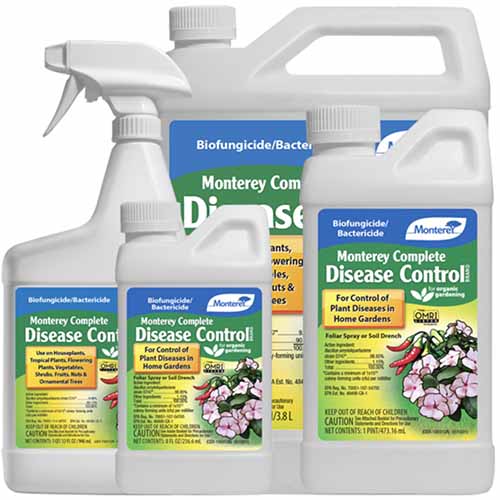
Monterey Complete Disease Control
Monterey Complete Disease Control contains this beneficial bacteria and is available at Arbico Organics.
Check out our guide to learn more about treating powdery mildew.
Violets are a Vibe
You can’t ask for much more than a plant that blooms for months without deadheading, needs little care, and will gently spread without becoming troublesome.
Wild violets are such an understated little addition to the garden.
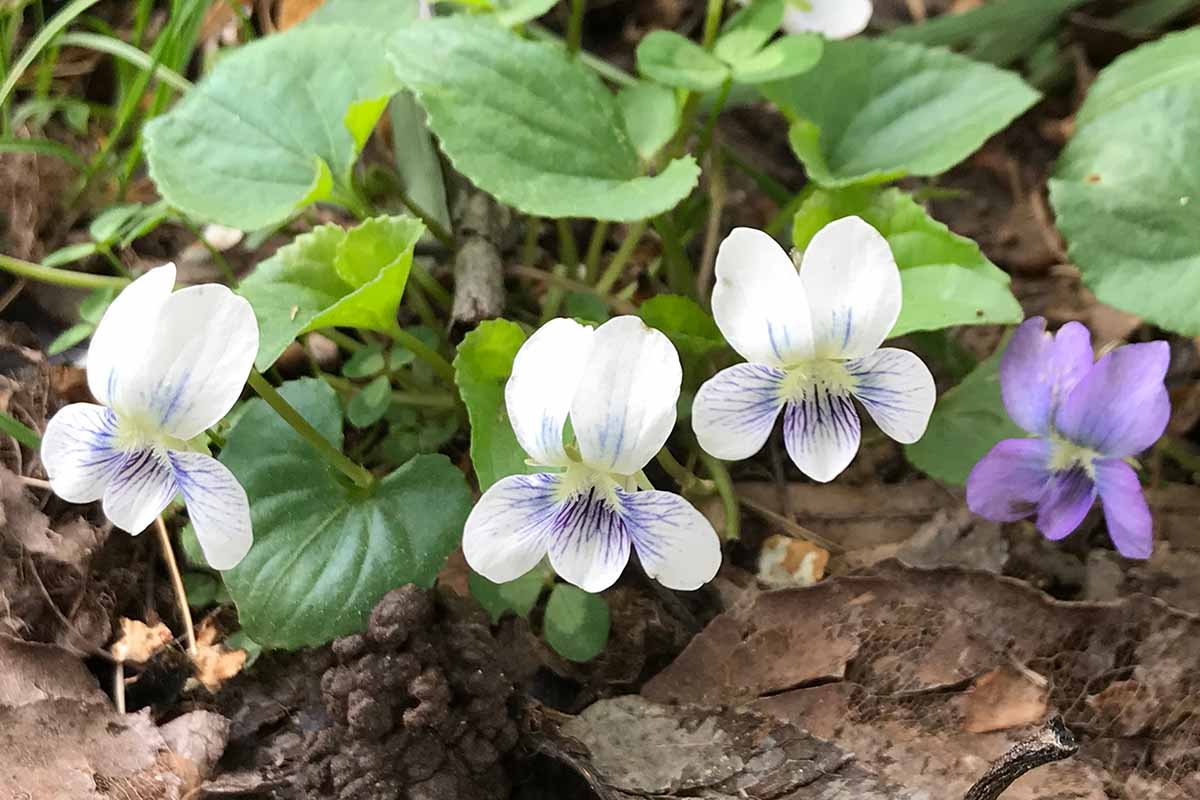
I’d love to hear about what species of wild violets grow in your area. Have you ever tried growing them? Any tips for other Viola lovers? Let us know in the comments section below!
And for more colorful flowers to add to your landscape, add these guides to your reading list next: