Iris reticulata
The rock garden iris, Iris reticulata, is a dwarf species in the Iridaceae family. It’s one of the earliest spring-blooming flowers and a welcome sight in USDA Hardiness Zones 5 to 9.
To the delight of growers worldwide, hybridizers continue to develop new colors to add to the blue, lavender, purple, or white natural color palette.

We link to vendors to help you find relevant products. If you buy from one of our links, we may earn a commission.
In our guide to growing irises we provide all you need to know to introduce these harbingers of spring to your outdoor living space.
This article zeroes in on the unique features and requirements of the dwarf rock garden species.
Here’s what we’ll cover:
What You’ll Learn
Unlike traditional full-size species and cultivars that grow from thick, elongated rhizomes, rock garden irises sprout from small bulbs a bit like crocuses.
I. reticulata is also known as netted or reticulated irises because the tunic or papery sheath around the bulbs appears to be woven like netting.
The blossoms have six petals and perch atop leafless stems.

The upright petals are called “stands” and those that arch gracefully downward are known as “falls,” with a raised, brightly-hued “crest” and flecks, spots, and striations of complementary or contrasting colors.
Some are sweetly fragrant, but this characteristic varies, as is often the case with cultivated varieties.
Primarily blue, lavender, and white, the ever-increasing number of hybrid cultivars includes exciting new shades of brown and yellow.
The foliage is green and strap-like and often stands taller than the flowers. Mature dimensions are four to six inches tall and up to four inches wide.
Quick Look
Common name(s): Rock garden iris
Plant type: Perennial flowering bulb
Hardiness (USDA Zone): 5-9
Native to: East Turkey to Iran
Bloom time / season: Early spring
Exposure: Full sun to part shade
Soil type: Average, well draining
Soil pH: 6.0-7.5, slightly acidic to neutral
Time to maturity: 2 years
Mature size: 4 inches wide x 4-6 inches high
Best uses: Beds, borders, containers, mass plantings, rock gardens, woodland clearings
Taxonomy
Order: Asparagales
Family: Iridaceae
Genus: Iris
Species: Reticulata
I. Reticulata is native to the region spanning eastern Turkey to Iran.
The use of irises as ornamentals dates to ancient Egypt, where the three prominent “fall” petals symbolized courage, faith, and wisdom.
E. A. Bowles of the British Royal Horticultural Society cultivated the lovely flax blue ‘Cantab,’ one of the earliest cultivated hybrids in 1914.
Iris societies abound today, and cross breeding continues to bring outstanding cultivars to market.

Rock garden irises are well-suited to the front positions of beds and borders and make attractive edging along entry sidewalks where you and visitors to your home can appreciate them.
Enjoy them in patio pots and window boxes, where a quick glance through a window or door brings them into view. There’s no garden too small for a pot or plot of I. reticulata.
Mass plant a dedicated drift for a swath of color in a woodland clearing or naturalize bulbs through the lawn to enjoy a carefree display before the ritual of mowing begins.
When selecting a planting location, consider companion plants. Rock garden iris bulbs must stay as dry as possible during dormancy.
Plants suited to xeriscaping, like native perennials and ornamental grasses with low moisture needs, can thrive in some of the driest garden soil.
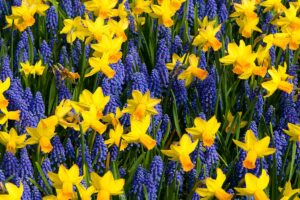
Interplant with other early-spring blooming flowers, such as crocuses, daffodils, glory-of-the-snow, other irises, like the dwarf bearded (I. pumila), snowdrops, and hellebores. They, too, will be dormant by summer.
How to Grow
These plants prefer full sun to part shade and average, well-draining soil with a pH of 6.0 to 7.5.

During the spring growing season, the bulbs need even moisture. They prefer a dry dormant season from summer to winter and have a high tolerance for summer drought.
Too much rain during their dormant period can cause the bulbs to rot.
Provide an inch of water per week, including rain, from the time the foliage is visible until blooming finishes.
Fertilize post-bloom with a high-phosphorus, low-nitrogen product.
Cultivars to Select
In addition to the species growing in nature, many exciting cultivated varieties are available to the home gardener.
Here are three to whet your appetite:
Alida
‘Alida’ boasts light blue stands. The falls are a slightly darker blue shade and display a bright yellow crest, dark blue flecks, and white striations.

The lighter shade of this variety complements early-season pastels, like the blue, lavender, and pink shades of glory-of-the- snow.
Harmony
‘Harmony’ is a bright violet-blue flower. The falls have prominent golden crests, white stripes, and violet blue flecks.
The mellow tones complement those of early crocuses in lavender, white, and yellow hues.

Harmony is also an excellent choice for indoor forcing.
‘Harmony’ bulbs are available from Burpee.
Joyce
‘Joyce’ has deep blue petals with gold crests and splashes of white flecked with deep blue.

The richly saturated color pairs well with vibrant dwarf yellow daffodils.
Maintenance
The rule of thumb for irises is to divide them every three to five years in late summer or early fall to reduce volume.
Overcrowding is undesirable as it reduces air circulation, leads to moisture buildup, and increases the risk of fungal disease.
Here’s how:
- Use a garden fork to unearth a clump of bulbs gently.
- Brush away excess soil.
- Gently separate the larger conjoined bulbs that are as large as the “parent” bulbs or slightly smaller. Leave the smallest ones attached to mature further.
- Transplant the parents and mature offsets where desired.
Other than dividing, since the bulbs remain in the ground year-round, they require little maintenance.
If you like, you can deadhead entire stems of spent flowers but leave the foliage in place to feed the bulb for next year’s blooms.
When the foliage withers and dies, you can tidy up the area to avoid leaving plant debris for pests and pathogens to inhabit.
Propagation
To propagate I. reticulata, you’ll need to purchase bulbs or obtain them from existing plants by division, as we described above.
Since the bulbs, flowers, foliage, and roots contain toxins that can cause contact dermatitis and GI issues in people and pets, it’s best to wear gloves when handling them.

Work the garden soil to a depth of six inches until it is crumbly and debris-free in preparation for planting bulbs.
Some gardeners like to add bone meal for a calcium and phosphorus boost. If you do, sprinkle it sparingly onto the soil and mix thoroughly before planting to avoid burning the bulbs.
For container gardening, fill a six-inch deep pot three-quarters of the way with a light, well-draining potting mix.

Set the bulbs at a depth equal to twice their width. Their circumference is approximately two inches, so you’ll need to set the flat bottom of the bulb four inches down from the soil’s surface.
Space them as close together as one inch for a carpet of color and three to five inches apart for a looser arrangement. Odd-numbered clusters yield the most pleasing visual appeal.
Cover them with soil or potting mix.
When the leaves sprout, maintain even moisture but avoid oversaturation.
Managing Pests and Disease
Unlike full-size species that bloom well into June, I. reticulata is relatively pest and disease-free because its early-season debut takes place before many pests have awakened from winter dormancy.

When there is excess moisture, poor drainage, and/or deep shade, the resulting wet bulbs and foliage appeal to night-foraging slugs and snails.
They leave telltale trails of slime and chewed holes in their wake. You can sprinkle food-grade diatomaceous earth around plants to keep them away.
Our article on slug and snail management has more details.
Fusarium basal rot is caused by Fusarium oxysporum and F. proliferatum fungi. When these pathogens penetrate the bulbs, they cause rotting for which there is no treatment.
Avoid oversaturation to inhibit fungal spore proliferation.
Irises that Rock
As adorable as they are versatile, rock garden irises are the perfect early-season bulb for Zones 5 to 9.
Grow them in full sun to part shade with average soil that drains well. Avoid oversaturation, especially during the off-season dormant months.

Where will you grow I. reticulata in your outdoor living space? From beds to windowboxes, it’s sure to rock emergent spring landscapes with big color on a small scale.
Tell us about your experience with it in the comments section below.
And for more information about growing irises in your landscape, we recommend these guides next: