Gentiana spp.
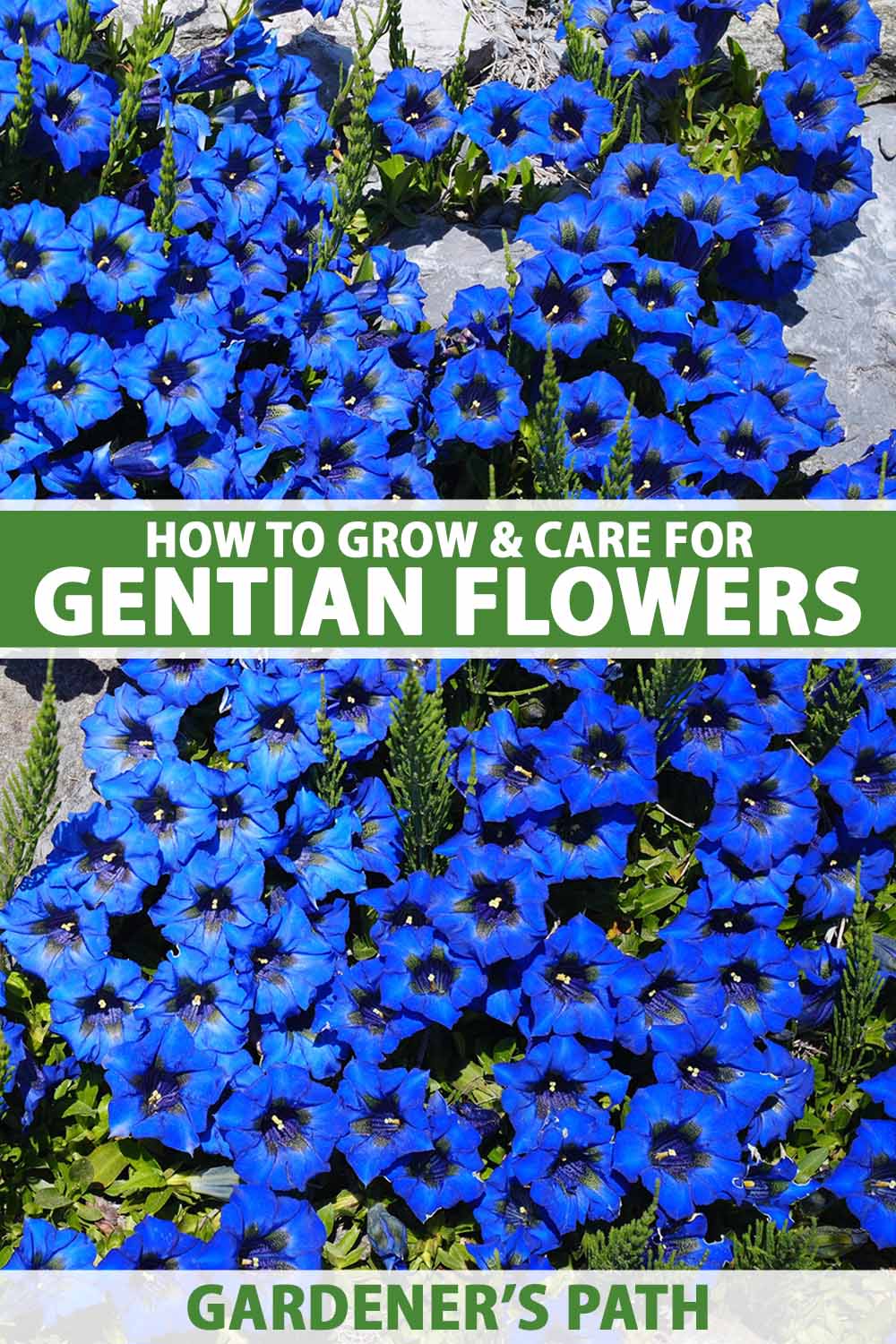
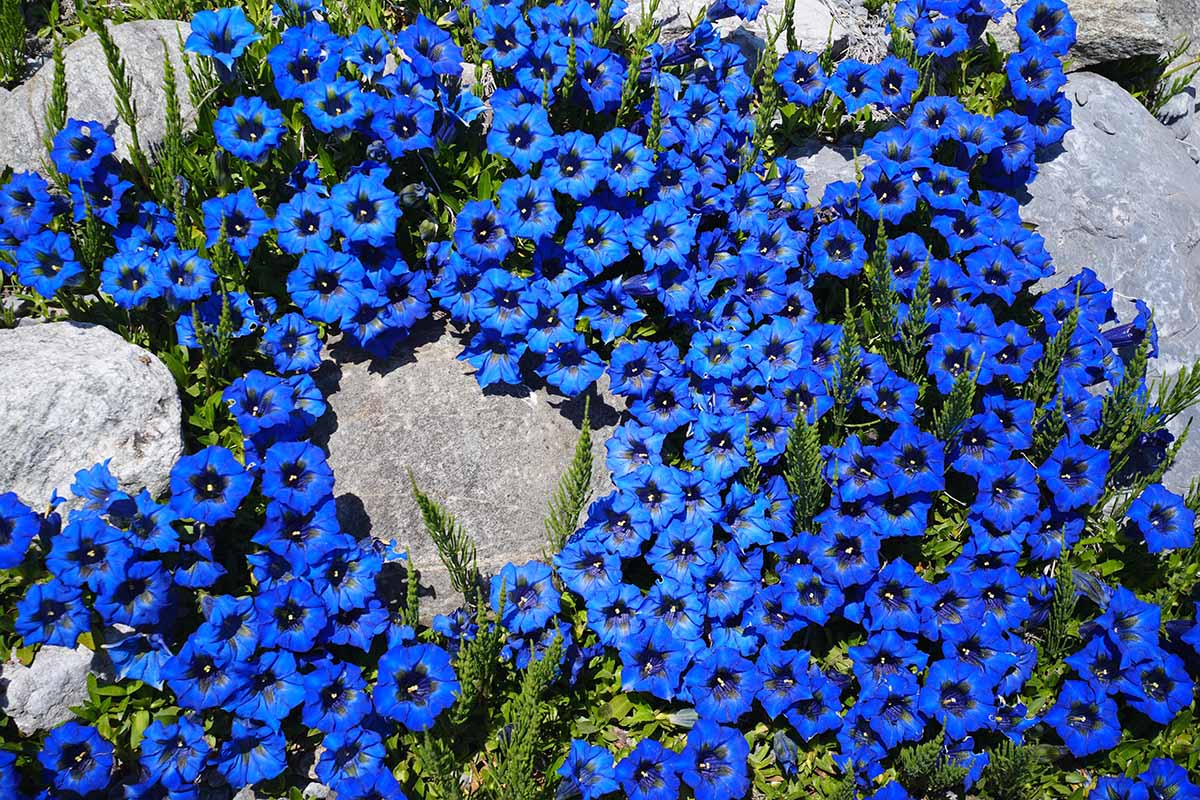
A beautiful alpine plant, gentian (Gentiana spp.) is prized for its intensely blue, trumpet-shaped flowers set in clumps of narrow green leaves.
In the Gentiana genus, there are varieties with mauve, pink, purple, white, or yellow flowers.
Blue types are the most common for home cultivation, with saturated hues ranging from cornflower to cobalt.
Flowering time can be spring, summer, or fall – depending on the species – and most are native to mountainous and woodland regions in temperate zones.
We link to vendors to help you find relevant products. If you buy from one of our links, we may earn a commission.
Hardy and strong, gentian thrives in difficult environments such as coarse sand and rocky soils and are indigenous to all continents but Antarctica.
They enjoy full sun in mild summers but typically need afternoon shade in warmer areas.
Resistant to herbivores like deer and rabbit, the nectar- and pollen-rich flowers are highly attractive to bumblebees and draw in other pollinators as well, like hummingbirds.
And although some gentian varieties are known to be a challenge to cultivate, there are plenty of options that are easily grown in the right conditions.
To learn which are the best for home gardeners, keep reading as we unearth how to grow and care for gentian wildflowers!
Here’s what you’ll find ahead:
What You’ll Learn
The Gentiana genus is a large one with over 300 species of perennial, annual, or biennial plants that are mostly alpine in nature.
Garden gentian varieties are primarily herbaceous perennials, forming moderate clumps with upright growth and narrow, smooth-margined leaves.
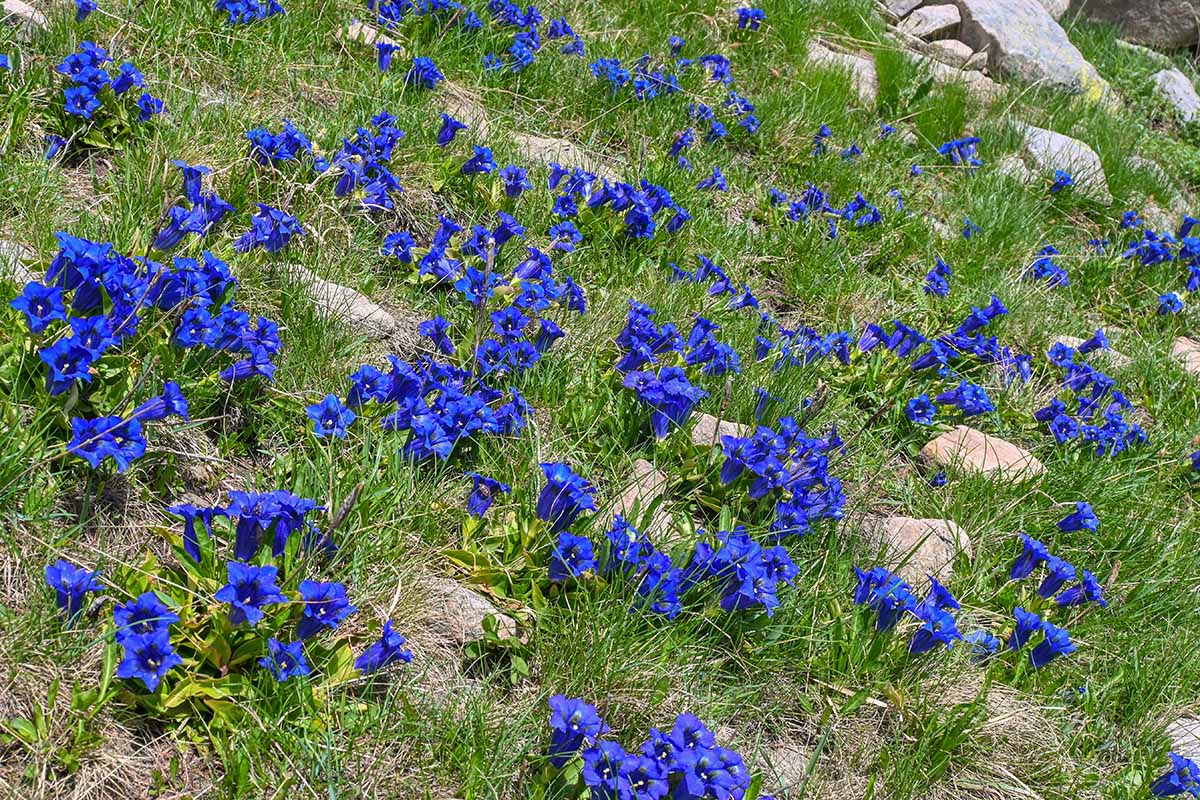
The trumpet-like flowers bloom singly or in inflorescences and growth habits can be low or tall, with cultivars falling in the range of four to 24 inches.
Some gentian varieties prefer acidic soil while others need a more neutral pH.
All require a well-draining site with a preference for sandy, stony, or rocky locations – planting in hot, dry areas should be avoided.
Quick Look
Common name(s): Gentian
Plant type: Herbaceous perennial
Hardiness (USDA Zone): 3-7
Native to: Temperate regions of most continents
Bloom time / season: Spring, summer, or fall
Exposure: Full sun to part shade
Soil type: Moderately rich with a sandy texture, well-draining
Soil pH: 5.5-7.0, slightly acidic to neutral
Time to maturity: 2-3 years for flowers
Mature size: 4-24 inches tall and wide (depending on species)
Best uses: Alpine troughs, borders, containers, edging, rock gardens
Taxonomy
Order: Gentianales
Family: Gentianaceae
Genus: Gentiana
Species: Acaulis, andrewsii, asclepiadea, verna, scabra
Fall is the best time for planting as this gives the gentian plants ample time to develop a strong root system in cooler months while avoiding the stress of summer’s heat.
If you need to plant in spring, try to do so early in the season while the temperatures remain cool.
How to Grow
In fall, transplant new gentian specimens into prepared beds.
Use a garden fork to loosen the soil to a depth and width of 12 inches then create a hole approximately the same size as the nursery container.
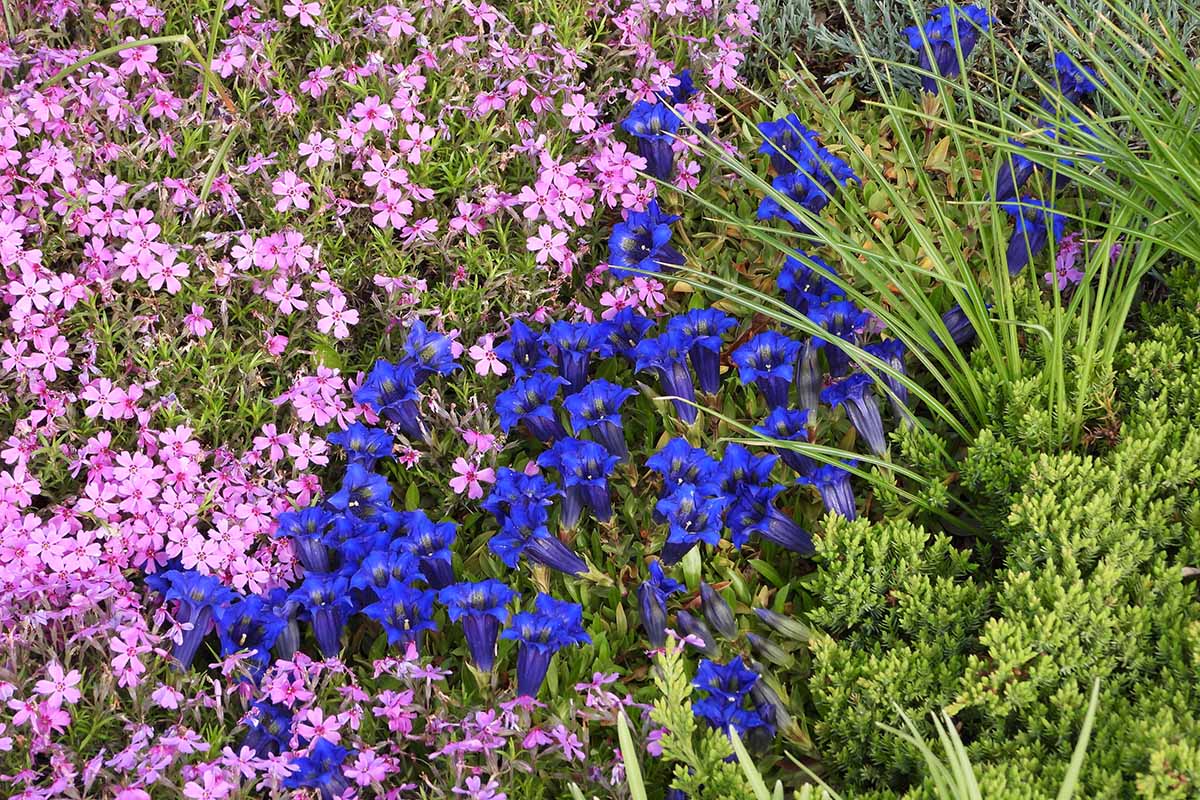
For each plant, mix one or two tablespoons of bone meal into the soil to promote fast, strong root growth.
Set plants in place spacing them 12 to 24 inches apart then backfill with soil, gently firming in place.
Water gently to settle plants then maintain lightly moist soil throughout the growing season.
These alpine wildflowers are not a fan of having their roots disturbed. For growing in pots, ensure the container can become a permanent location, like an alpine trough.
Light
For the most vigorous growth, plant gentian in locations that receive morning sun with afternoon shade or a bright, partially shady spot.
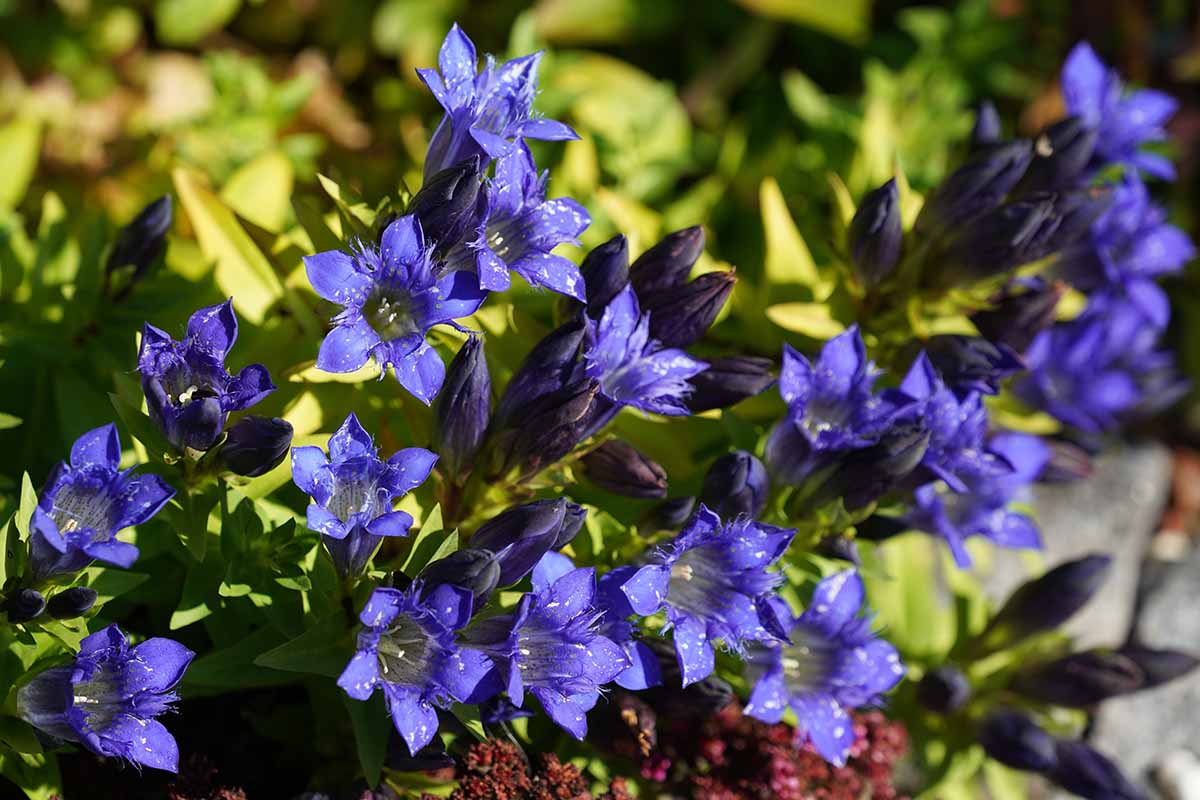
Full sun is acceptable in areas with mild summers but avoid it in regions with intense afternoon sunlight – leaf scorch and wilting can happen quickly and plants will struggle to survive.
Soil
Plants require well-draining, consistently moist soil with a sandy or rocky texture and moderate amounts of organic material.
Most gentian varieties require slightly acidic to neutral soil with a pH of 5.5 to 7.0.
Amend garden soil with a shovelful of grit per plant to provide the fast drainage they need, using materials such as crusher dust, granite chips, landscape sand, or pea gravel.
Mix in one-half shovelful organic material such as compost, leafmold, well-rotted manure, or worm castings for nutrients and to help maintain soil moisture.
Water
For vigorous plants, water regularly and deeply when the top one inch of soil is dry, but don’t allow conditions to dry completely – gentian starts to wilt at even a hint of drought.
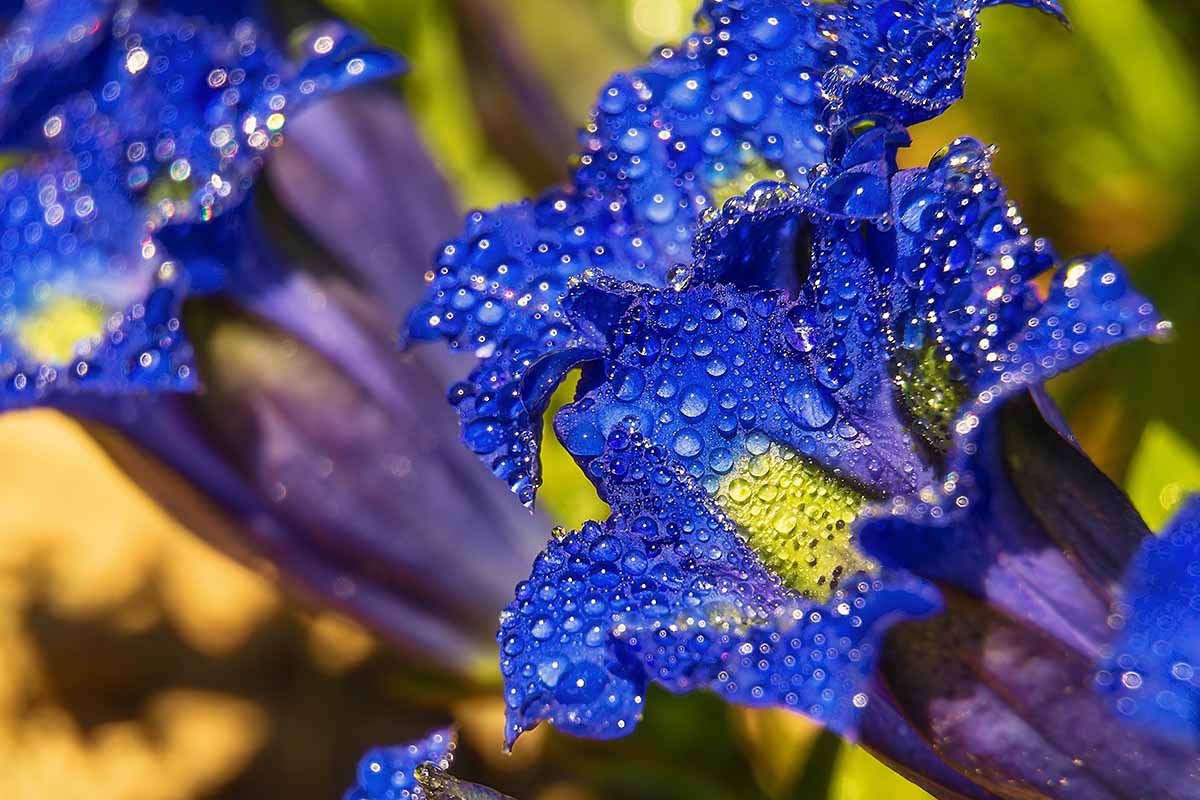
Aim to keep the soil consistently moist but not waterlogged.
The roots tend to be thick and fleshy with taproots or rhizomes that can rot in soggy conditions.
To help prevent moisture loss from evaporation, cover the root zone with a two-inch layer of mulch.
Materials such as pea gravel or stone chips make a good mulch and align with an alpine vibe while helping the roots to stay cool and moist.
Temperature
All gentian varieties grow best in mild to cool summer conditions and have good cold hardiness that’s suitable for cultivation in USDA Zones 3 to 7.
Unfortunately, these alpine wildflowers struggle in areas with hot summers or in climates with heat and humidity.
Fertilizer
As light feeders, gentian plants do best in moderately rich soil.
An application of compost, leafmold, or worm castings in early spring is adequate to meet their nutritional needs.
Alternatively, scratch a slow-release fertilizer into the soil in early spring using a balanced formula such as 5-5-5.

Burpee Enhanced All Purpose Plant Food
I like to use Burpee Enhanced All Purpose Plant Food, which you can find available at Burpee.
For container plants, a second application can be made in midsummer.
Species and Cultivars
Gentian can be a little difficult to find but can often be sourced in larger garden centers or sites dedicated to alpine plants.
Some popular and easy-to-cultivate options include the following:
Stemless
The stemless variety, G. acaulis, is a star in the spring rock garden, blooming from mid-spring to early summer.
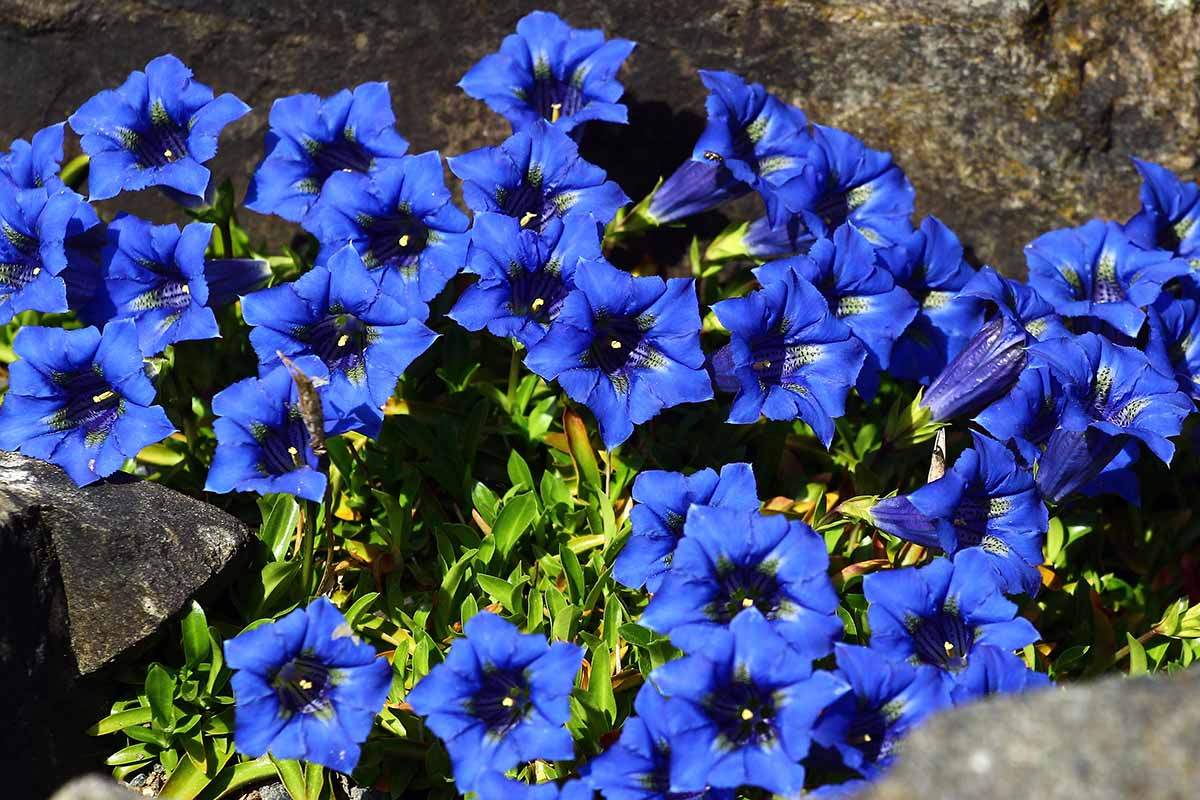
Vibrant, trumpet-like flowers of sapphire blue with navy or green freckled throats sit atop slowly spreading evergreen mats of up to six inches.
Spring
Spring gentian, G. verna, forms handsome, evergreen mats of grey-green foliage up to six inches tall topped with long-necked, starry flowers of vibrant, ultramarine blue with white throats.
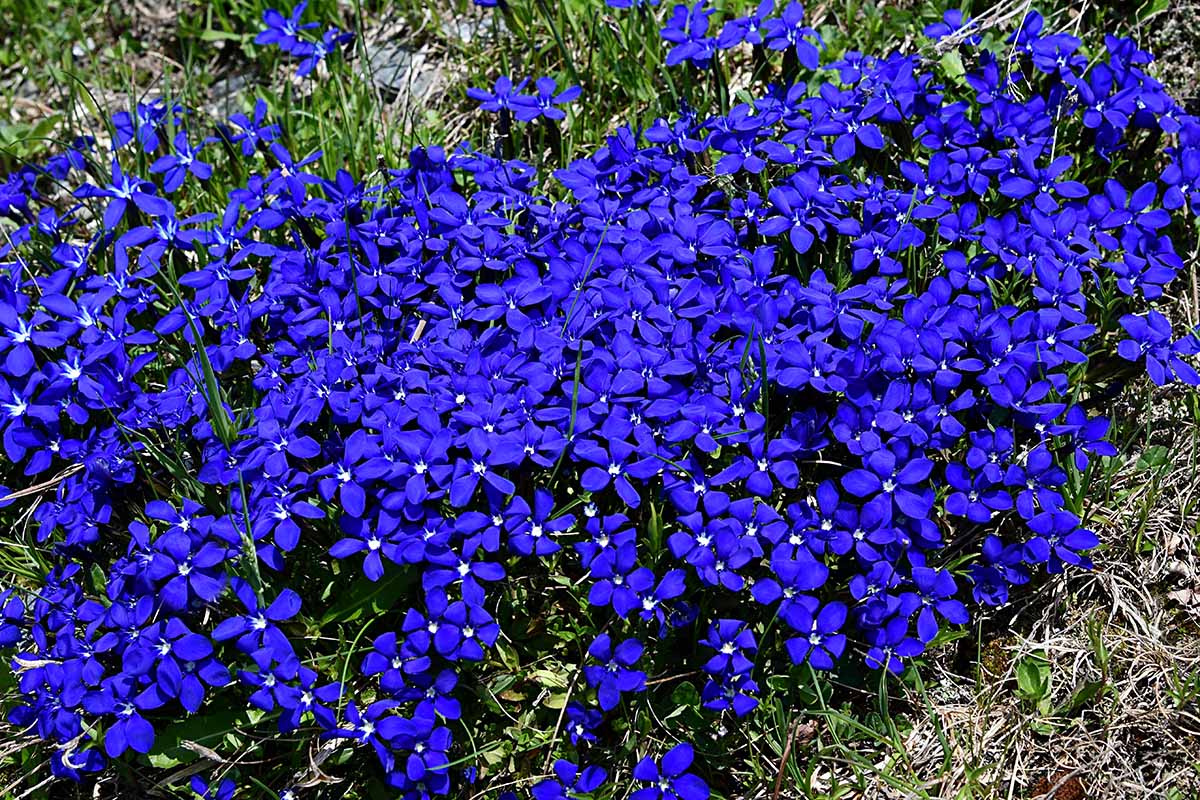
A popular type for containers, edging, and rock gardens.
True Blue
‘True Blue,’ G. scabra, is a taller, clumping variety of up to 24 inches that flowers from midsummer into fall.
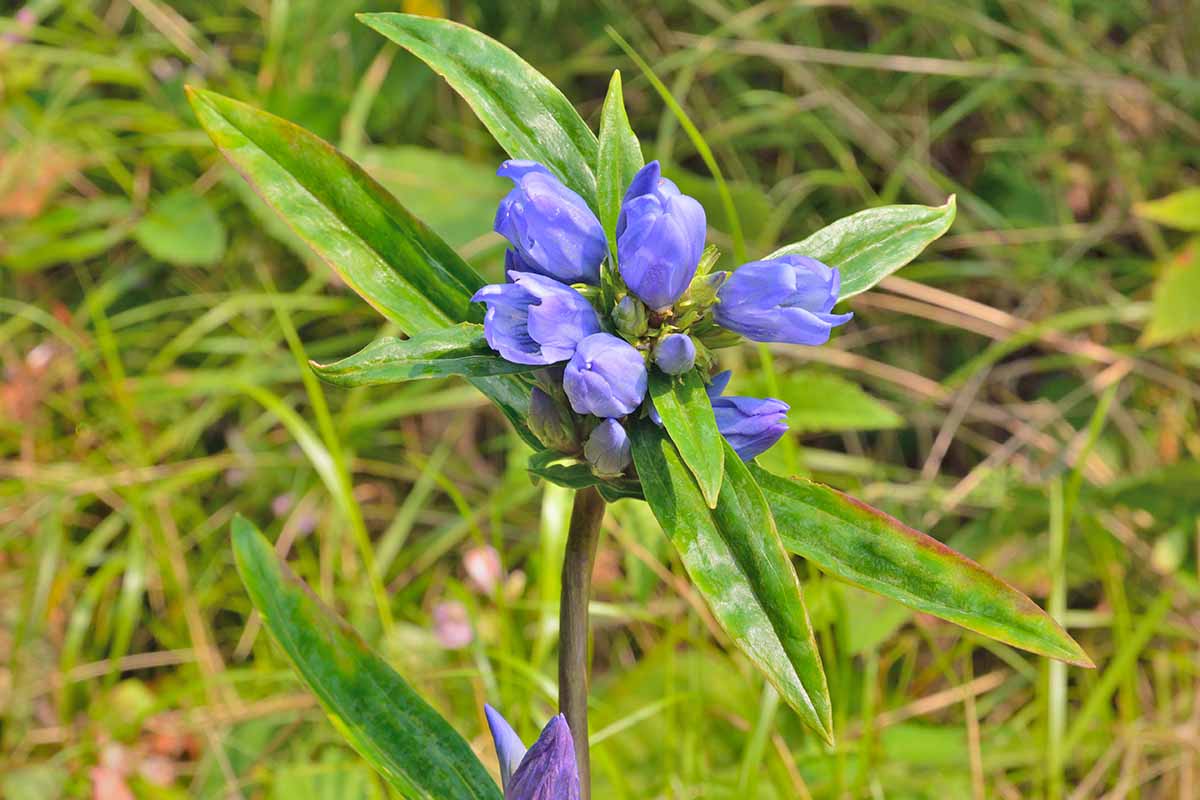
The stunning tubular flowers of royal blue open into star shapes that bloom along the length of the flower stems at the upper leaf axis.
Willow
Willow gentian, G. asclepiadea, is one of the easiest species to cultivate.
It grows slowly into attractive clumps with willow-like leaves and elegant, arching stems that bear flowers in groups of three on the upper leaves.
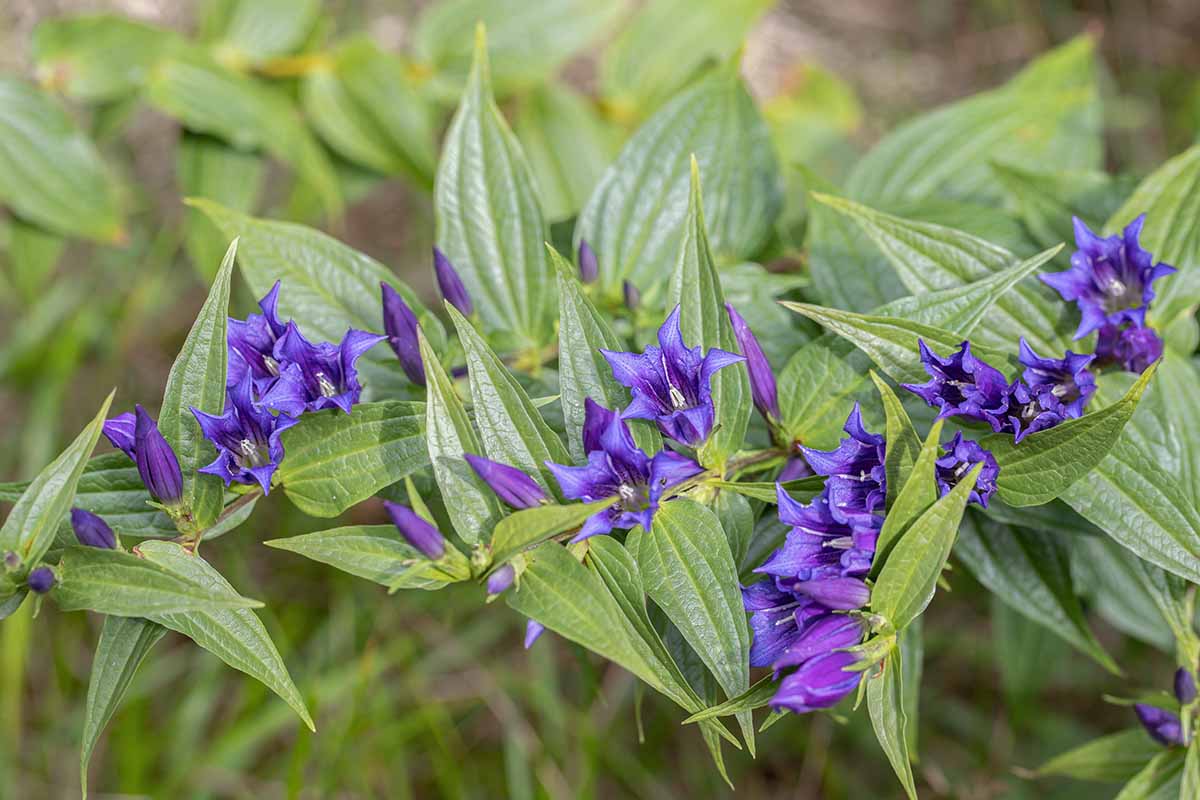
Flowering in late summer and fall, plants produce a profusion of true blue flowers for several weeks.
Closed Bottle
A North American native and easily cultivated, closed bottle gentian, G. andrewsii, features tight clusters of closed, bud-like, cylindrical flowers of deep blue to purple.
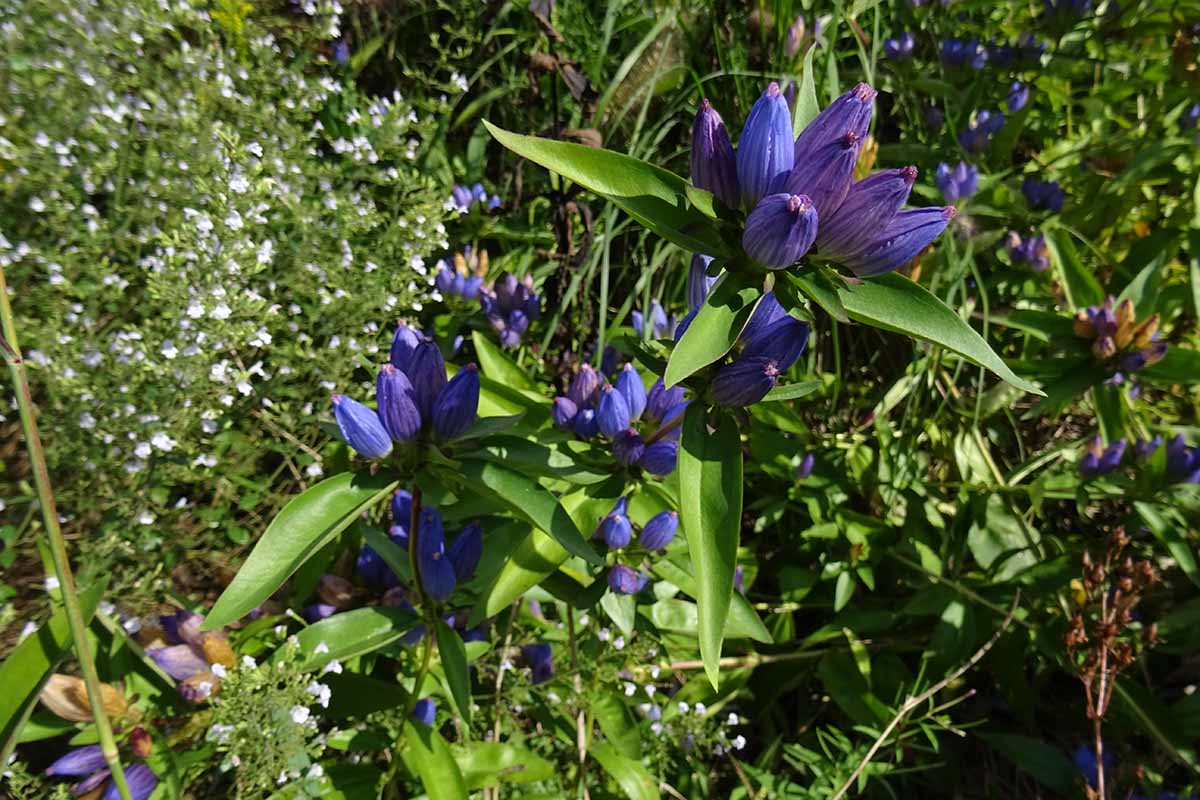
Blooming from late summer into fall with the pretty buds forming at the top of stems and along leaf axis, plants grow up to 48 inches tall and spread into clumps.
Maintenance
Pruning isn’t required but once gentian plants enter dormancy, they can be cut back to the ground to tidy them.
To protect against deeply frozen soil, lay down a layer of winter mulch two to four inches deep over the root zone, using materials such as bark mulch, hay, or pebbles.
If needed, provide protection for potted plants by adding a layer of mulch and wrapping the pot in a blanket or fleece.
Remove the catchment saucer and place the pot on blocks of wood to lift them above freezing soil.
Propagation
Plants can be propagated by division or sowing seeds.
Here’s how:
Division
Division is best performed in fall or spring with the following steps.
- Use a spade to lift plants from the ground with the root ball intact.
- With a clean, sharp spade or garden knife like a hori hori, divide into two or more sections ensuring each part has healthy roots.
- For rhizomatous varieties like G. acaulis, use a trowel or small spade to separate side shoots from the parent plant, taking care to keep the rhizome or taproot intact.
Replant into prepared new locations promptly.
From Seed
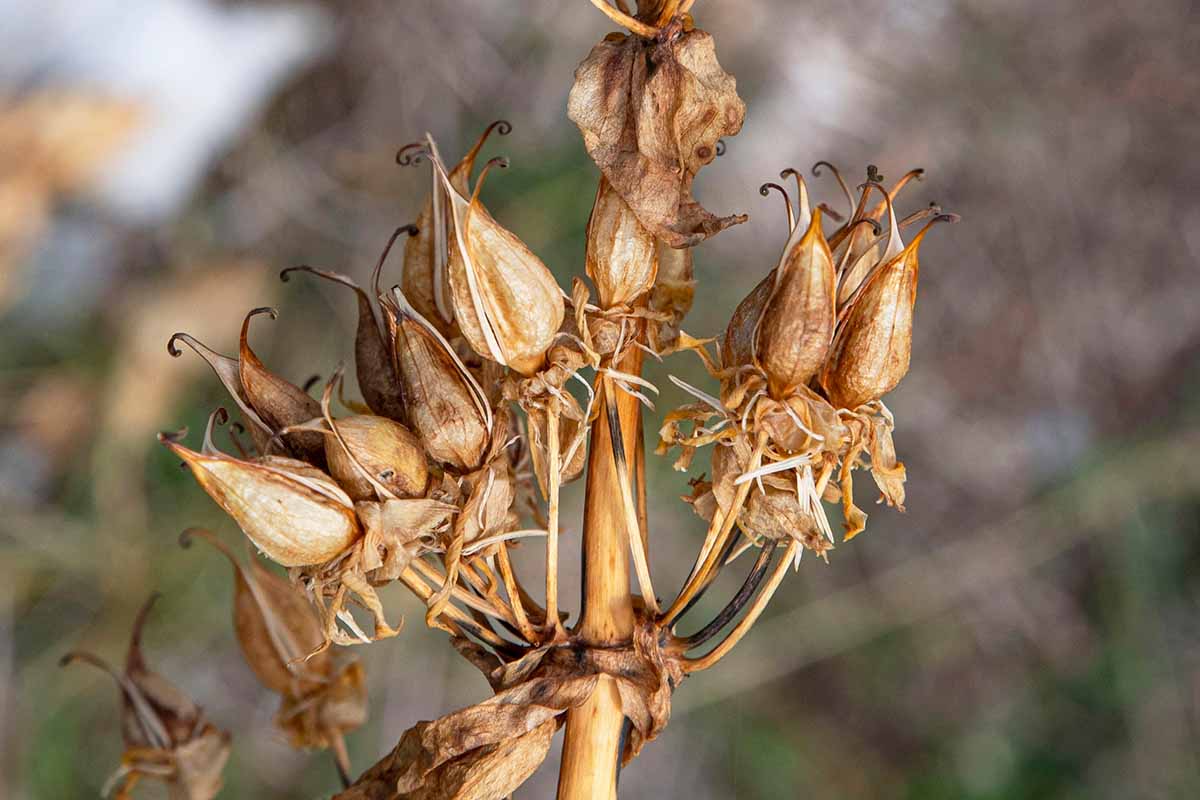
Collect ripe seed cases after flowering.
- When completely dry, gently rub the pods between your fingers to remove the seeds.
- The seeds are known to be slow and often difficult to germinate – for a sprouting boost, cold stratification is recommended.
- Mix gentian seeds with damp sand and place in a loosely closed plastic bag, then chill in the refrigerator for eight to 12 weeks before sowing.
- Prepare trays or individual containers with a starter potting mix.
- Scatter the seeds lightly and press into the surface or barely cover with soil.
- Water gently and maintain lightly moist soil.
- Place in a brightly lit but cool location – 60 to 70°F works best.
- Germination can be spotty but sprouts usually appear within four to six weeks.
After all danger of frost has passed, harden off seedlings for at least one week before transplanting out.
Pests and Disease
Gentians are mostly problem free, but there are a couple of issues to watch for.
Although grazing herbivores avoid them, snails and slugs will eat new growth. Handpick and dispose of gastropods in the early morning or early evening.
Pathogen problems like crown or root rot can develop in wet or soggy soil. Before planting, ensure they have a well-draining environment.
True Blue Charm
With their fantastically intense true blue coloring, gentian wildflowers make a charming addition to beds, containers, edging, and rockeries.
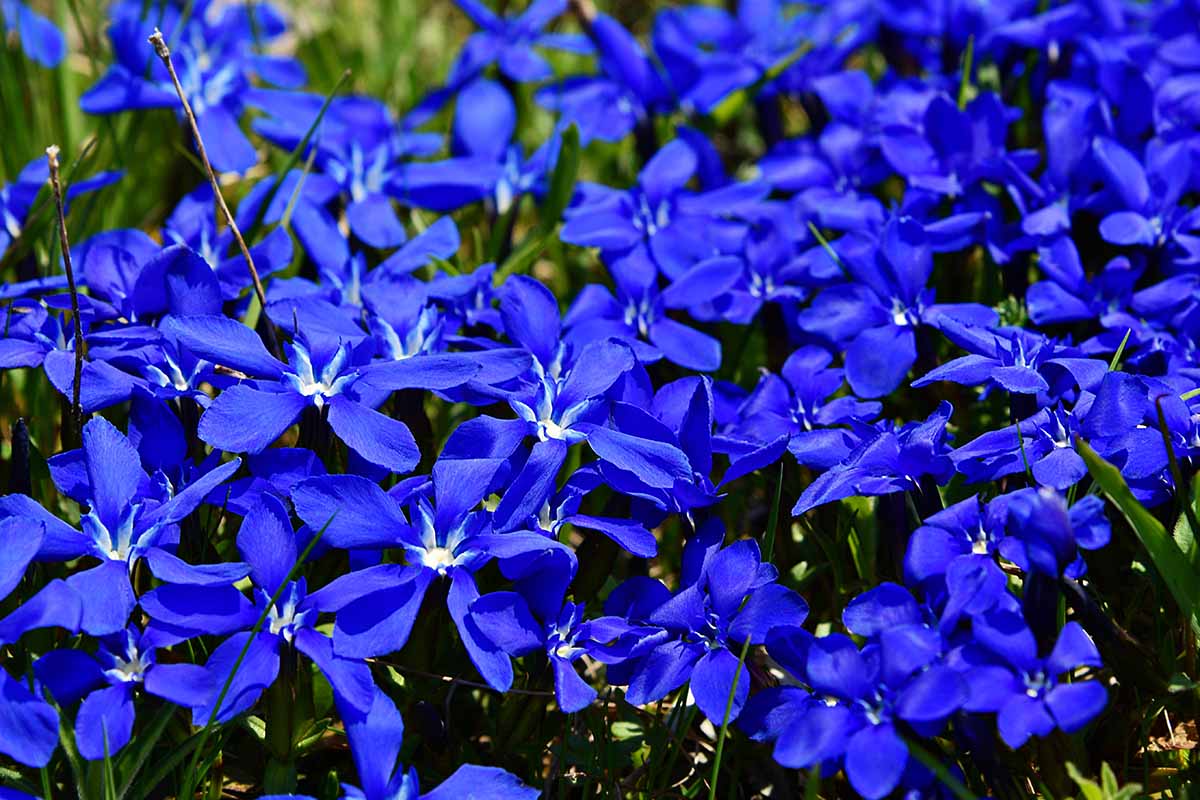
And although these are tough and hardy plants, they’re delicate in high heat and humidity.
Provide them with cool to warm temperatures, humusy soil with a sandy texture, excellent drainage, and dappled light or afternoon shade for healthy growth and plenty of those dazzling flowers!
What types of gentian work best in your garden? Let us know in the comments section below.
And for more flowers to grow in your rockery, be sure to add these guides to your growing list next: