
Iberis spp.
Candytuft is the common name for pretty, low-growing ornamentals in the Iberis genus.
With popular annual and perennial options for home gardeners, both types have similar easy care growth habits and garden uses!
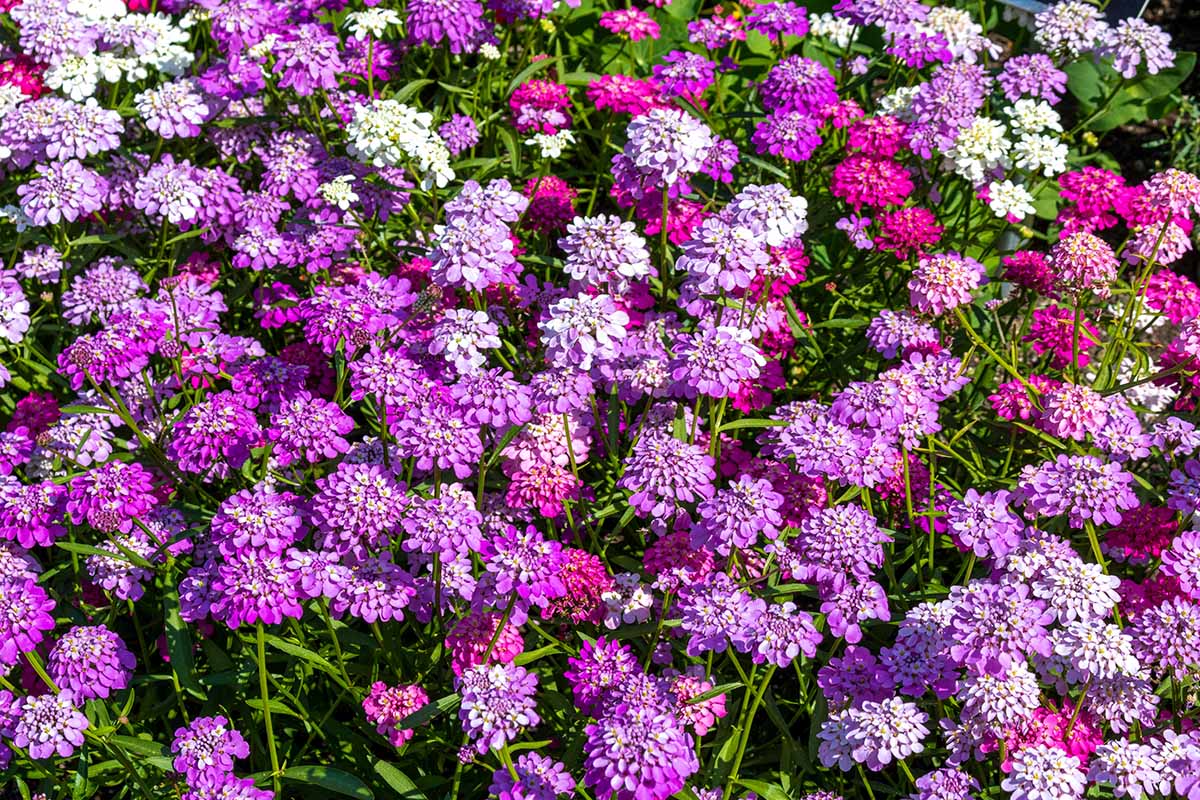
Annual species include globe candytuft (I. umbellate) and rocket candytuft (I. amara) which flower from late spring through summer.
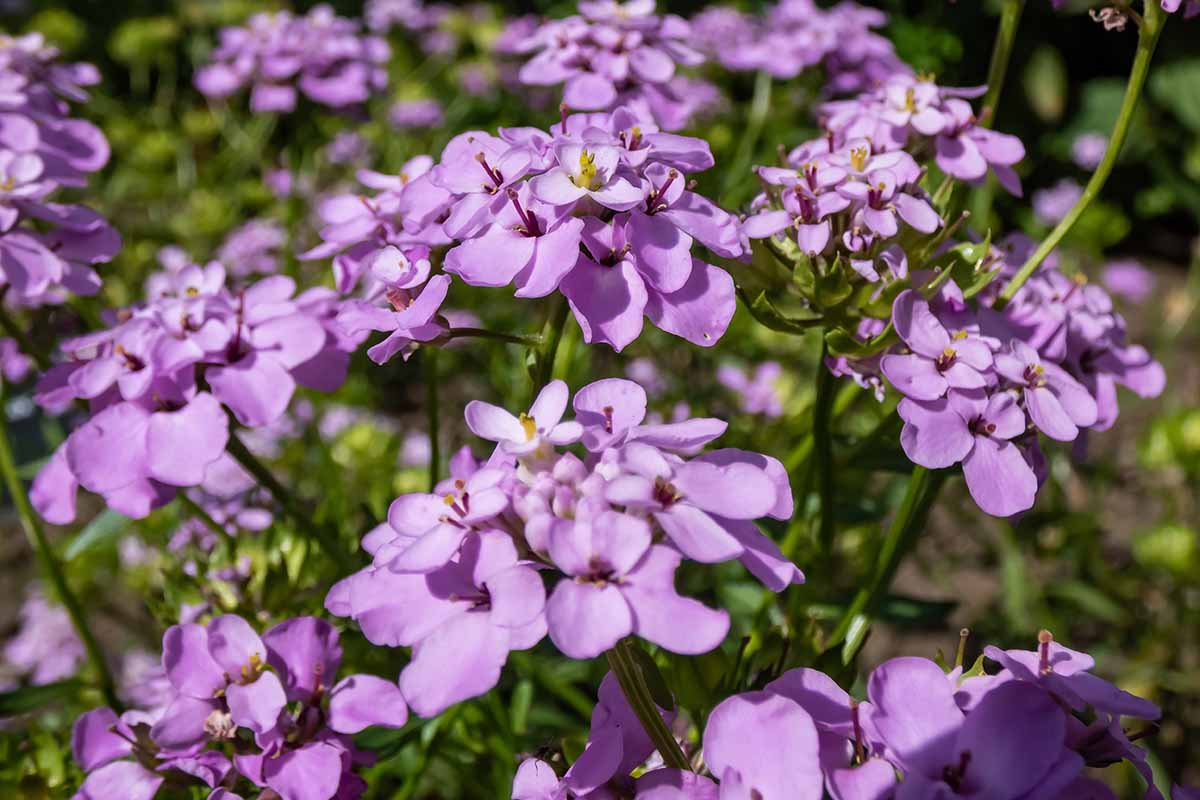
These provide the best range of flower colors, with fragrant, flat-topped corymbs in shades of mauve, pink, purple, red, and white.
Perennial varieties are cultivars of evergreen candytuft (I. sempervirens).
We link to vendors to help you find relevant products. If you buy from one of our links, we may earn a commission.
These are herbaceous plants that retain their narrow, glossy leaves in mild winters and give a reliable show of fragrant white flowers from early to late spring.
Both annual and perennial types are highly floriferous, spreading into attractive, multi-branched mounds that look superb in mixed beds, borders, containers, and edging or scrambling over walls and through rockeries.
The sweetly-scented flowers attract bees and butterflies and plants are resistant to foraging by deer and rabbits.
Does your garden need some clusters of fragrant, no-fuss plants to decorate a wide range of settings? Then let’s dig into the steps of how to plant and grow candytuft!
Here’s a preview of what’s ahead:
What You’ll Learn
Candytuft is a mounding, low-growing plant that develops into sweetly plump cushions of six to 12 inches tall with a spread of six to 18 inches.
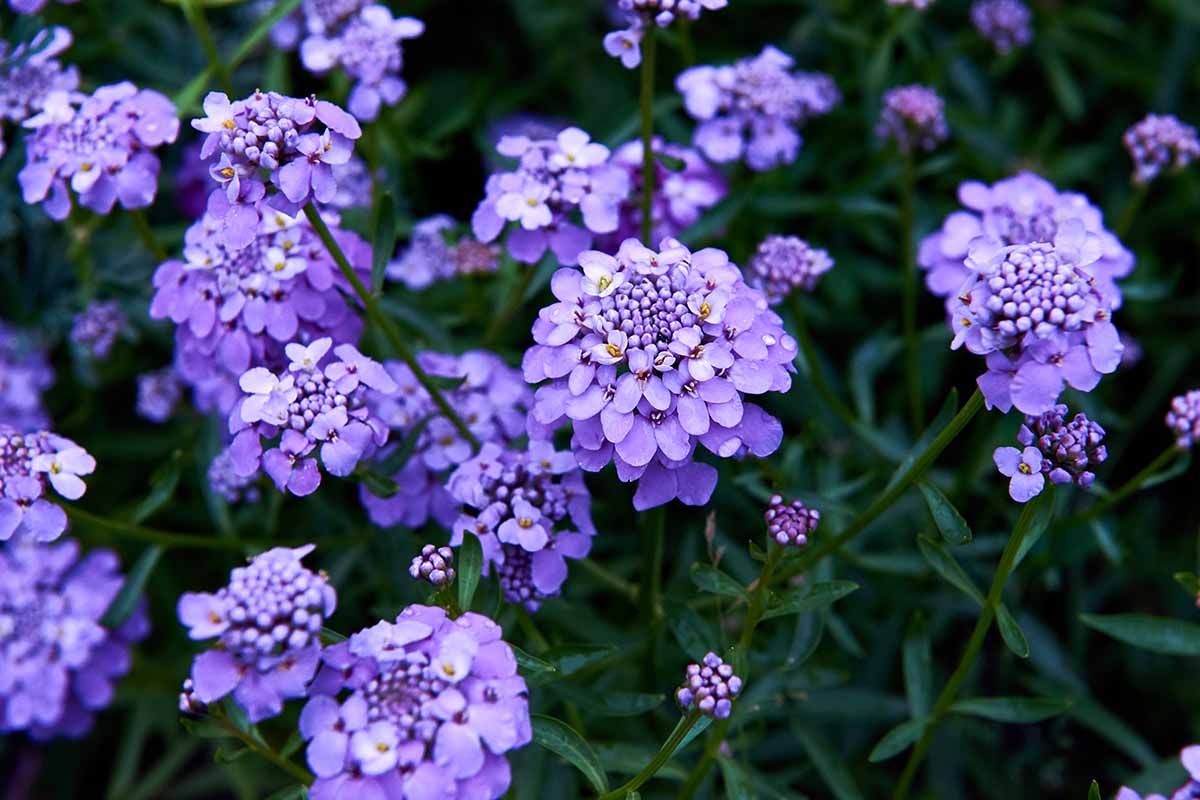
Native to southern Europe from the Iberian Peninsula to the Adriatic Sea, they thrive in full sun and well-draining soil.
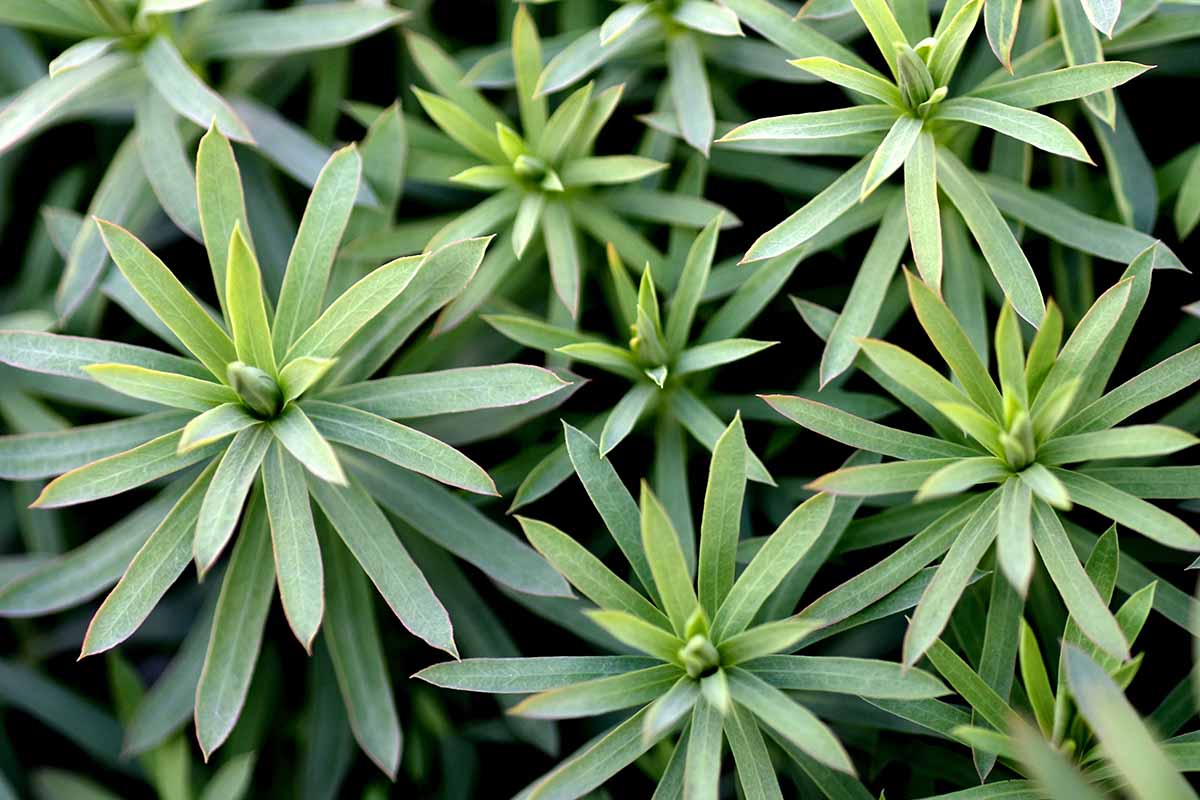
Both annuals and perennials feature narrow, dark green leathery leaves and the perennial cultivars are evergreen in mild winters or semi-evergreen in colder regions.
Quick Look
Common name(s): Evergreen, globe, and rocket candytuft
Plant type: Herbaceous perennial or annual
Hardiness (USDA Zone): 3-9 (perennials)
Native to: Southern Europe
Bloom time / season: Annuals: late spring to summer; perennials: early to late spring
Exposure: Full sun
Soil type: Average to lean, well-draining
Soil pH: 6.0-8.0, slightly acidic to slightly alkaline
Time to maturity: Annuals: 60-70 days from seed; perennials: 2-5 years
Mature size: 6-12 inches tall by 6-18 inches wide
Best uses: Ornamental borders, containers, edging, ground cover, rock gardens, and cascading over walls or rock faces
Taxonomy
Order: Brassicales
Family: Brassicaceae
Genus: Iberis
Species: Amara, sempervirens, umbellata
Perennial evergreen types develop semi-woody, well-branched stems that produce a profusion of fragrant, snowy white or mauve corymbs.
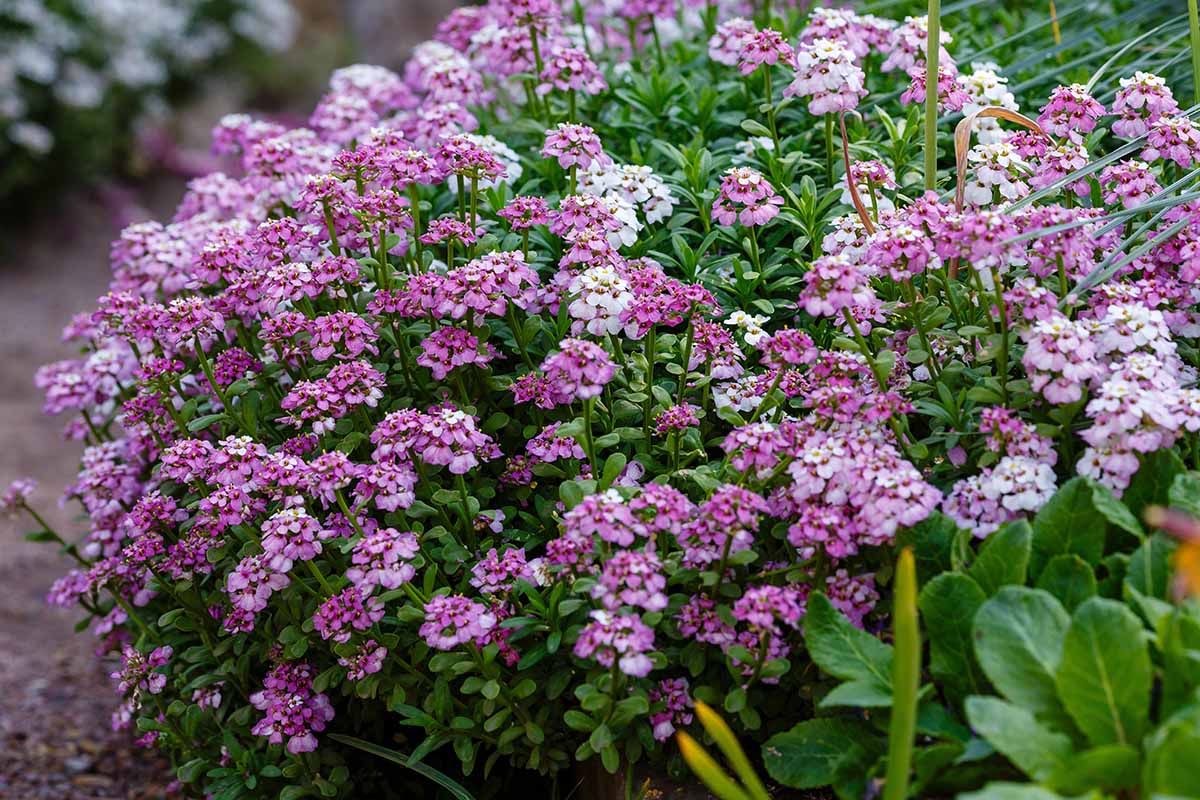
Blooming from early to late spring, the flower clusters are often so dense they obscure the leaves beneath.
Annual varieties are fast blooming and are often started from seed.
They have a similar multi-branched form with an abundance of scented corymbs in reddish tones of lilac, pink, rosy purple, scarlet, and white, blooming from late spring through summer.
How to Grow
Now let’s take a closer look at the details for how to plant and grow candytuft.
Light
A full sun location is the best spot to produce an abundance of flowers. Plants tolerate light shade but too much shade typically results in fewer blooms.
Soil
Iberis species and cultivars are adaptable to a variety of soils but do best in average to lean mediums with a sandy or gravelly texture, similar to their native Mediterranean habitat.
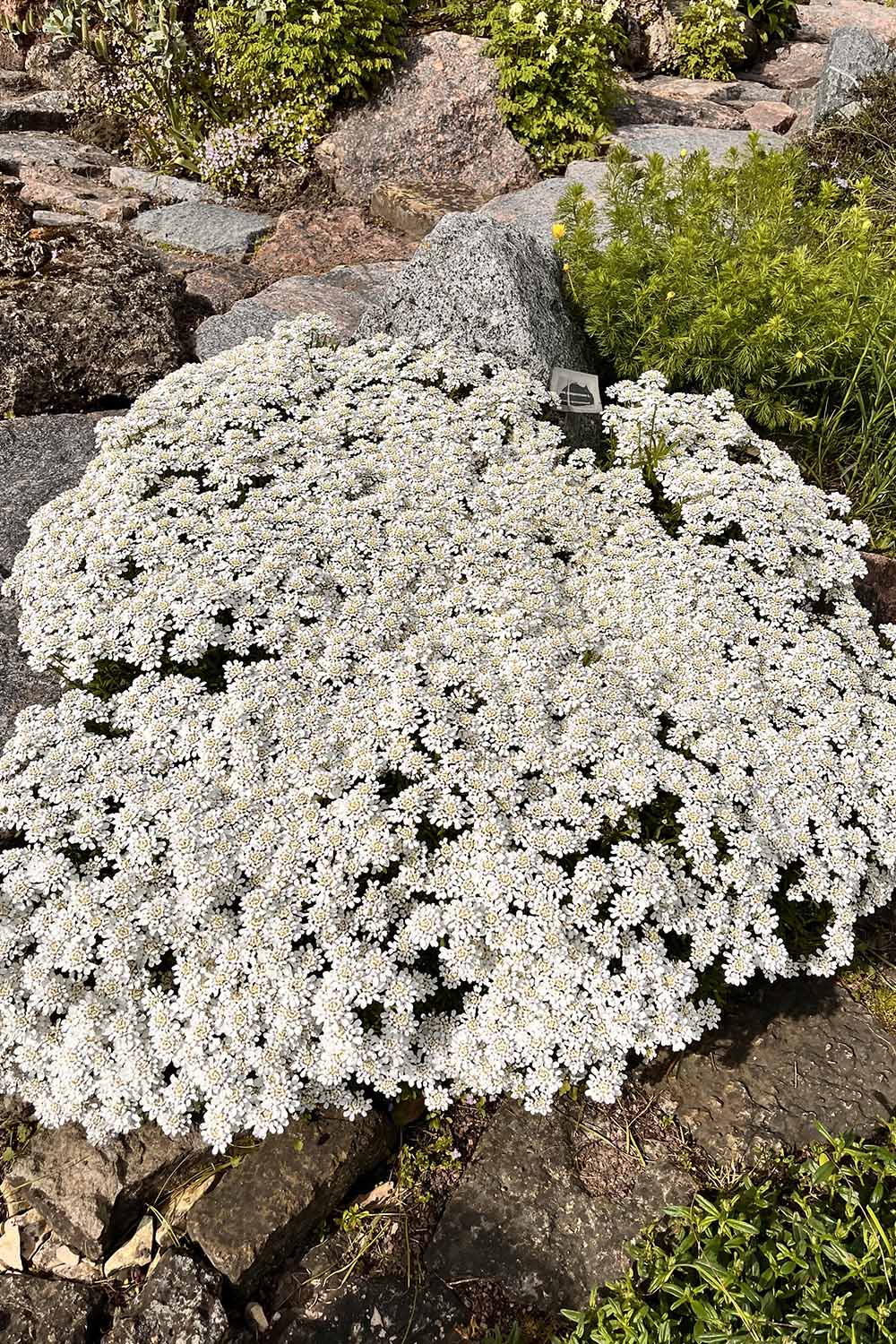
However, they are highly sensitive to wet conditions and heavy clay should be avoided – well-draining soil is key to their vitality.
Here’s how I like to prepare planting sites for annual and perennial candytuft.
- Use a spade or garden fork to loosen the soil to a depth of 12 inches.
- Add in one part of organic matter such as compost, well-rotted manure, or worm castings.
- Add in one or two parts of grit to improve the drainage, using materials such as pea gravel, lava pebbles, perlite, landscape sand, crushed shells, or stone chips.
- To further improve drainage, pull the amended soil into small planting mounds approximately six inches high and 12 inches in diameter.
- Use a similar gritty, well-draining soil for container plants.
Avoid using sand only to aerate clay as the combination can harden substantially into an unusable lump!
Water
Seedlings and new plants require consistently moist soil, but once established, both annual and perennial types have good drought tolerance.
For mature plants, water deeply then allow the top two inches of soil to dry out between water applications.
More frequent watering is typically needed for container plants or during prolonged hot spells.
Temperature and Humidity
Candytuft varieties enjoy moderate growing conditions of cool to warm temperatures in the range of 65 to 80°F.
Excessive heat or high humidity can cause wilting, which makes Iberis better suited for areas with dryer air and low humidity.
Perennial I. sempervirens is hardy in Zones 3 to 9 while I. umbellata and I. amara are hardy only in Zones 7 to 9 and are grown as annuals in colder zones.
Fertilizer
Candytufts are average feeders that require little additional fertilization when grown in moderately rich soil.

Perennials benefit from a one- to two-inch top dressing of compost, leafmold, manure, or worm castings in early spring.
Work it in gently over the root zone with a hand cultivator or hori hori garden knife.
Alternatively, feed perennials with a balanced or flower boosting fertilizer, using either a liquid or slow release application in early spring and again after flowering.
Balanced feeds have formulas with equal amounts of nitrogen, phosphorus, and potash, such as 5-5-5 NPK.
I like to use Burpee’s Enhanced All Purpose fertilizer.

Burpee Enhanced All Purpose Plant Food
You can find it available at Burpee.
Flower boosting formulas are slightly higher in phosphorus, like 4-6-2 NPK.

Down to Earth has a good product that you can find available at Arbico Organics.
Annuals can be fed in spring with the same balanced or flower boosting formulas about one month after planting and again in midsummer.
Cultivars to Select
Let’s have a look at some popular perennial rootstock and annual seed options.
Alexander’s White
Growing only six-to-eight inches tall, ‘Alexander’s White’ (I. sempervirens) is a charming, carpet-forming variety that’s covered in masses of scented white flower clusters all spring.

Hardy in Zones 3 to 8, plants in one-gallon containers are available at Nature Hills Nursery.
Forte
A showstopper with improved vigor and a long flowering time, Snowsurfer™ ‘Forte’ (I. sempervirens) features a dense display of fragrant white flowers that start blooming in early spring and last for weeks.

Hardy in Zones 4 to 9, plants in one-gallon containers are available at Nature Hills Nursery.
Rose Cardinal
Pretty and fragrant, the heirloom cultivar ‘Rose Cardinal’ (I. umbellata) is grown as an annual that gives clouds of rosy mauve flowers throughout the summer for an alluring groundcover or container plant.

Packets of seeds in a variety of sizes are available at Eden Brothers.
Maintenance
In fall after annuals have stopped flowering or been killed by frost, remove the plants from beds and containers and dispose of or toss them in the compost.

Perennials benefit from a light pruning in fall to maintain a compact habit and to encourage branching for more flowers.
Use clean, sharp shears to cut back plants by as much as one third.
If your garden is in the colder end of their hardiness range, Zones 3 and 4, an airy covering of evergreen boughs, burlap, or floating row cover fabric offers easy protection from desiccation if the snow cover is inadequate.
Propagation
Candytuft is easily propagated by division in spring or fall, stem cuttings in summer, and seeds in spring.
- To divide perennials, in spring or fall dig out plants in one piece.
- Use a clean, sharp spade to divide the rootball into equal pieces.
- Replant one section back into the original site and distribute the others as desired, planting into prepared, well-draining soil.
Stem cuttings from perennial plants are best taken in early to midsummer after flowering has finished.

- Use clean, sharp shears to take three-to-five-inch cuttings from healthy, nonflowering stems.
- Strip leaves from the bottom half of stems.
- Dip the stripped end into a rooting hormone if desired.
- Insert stems into cells or small pots filled with a moistened sterile starter soil mix.
- Place in a location with bright, indirect light.
- Keep the soil lightly moist until roots form in three to four weeks.
- Plant out when the temperatures cool at the end of summer or early fall.
If you collect your own seeds, use stock from species plants only – seed from cultivated varieties typically don’t grow true to the parent plant.
- Seeds can be direct sown after your last frost date.
- Sow seeds a quarter of an inch deep into prepared soil in a sunny, well-draining location.
- Water lightly and ensure the soil surface stays lightly moist for the best germination, which takes place in 10 to 20 days.
- Maintain lightly moist soil for the seedlings and when they have four to six leaves, thin to six to 12 inches between plants.
You can also use the thinned seedlings to transplant into other locations.
Pests and Disease
Candytuft is mostly an easy-care plant, but there are a few issues to watch for.
Caterpillars, slugs, and snails are the primary pests and these can be hand-picked and disposed of.
Crown rot is a common problem caused by wet soils and can be avoided by providing plants with a well-draining location.
Other microbial problems such as powdery mildew and fungal leaf spots can be prevented by giving plants a full sun location with adequate air circulation.
Fragrant and Easy Care
Delightful as a fragrant groundcover, rockery plant, or spilling over container sides and walls, candytuft can be enjoyed from early spring to the end of summer.
Give them a full sun location and keep the soil lightly moist for new plants. Then once they’re established, allow the soil to dry out between water applications.
Fertilize in spring and ensure they have a well-draining site for healthy, vibrant plants.
What type of candytuft do you plan to use? Annuals, perennials, or a combo? Let us know in the comments section below!
And for more flowering ground cover ideas for your landscape, check out these guides next: