Primula meadia
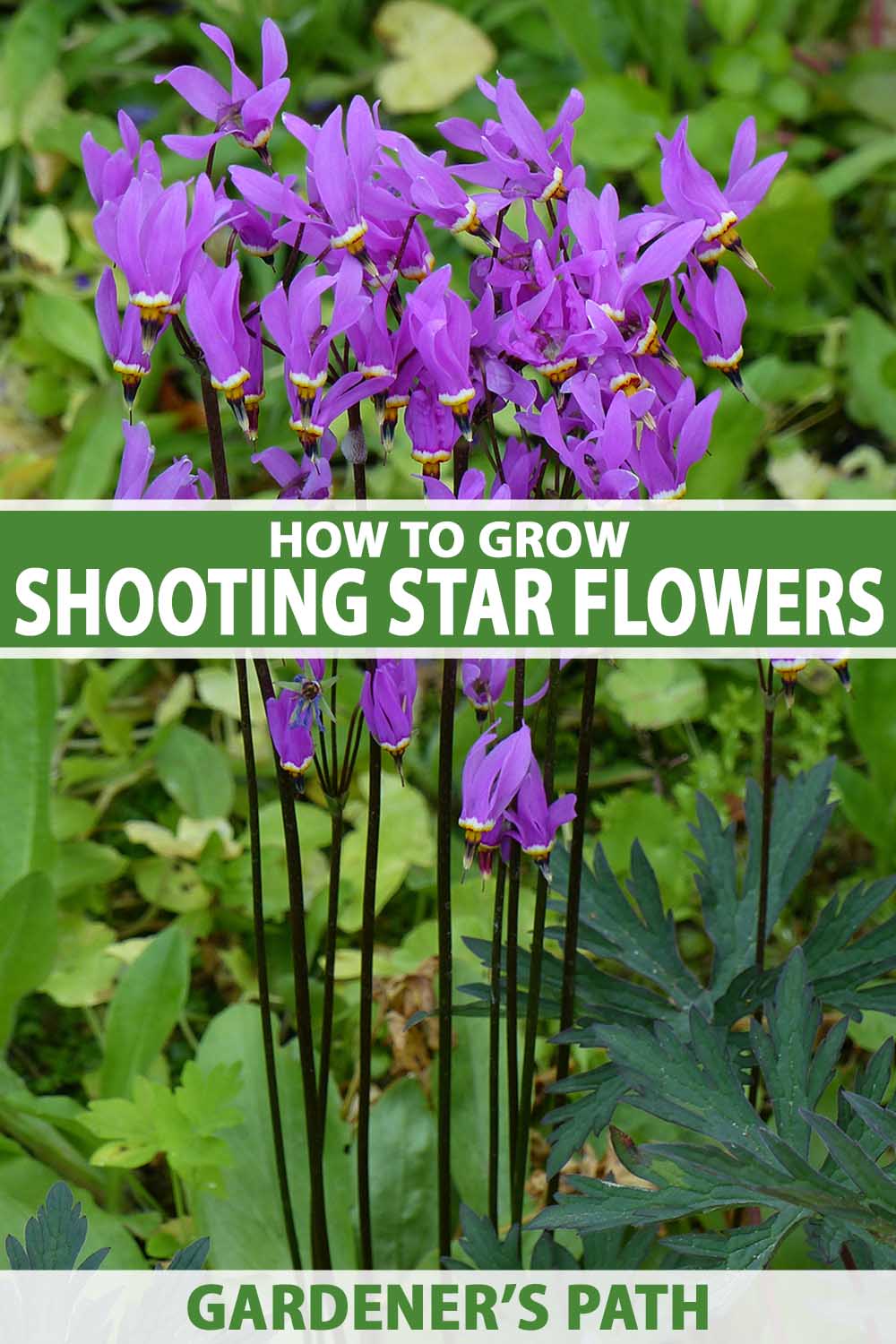
Shooting star, Primula meadia, (syn. Dodecatheon meadia), is a North American wildflower in the Primulaceae or primrose family suited to cultivation in Zones 4 to 8.
In early spring, basal rosettes of red-tinged green, spear-like foliage emerge.
They are soon followed by leafless stems called inflorescences with flattened clusters of blossoms called umbels at the top.
As the flowers bloom in shades of pink, purple, or white, the blossoms nod demurely downward, while their backward or reflexed petals point sharply upward, like those of a coneflower.
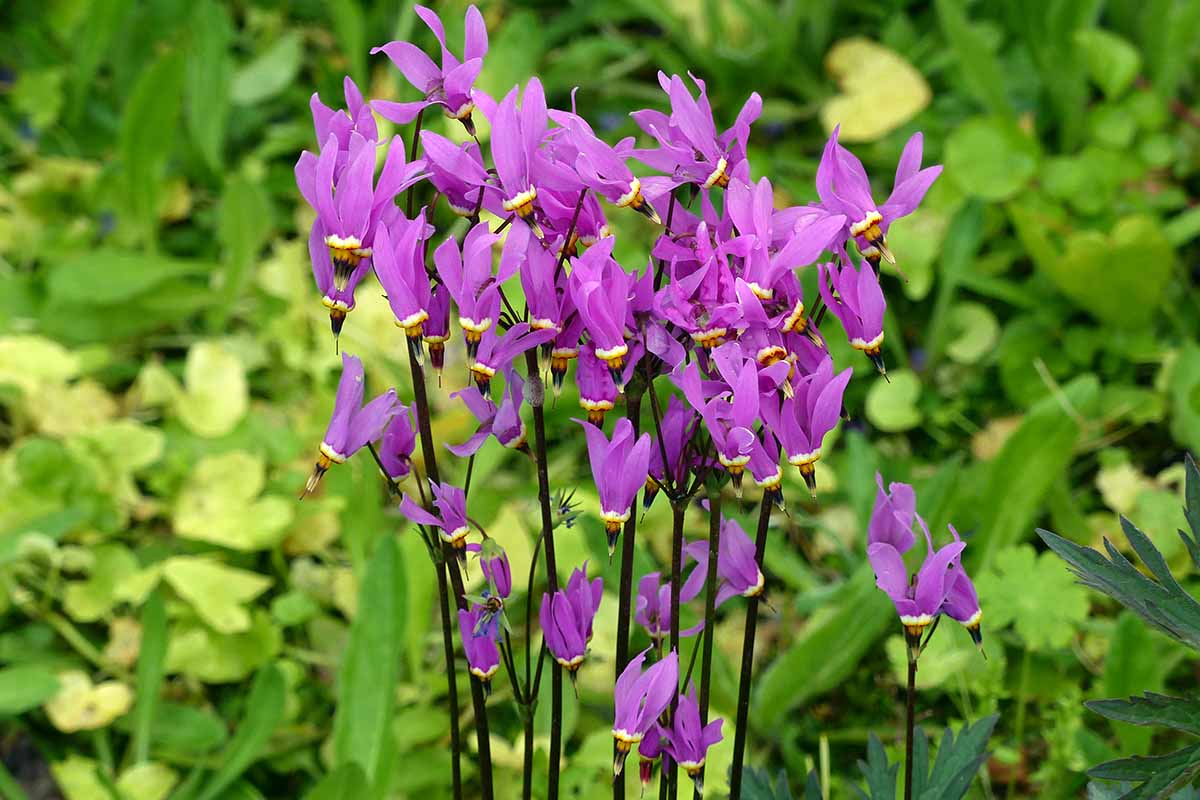
In early summer, the foliage begins to fade and elongated brownish seed capsules form from which tiny seeds disperse.
By mid-summer, this ephemeral early bloomer vanishes from view, remaining in dormancy until the following spring.
Once plentiful in prairie grasslands and open woodlands, it is becoming scarce and has protected status in Florida, Michigan, and Pennsylvania.
By purchasing seed or plants from reputable nurseries, gardeners can help to conserve the species in their home landscapes.
Read on to learn how to grow this charming wildflower in your landscape. Here’s what we’ll cover:
What You’ll Learn
There are about 12 species in the Dodecatheon genus, with D. meadia being the most common. In 2007, the Dodecatheon species were reclassified into the Primula genus.
This reclassification was considered controversial by some botanists.
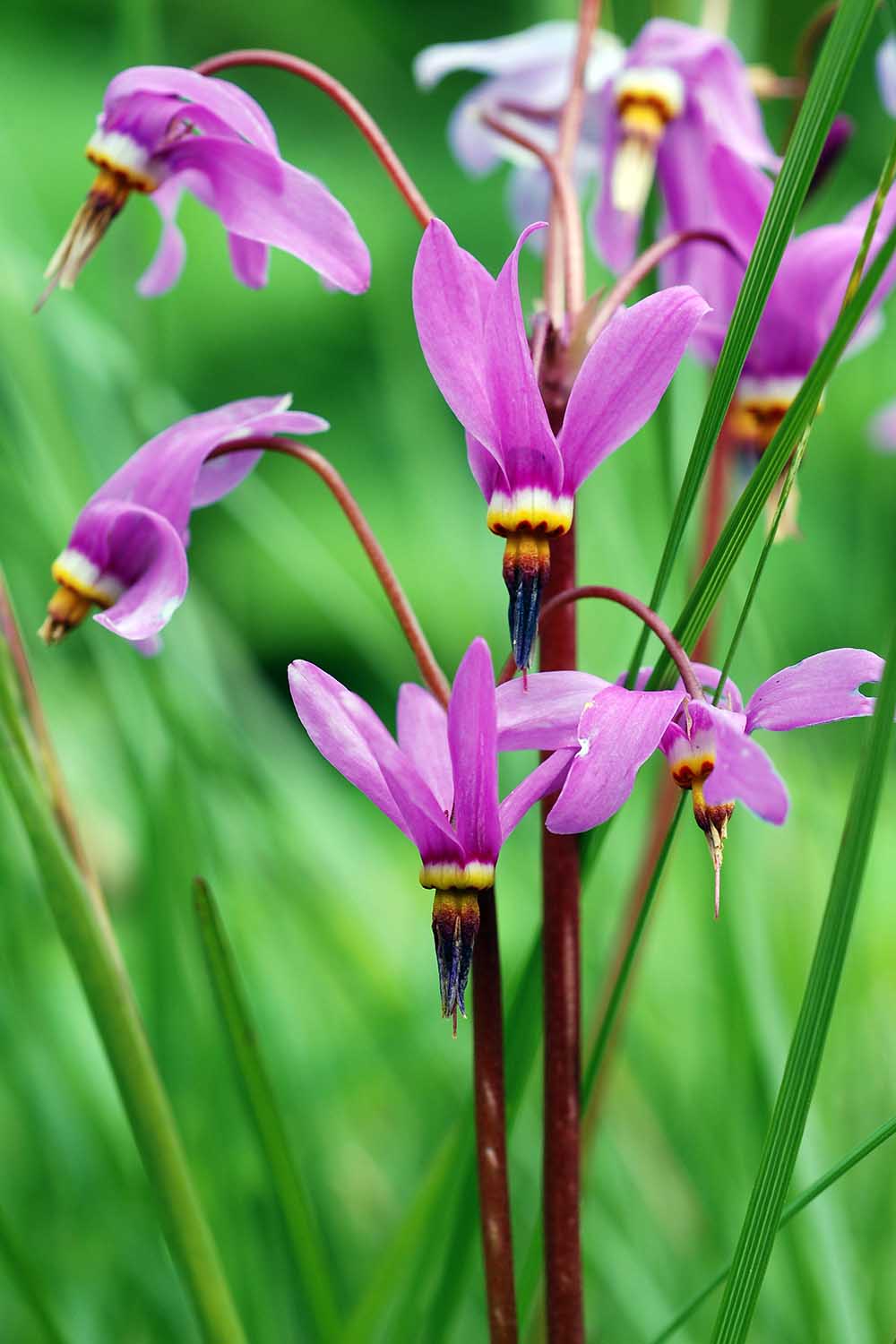
The jeweled shooting star, P. fassettii (syn. D. amethystinum) is quite similar but even rarer.
It has brighter magenta petals, a later bloom time, and a preference for limestone-rich slopes.
And while you may find the jeweled shooting star available for purchase, note that it is less tolerant of the range of well-draining garden soils to which P. meadia is able to adapt.
P. media has a variety of common names, including eastern, midland, or prairie shooting star, prairie cowslip, and pride of Ohio.
Shooting star is native to eastern and central North America, and is typically found in open prairies, rocky slopes, and on the edges of woodlands.
Quick Look
Common name(s): Eastern, midland, or prairie shooting star; prairie cowslip; pride of Ohio; shooting star
Plant type: Herbaceous perennial
Hardiness (USDA Zone): 4-8
Native to: Eastern and central North America
Bloom time: Late spring
Exposure: Part shade to full sun
Soil type: Fertile, moist, well-draining
Soil pH: 6.5-7.5, neutral
Time to maturity: 3-4 years
Mature size: 9-18 inches tall by 9-12 inches wide
Best uses: Bed and border specimen, meadow, pollinator garden, rock garden, woodland
Taxonomy
Order: Ericales
Family: Primulaceae
Genus: Primula (syn. Dodecatheon)
Species: Meadia
Gardening with native plants offers growers the opportunity to contribute to local biodiversity, attracting pollinators beneficial to local flora.
Shooting star appeals to early-season native bees, “buzz pollinators” that shake pollen free from flowers. As P. meadia produces no nectar, honeybees do not favor the species.
Plants grow slowly and spread via a fibrous root system and self-sowing. They readily colonize in dappled woodland shade and wildflower meadows.
Add them to rock gardens and showcase individual specimens in water-wise beds and borders, where later-blooming companions hide the post-bloom fading foliage, and don’t require excess summer moisture, as discussed below.
How to Grow
Shooting star readily acclimates to partially shaded Zone 4 to 8 gardens with moist, fertile, well-draining soil like that of its wild habitat.
They are accustomed to a temperate climate with four seasons and a cool, moist spring.
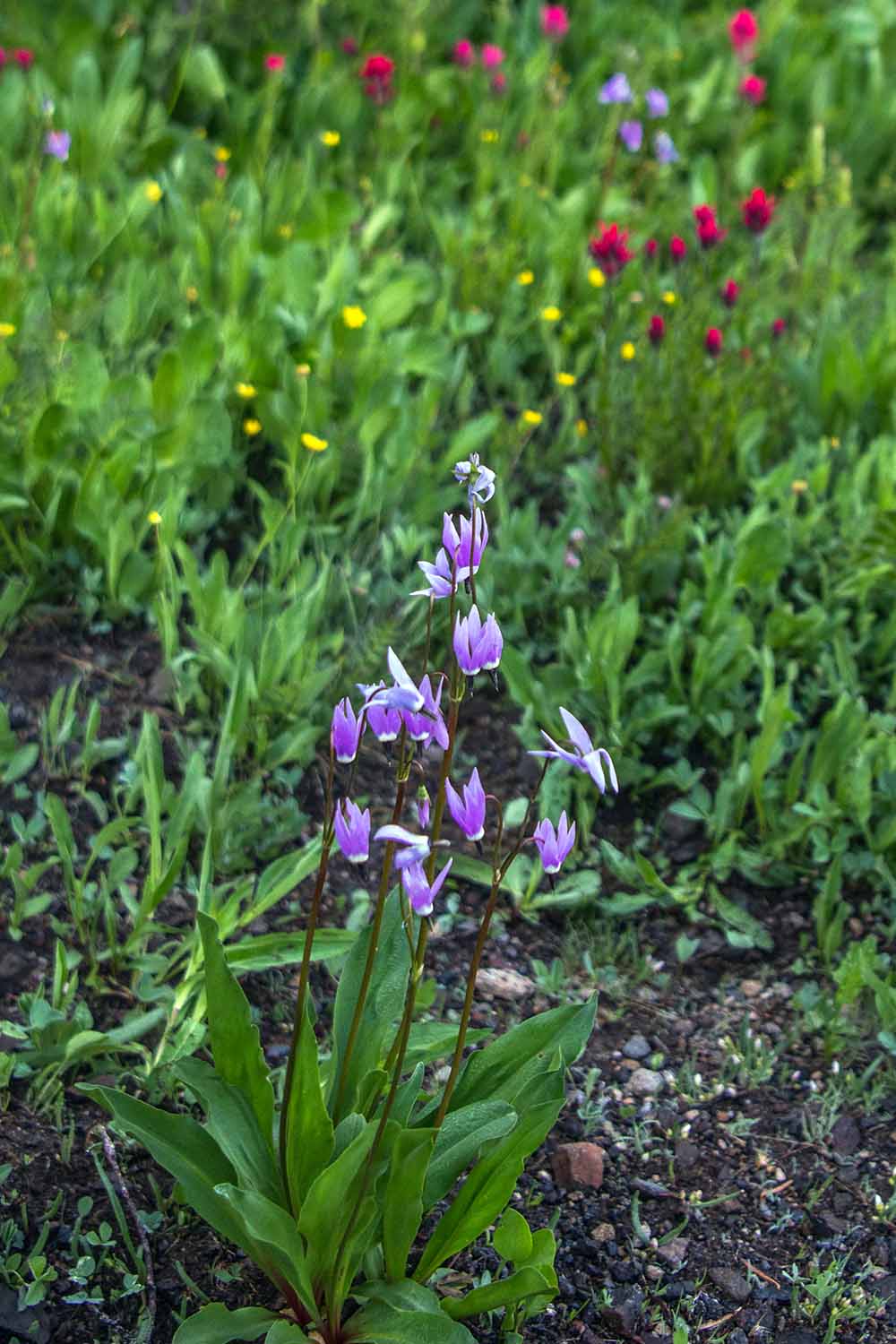
Regions that are too wet or too dry may be unsuitable for cultivation.
It is essential to remember that this is an ephemeral species that disappears once summer arrives, going dormant during which time the soil must not be allowed to become waterlogged.
Avoid planting water-craving summer flowers nearby, as perpetual saturation may cause the dormant roots to rot.
For best results, growers should also meet the following cultural requirements:
Light
The ideal setting for shooting star is partial shade, although plants tolerate full shade.
In the warmest regions, dappled sunlight through emerging spring trees, or afternoon shade are desirable options.
Shooting star will thrive in full sun in cooler areas, provided there is adequate moisture in the soil.
Soil
As mentioned, the preferred soil is organically rich and well-draining, but shooting star adapts to various soil types provided the drainage is good.
A pH in the 6.5 to 7.5 range is ideal. Conduct a soil test and make the recommended adjustments for best results.
Water
Consistently moist soil is a must from spring to midsummer. If it doesn’t rain during the week, water when the top inch of soil is dry. Use a moisture meter as a guide.
When the seeds have set and the foliage has withered, discontinue supplemental watering and avoid oversaturating the soil during the dormant period from midsummer to spring.
Fertilizer
Fertilizer is not required if you’re growing shooting star in organically-rich soil.
However, if you wish to boost soil nutrients, you can sprinkle a slow-release, granular 5-10-5 (NPK) feed in early spring.
Avoid using fertilizer with higher nitrogen concentrations that may produce excess foliage and few flowers.
Where to Buy
Straight species shooting star seeds and plants are available from native plant nurseries and online suppliers.
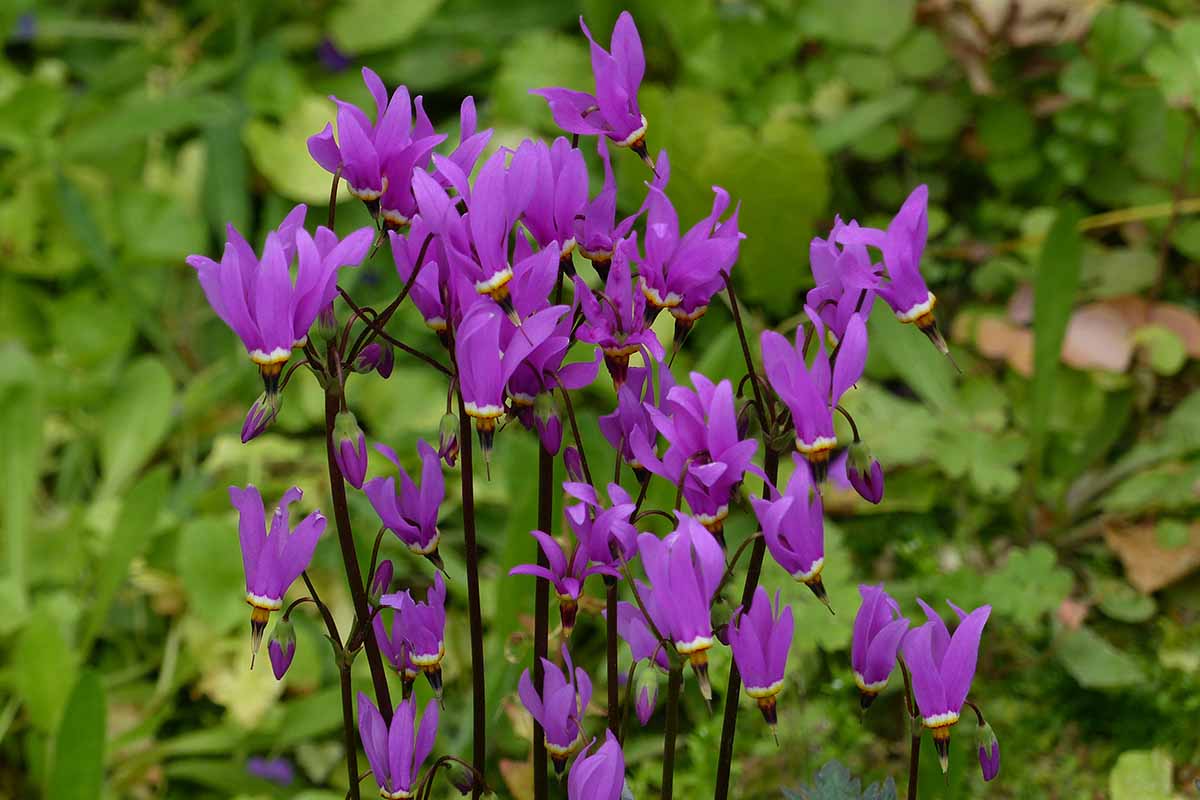
When purchasing seeds, check that they are packed for the current growing season to ensure optimal viability.
There are also cultivated varieties. The crisp, snow white blossoms of ‘Alba’ are larger than those of the wild species.
Pink ‘Aphrodite’ boasts blossoms and stems of a larger, sturdier nature. And ‘Queen Victoria’ delights with light pink flowers.
Maintenance
There are few maintenance chores with native wildflowers. You can divide them in early fall if they become overcrowded or start to grow beyond desired boundaries.
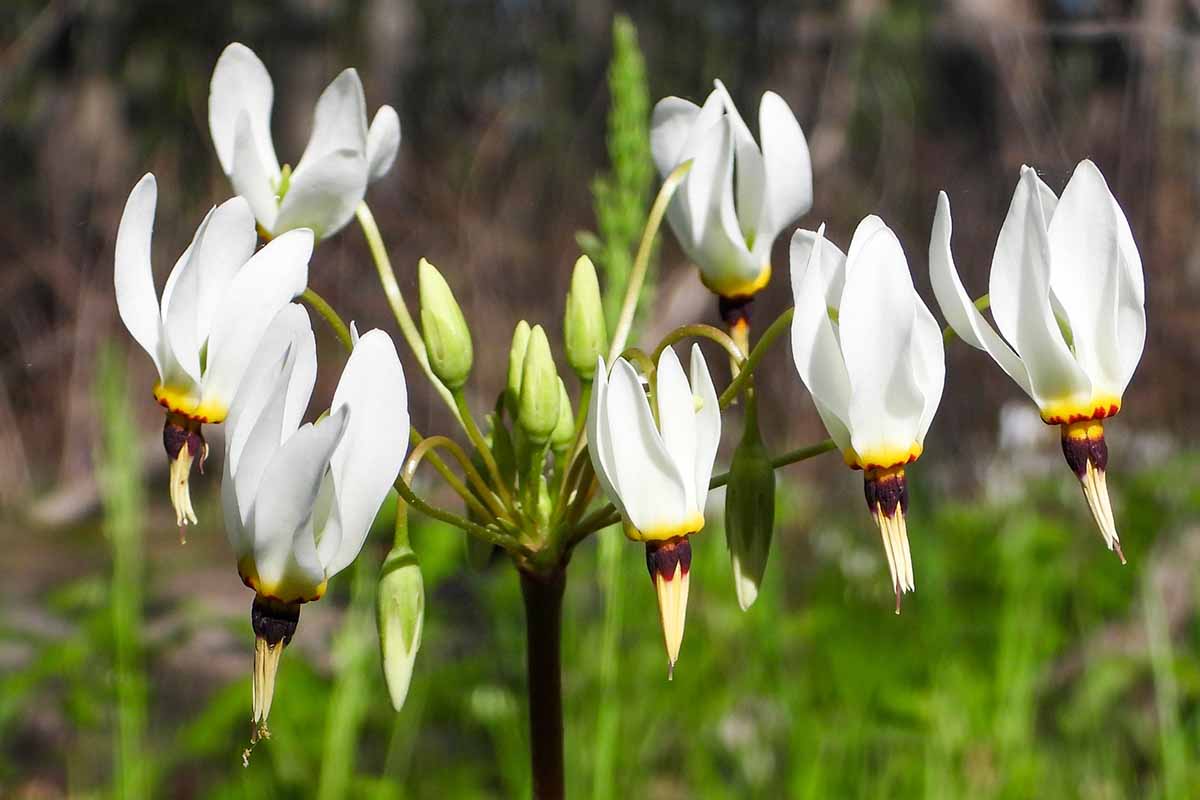
Post-bloom, you can deadhead shooting star before the flowers set seed to tidy the garden.
Snip the leafless inflorescences near the base in the basal leaf rosette.
Allow the foliage to remain in place and wither naturally to avoid damaging the crown, where the stems and roots meet.
Propagation
To grow shooting star in your outdoor living space, you’ll need seeds, bare rootstock, divisions, or nursery plants.
Let’s explore these options.
From Seed
From seed to bloom can take three to four years and is the slowest method for starting plants.
If you choose this option, collect the seeds from the dry, brown pods of a friend’s plant in the summer, and store them in a jar in a cool, dry, dark place until early fall.
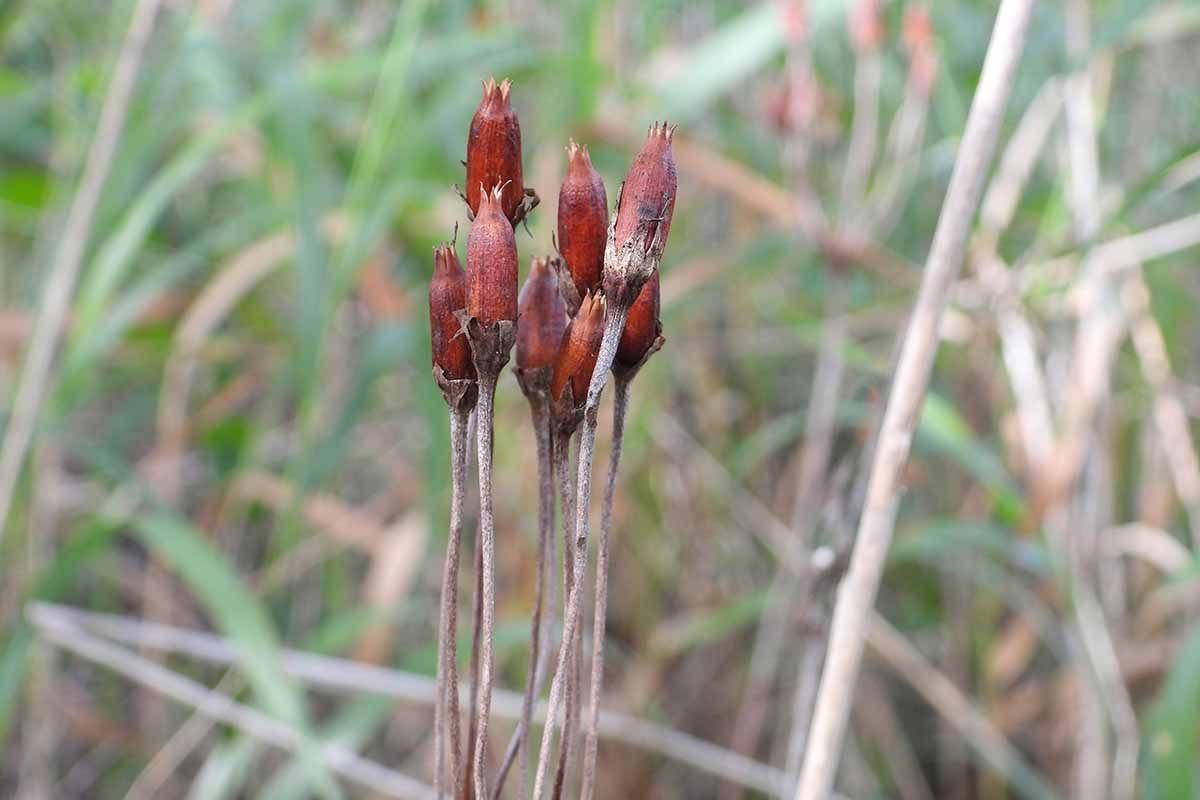
Alternatively, purchase seed packets dated for the current growing season.
In early fall, at least six weeks before the first average frost date for your region, prepare garden soil by working it to a depth of four to six inches until it is crumbly and free of roots, sticks, and stones.
Scatter a few seeds every nine to 12 inches. Do not cover them with soil.
Winter’s cold will provide the chill needed to induce germination.
When the seeds sprout the following spring, begin misting the soil lightly to keep it evenly moist during the seedling stage.
Withhold supplemental water if it rains during the week to avoid oversaturation.
When the seedlings have two sets of true leaves, thin them to one per interval.
Continue to maintain even moisture through early summer. There will be flowerless foliage for the first few years. It will wither and go into dormancy by midsummer.
From Bare Rootstock
You should plant bare rootstock immediately upon receipt, either in early spring or early fall.
Start by soaking it in tepid water for two to four hours to hydrate the roots.
Prepare a planting hole twice as wide and as deep as the rootstock.
Mound the soil slightly and drape the roots over the mound with the crown, from which the stem will grow, upright and at the soil surface.
Cover the roots with an inch of soil, leaving the crown tip exposed.
Water gently but thoroughly to settle soil air pockets.
Water weekly if it doesn’t rain.
By Division
Because of a tendency to suffer from transplant shock, it’s best to divide plants during dormancy in early fall.
Be sure to mark their location ahead of time to avoid unearthing the wrong ones, as the foliage will be gone.
Insert a long-handled shovel into the soil to dig up a clump of rootstock.
Rinse the roots and carefully separate and detach segments as desired.
Transplant the divisions to prepared soil, setting the crown at the original depth, at or slightly above ground level.
Return the remaining portion of the root clump to its original location.
Our guide to dividing perennials has details.
Transplanting
If you purchase potted plants from the nursery, transplant in early spring.
Water the pot the night before to loosen the soil and help the root ball come out easily.
Work the ground soil to the same depth of the pot and twice as wide.
Remove the plant from its pot and set it into the hole, making sure it’s at the same depth as it was in the growing container to minimize transplant shock.
Settle the contents of the container at the original depth to minimize transplant shock. The crown should sit at or slightly above grade to facilitate drainage.
Backfill with to hold the transplant firmly in place, then water in well.
Pests and Disease
Shooting star is not prone to pests or diseases.
However, slugs and snails may be drawn to tender young foliage and damp soil. Handpick the pests as they feed at night.
Surround plants with a ring of food-grade diatomaceous earth (DE) to kill them on contact.
The plants can suffer from root rot in overly wet soil, so ensure proper drainage to prevent irreversible damage.
Preserve a Prairie Treasure
Ephemeral spring flowers are a treat after a long, snowy winter.
When you grow native species like shooting star, they add more than beauty to the home landscape, improving soil quality via extensive root systems, supporting local wildlife, and promoting horticultural biodiversity.
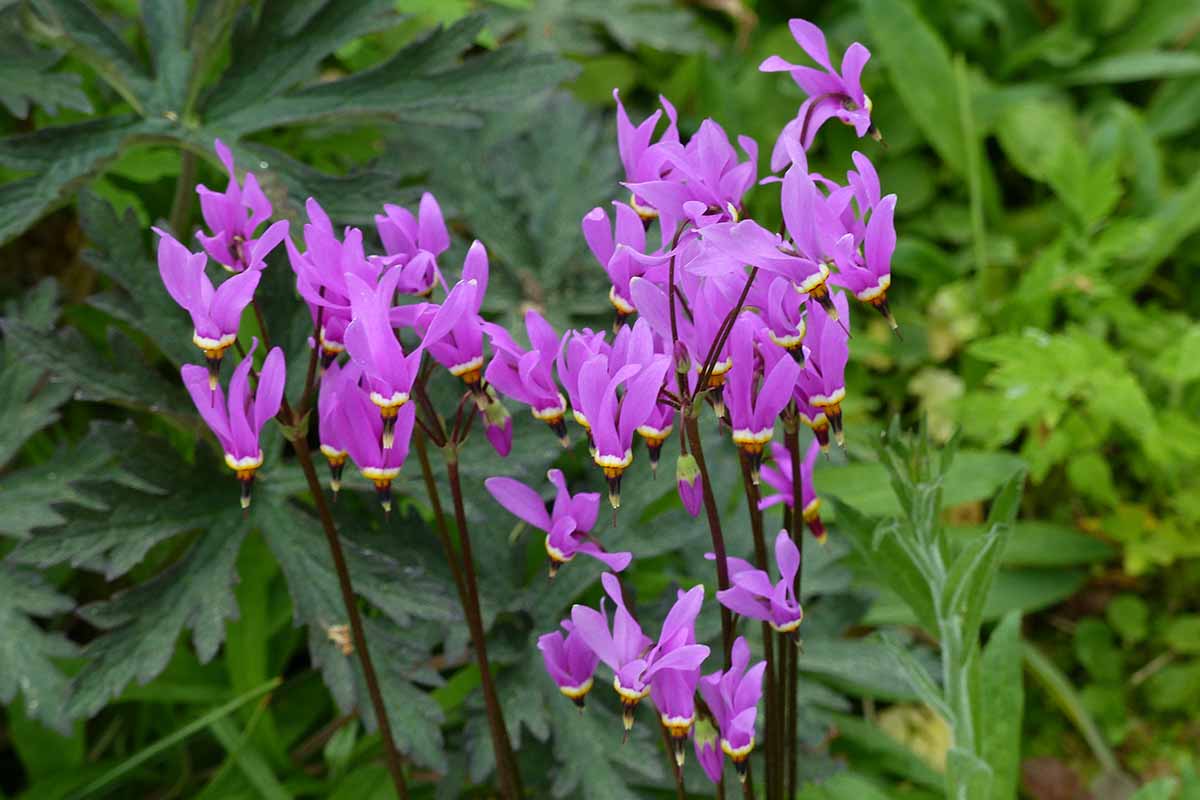
Where will you showcase early-season shooting star? A meadow, rock garden, or woodland? We can’t wait to hear about it in the comments section below.
If you found this guide informative, and want to read more about growing native wildflowers, we recommend the following: