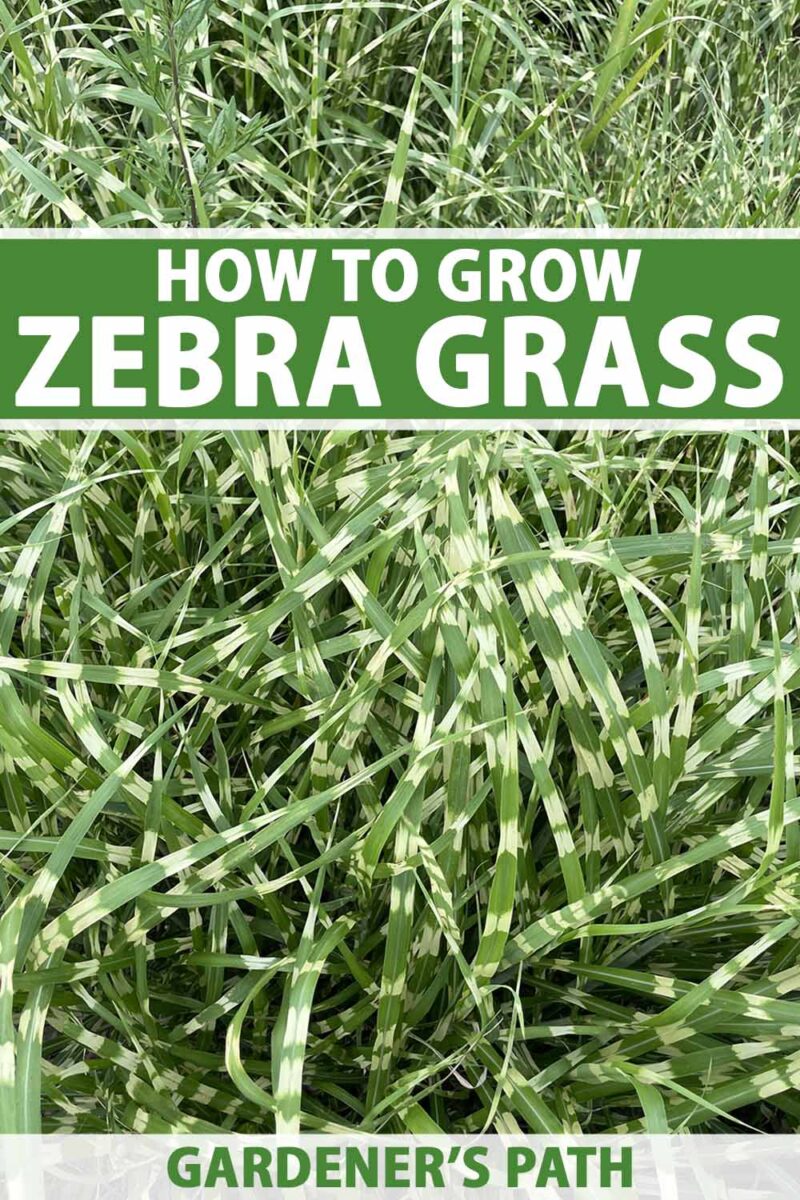
Miscanthus sinensis ‘Zebrinus’
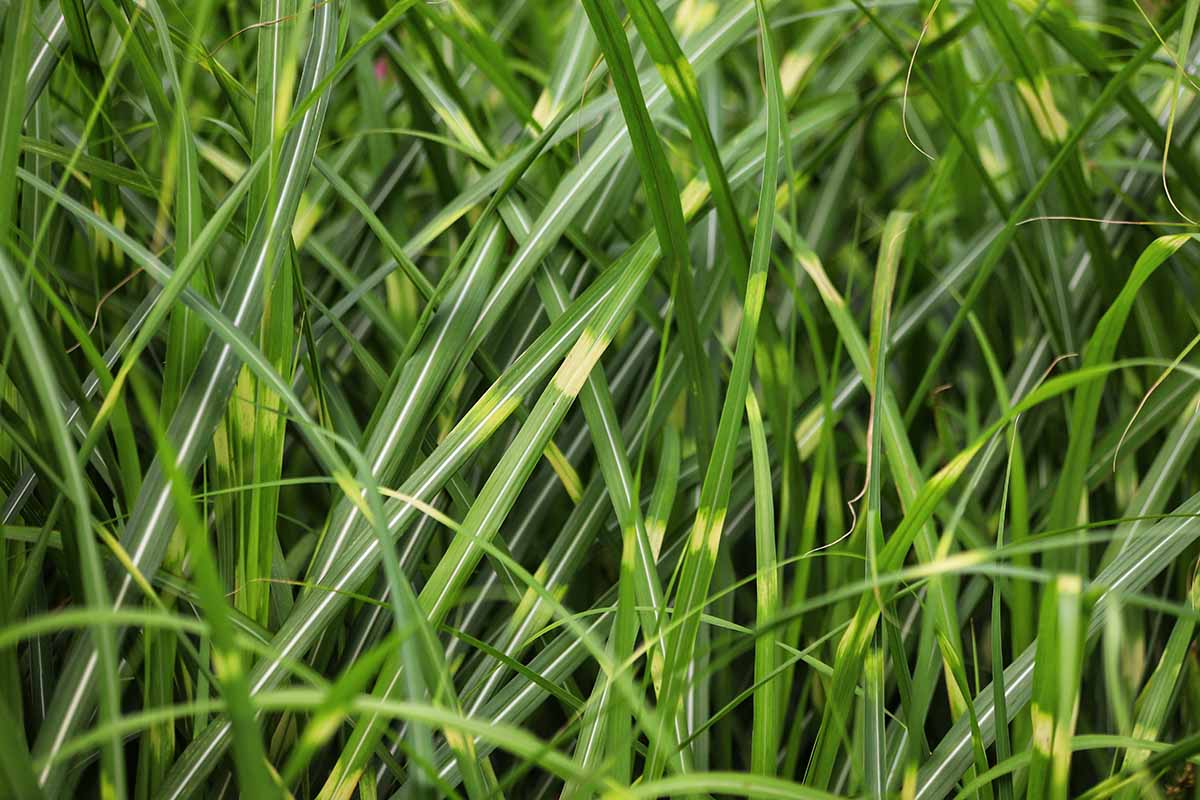
Zebra grass is an eye-catching ornamental grass with gracefully arching green foliage that sports bold, horizontal golden bands.
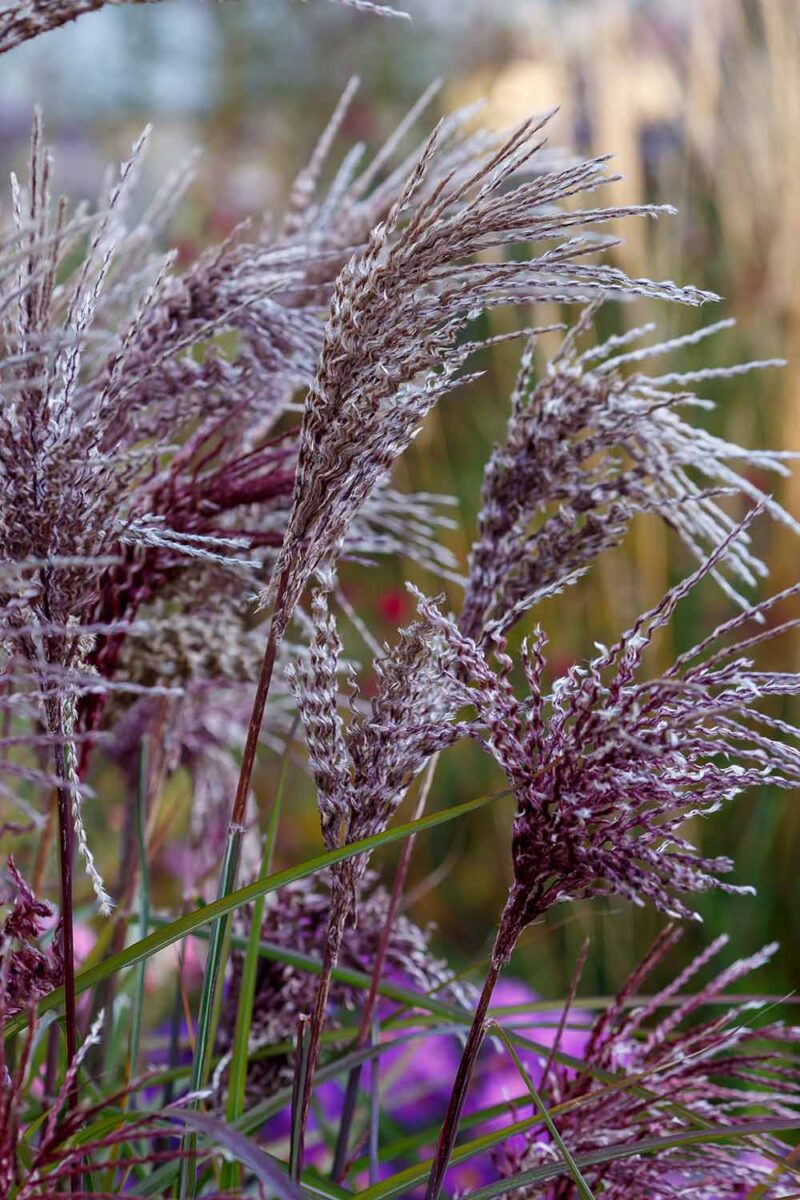
In late summer and early fall, tall feathery plumes emerge above the foliage, giving the plant an elegant, airy quality.
As winter sets in, the dried foliage takes on warm golden hues, adding structure and texture to the dormant landscape.

We link to vendors to help you find relevant products. If you buy from one of our links, we may earn a commission.
In our guide to growing maiden grass, we cover how to successfully cultivate Miscanthus sinensis aka Japanese silver grass in your landscape.
This article zeros in on ‘Zebrinus’ aka zebra grass. Here’s what we’ll cover:
What You’ll Learn
This cultivar of M. sinensis, commonly referred to as maiden or Japanese silver grass, has a striking appearance and is a durable and adaptable addition to the landscape.

Native to east Asia, M. sinensis has been widely cultivated around the world as an ornamental grass for its ability to thrive in different climates and soil conditions.
Like the species plant, ‘Zebrinus’ is drought-tolerant once established, resistant to most pests and diseases, and provides visual interest throughout the year.
Quick Look
Common name(s): Zebra Grass
Plant type: Perennial ornamental grass
Hardiness (USDA Zone): 5-9
Native to: East Asia
Bloom time / season: Late summer to fall
Exposure: Full sun to partial shade
Soil type: Loamy, sandy, well-draining
Soil pH: 5.5-7.0, slightly acidic to neutral
Time to maturity: 2-3 years
Mature size: 5-8 feet tall by 4-6 feet wide
Best uses: Privacy screen, border, erosion control, focal point
Taxonomy
Order: Poales
Family: Poaceae
Genus: Miscanthus
Species: Sinensis
Cultivar: ‘Zebrinus’
This versatile grass is often used for practical as well as ornamental purposes. Its dense growth habit makes it an excellent natural screen or windbreak.
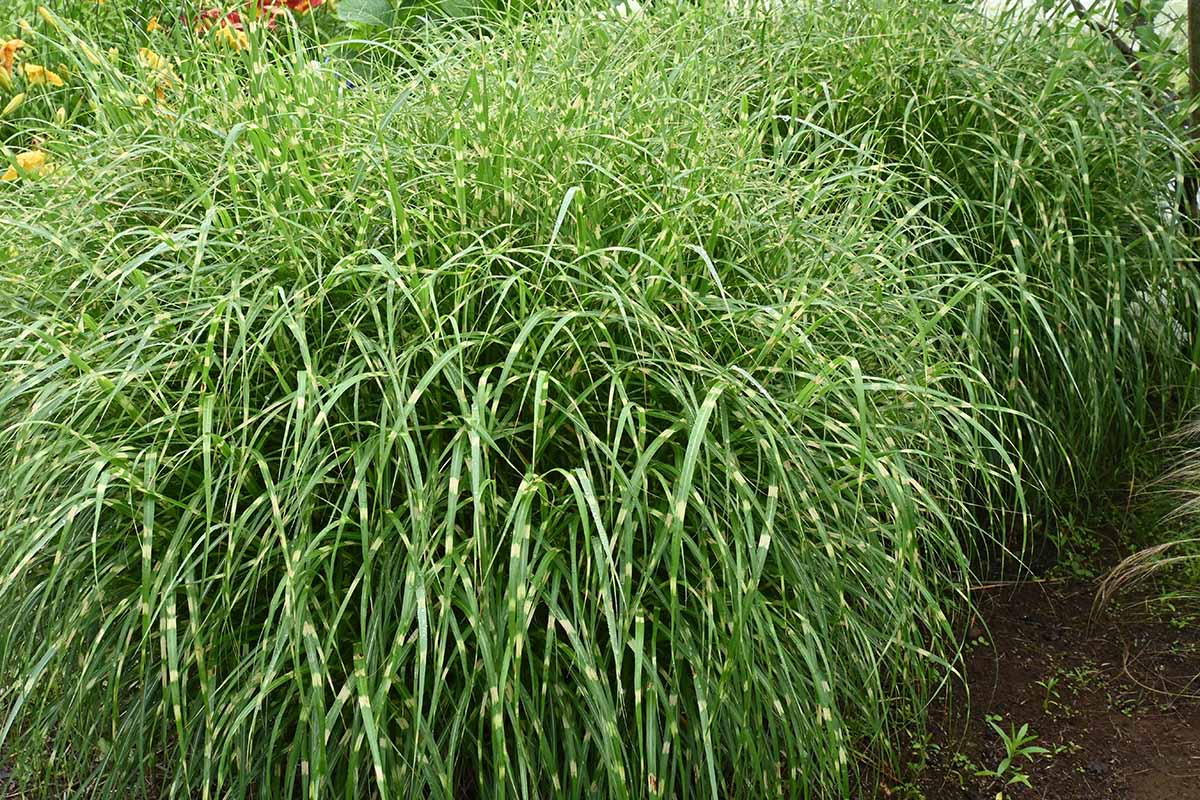
When planted in groups along borders or in naturalized areas, zebra grass provides height, movement, and texture to the landscape.
Thanks to its deep root system, the plant helps control erosion, making it a smart pick if you need to stabilize slopes or embankments.
And with minimal maintenance beyond seasonal pruning and division every few years, it’s an excellent choice for the busy gardener.
Hardy in Zones 5 to 9, ‘Zebrinus’ grows up to eight feet tall with a spread of about four to six feet.
How to Grow
Let’s take a look at what this easygoing plant needs to thrive.
Light
Zebra grass performs best in full sun, with at least six hours of direct light daily.
It can tolerate partial shade, but insufficient sunlight may cause weak, leggy growth and reduced variegation in the foliage.
A bright, open planting location will promote strong, upright growth and enhance the distinctive striping on the foliage.
In cooler climates, full sun is best to encourage maximum growth, while in hotter regions, light afternoon shade can help prevent leaf scorch.
When planting near walls or structures, ensure there is enough space for air circulation to prevent excessive humidity, which can contribute to fungal diseases.
Soil
This grass grows well in a variety of soils, including loamy, sandy, and clay-based, as long as they are well-draining.

Heavy clay soil should be amended with organic matter or grit to improve drainage and aeration.
Ideally, the soil should have a pH between 5.5 and 7.0, though zebra grass can tolerate slightly more acidic or alkaline conditions.
For best results, loosen the soil before planting and mix in compost or well-rotted manure.
This improves moisture retention while ensuring adequate drainage. Avoid compacted soils, as poor drainage can lead to root rot.
Water
During its first growing season, the plant requires regular watering to help establish a deep root system.
Water deeply once or twice a week, ensuring that the soil remains consistently moist but not waterlogged.
When it becomes established, the plant is moderately drought-tolerant and can withstand dry periods with minimal supplemental watering.
In particularly hot or dry climates, adding a layer of mulch around the base will help conserve moisture and regulate soil temperature.
Fertilizing
Zebra grass does not require a lot of feeding but can benefit from an application of slow-release, balanced fertilizer such as 10-10-10 (NPK) in early spring.

This supports healthy foliage growth and encourages strong plume production. Too much nitrogen can result in excessive growth, causing the plant to become floppy.
Organic alternatives such as compost, well-rotted manure, or fish emulsion can also provide necessary nutrients without overfertilizing.
If plants appear weak or have pale foliage, a mid-season application of diluted liquid fertilizer can help.
Container Growing
While zebra grass is most often planted in the ground, it can thrive in containers if given enough space to grow.
A large pot, at least 18 inches in diameter, is recommended to allow adequate root development.
The potting mix should be well-draining and amended with perlite or sand to improve aeration.
Container-grown plants require more frequent watering than those planted in the ground as soil in pots dries out more quickly.
A layer of mulch on the surface of the potting medium can help retain moisture. If the plant outgrows its container, it should be divided and repotted every two to three years.
Where to Buy
You can find ‘Zebrinus’ in most good garden centers and nurseries.

If you prefer to shop online, you can find plants available in #1, #2, and #3 containers at Nature Hills Nursery.
A similar, dwarf cultivar, ‘Little Zebra’ has the same care requirements but only grows to four feet tall and three feet wide.

The plumes are a little darker than those of ‘Zebrinus.’
You can find ‘Little Zebra’ available from Fast Growing Trees.
Maintenance
‘Zebrinus’ requires very little attention beyond an annual cleanup and occasional division.
In late winter or early spring use a clean pair of pruners to cut back the dead foliage to a few inches above the crown.

If the clump becomes too large or starts to die out in the center, it’s time to divide. This typically needs to be done every three to five years.
Dig up the plant in early spring and use a sharp spade or saw to slice through the root ball.
Each division should have both roots and viable shoots. Replant at the original depth and water well.
Plants growing in partial shade or overly rich soil may flop open in the center. If this happens, reduce feeding and consider staking the plant or relocating it to a sunnier spot.
Apply a few inches of mulch around the base in spring to help retain moisture and suppress weeds, but keep it away from the crown to prevent rot.
If you live in a windy area or experience heavy snow in winter, leaving the dried foliage in place until early spring can provide some protection for the crown and add visual interest to the garden during the colder months.
Propagation
You can propagate zebra grass by division or by transplanting nursery starts.

Starting from seed is theoretically possible but many ‘Zebrinus’ plants are sterile or rarely set viable seed. Additionally, seed-grown plants may not grow true to the parent.
By Division
Dividing an established plant is the most efficient way to propagate zebra grass.
In early spring, before new growth appears, dig up a mature clump.
Use a sharp spade or saw to cut the plant into sections, ensuring each piece has both roots and shoots.
Replant the divisions at the same depth.
Water thoroughly and apply mulch to help retain soil moisture and suppress weeds.
Transplanting
Dig a hole twice as wide and the same depth as the root ball or the container the plant is currently growing in.
Carefully remove the plant from the pot and set it in the hole, ensuring that it sits at the same depth as it was in the growing container.
After positioning the plant, firm the soil around the roots, water deeply, and mulch to retain moisture and discourage weeds.
Pests and Disease
Zebra grass is generally unbothered by pests or disease, which is part of what makes it such a reliable landscape option.
Pests
Deer typically avoid it, though they may nibble on young shoots in early spring if food is scarce. Rabbits might also sample new growth but rarely cause lasting damage.
Insect pressure is minimal, though aphids and grasshoppers occasionally feed on the foliage.
Aphid infestations can be managed with a strong jet of water from the hose or insecticidal soap if needed. Grasshoppers rarely warrant control.
Disease
Fungal diseases such as rust or leaf spot may appear in particularly humid conditions or where air circulation is poor.
Rust shows up as orange or brown pustules on the leaves, while leaf spot causes dark, water-soaked lesions.
Both can be managed by removing affected foliage and avoiding overhead irrigation.
Giving plants adequate space and keeping the clump thinned out in dense plantings will go a long way toward preventing problems.
Root and crown rot are rare but can occur if the soil stays oversaturated, particularly in winter.
A Dependable and Versatile Landscape Choice
Zebra grass is a low-maintenance, visually striking ornamental that offers year-round interest in a variety of landscapes, from formal gardens to naturalized settings.
Are you growing ‘Zebrinus’ zebra grass? Let us know in the comments section below!
And for more information about growing ornamental grasses in your landscape, check out these guides next: