Tacca chantrieri
I’m obsessed with black flowers. They seem almost unnatural, like flowers out of some fantasy novel filled with witches and dragons.
It just seems like Mother Nature shouldn’t be able to produce such striking color. And yet, though they’re rare, black flowers do exist.
And when it comes to black flowers, there’s striking and then there is… like, whoa.
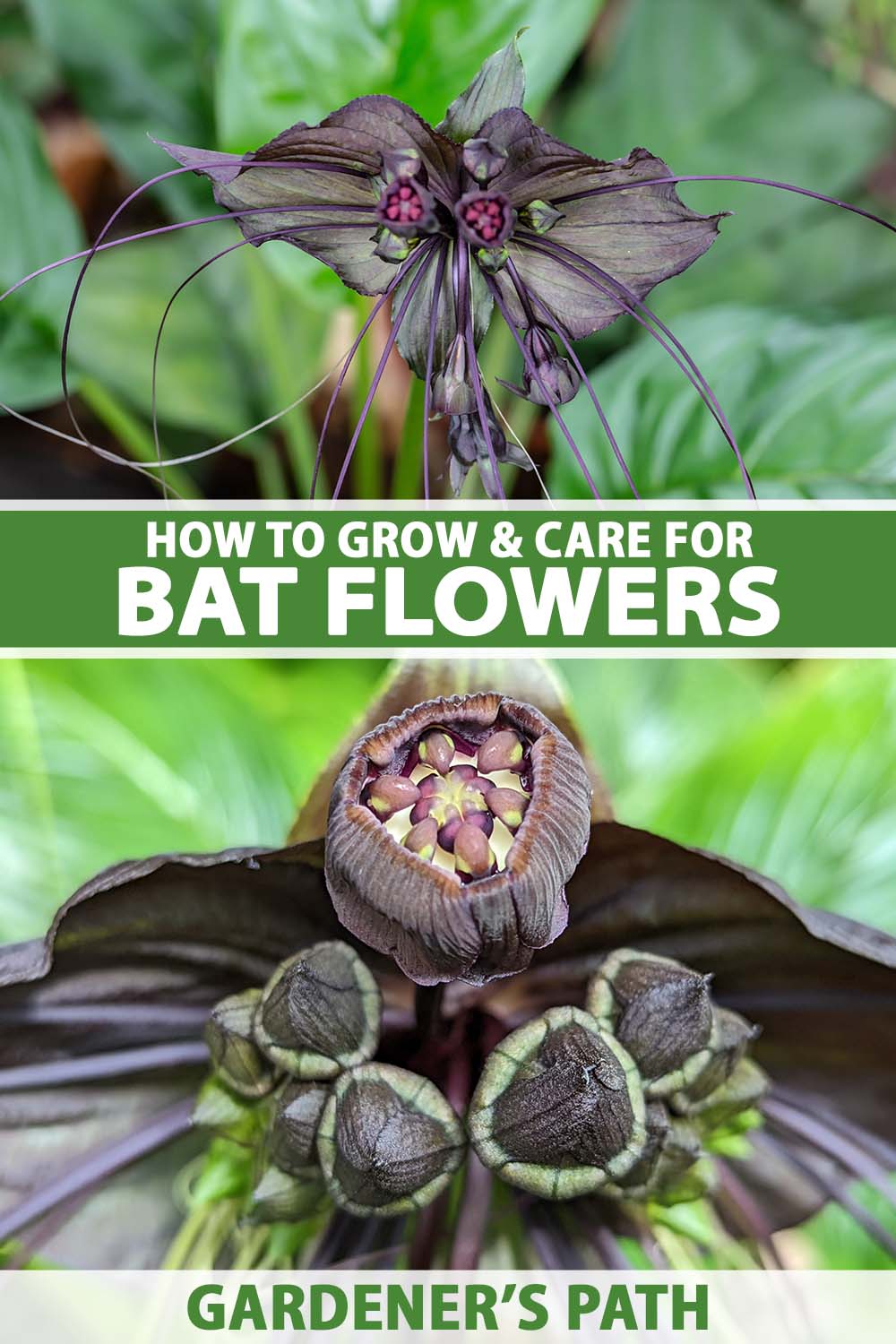
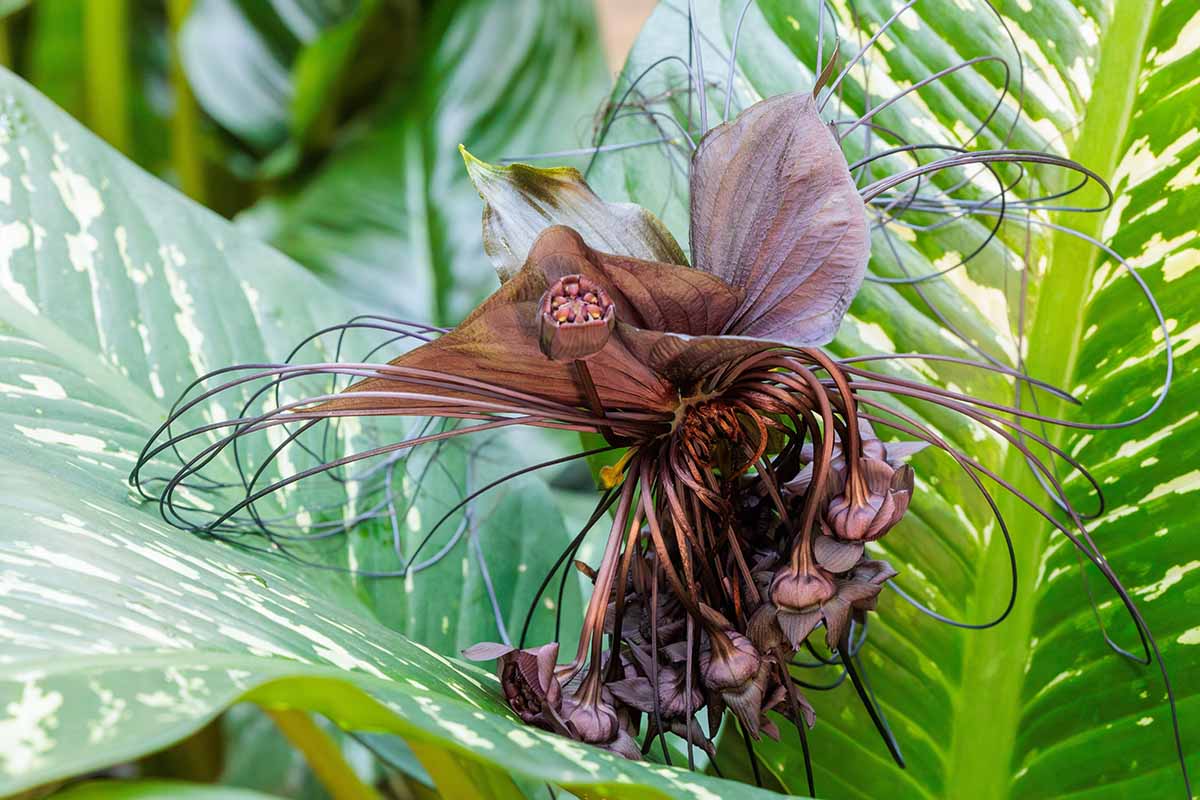
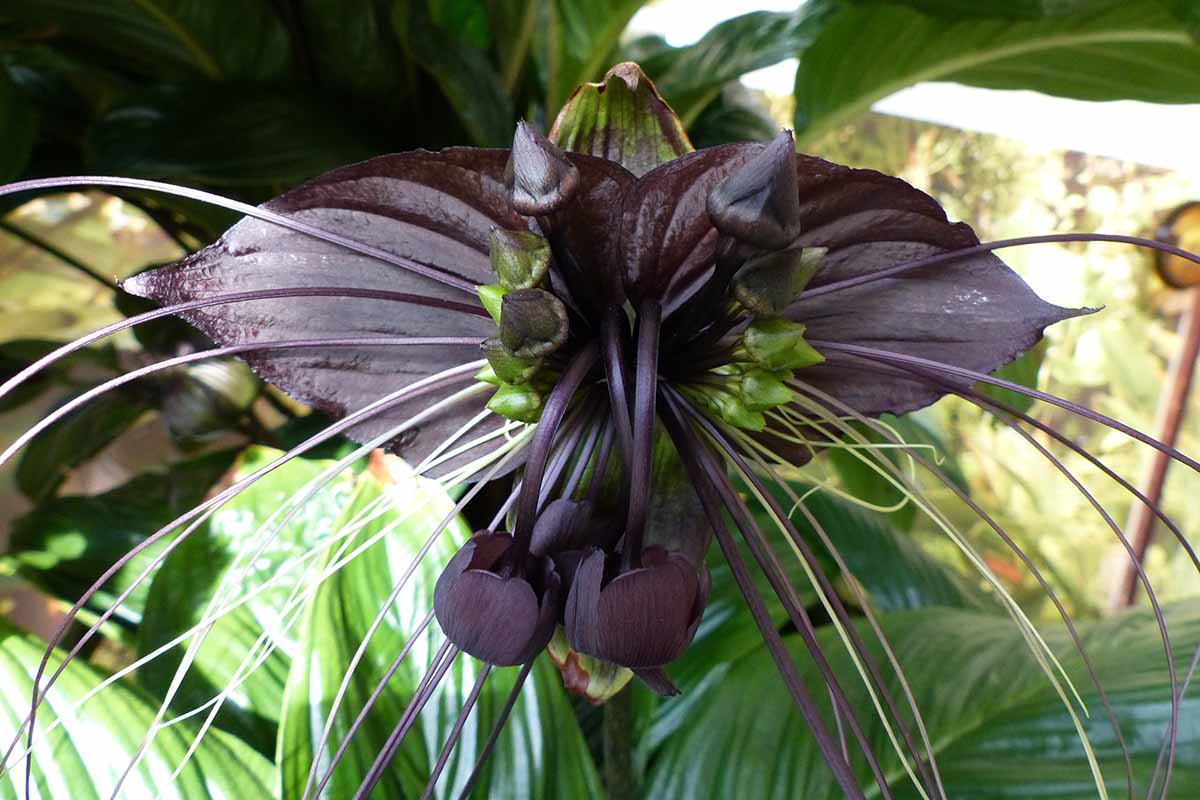
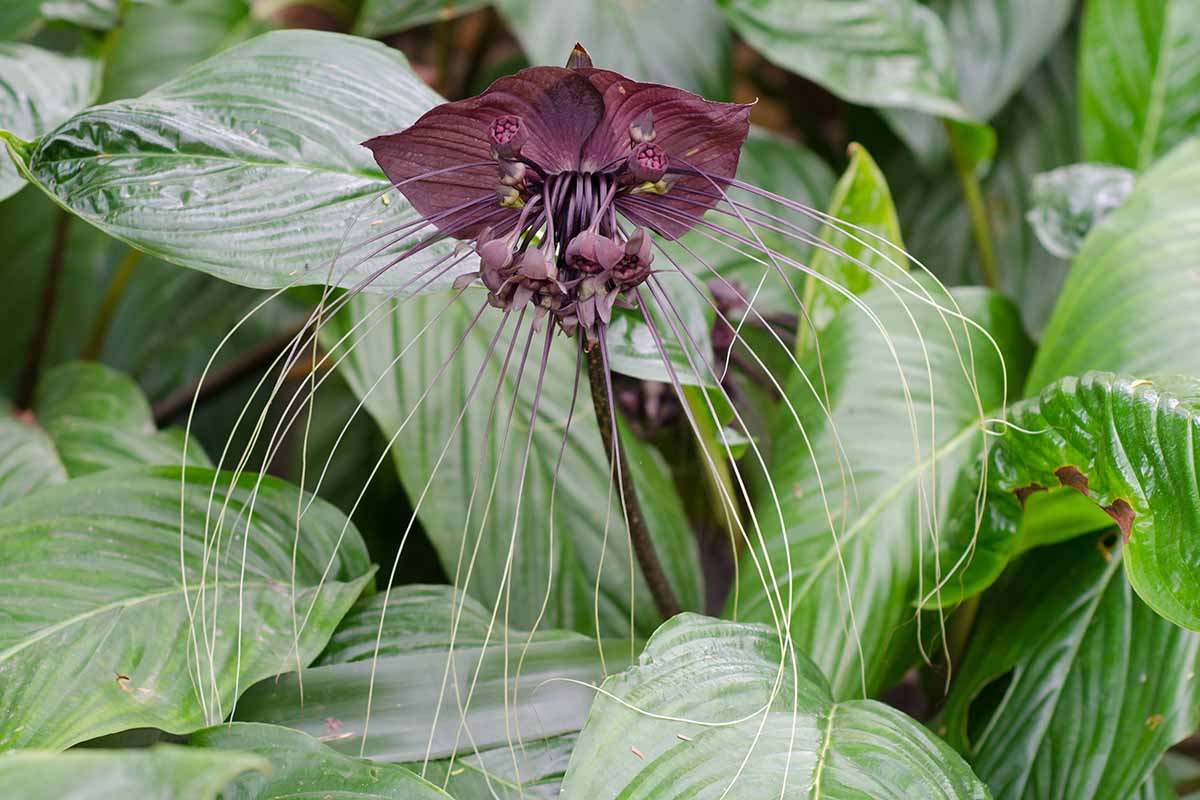
That’s the bat flower (Tacca chantrieri). Not only does it have that out-of-this-world dark hue, but the shape of the flower is truly unlike any other plant I’ve ever seen.
We link to vendors to help you find relevant products. If you buy from one of our links, we may earn a commission.
It’s sometimes called black orchid because the shape is somewhat orchid-like, but really, that hardly describes the blossoms.
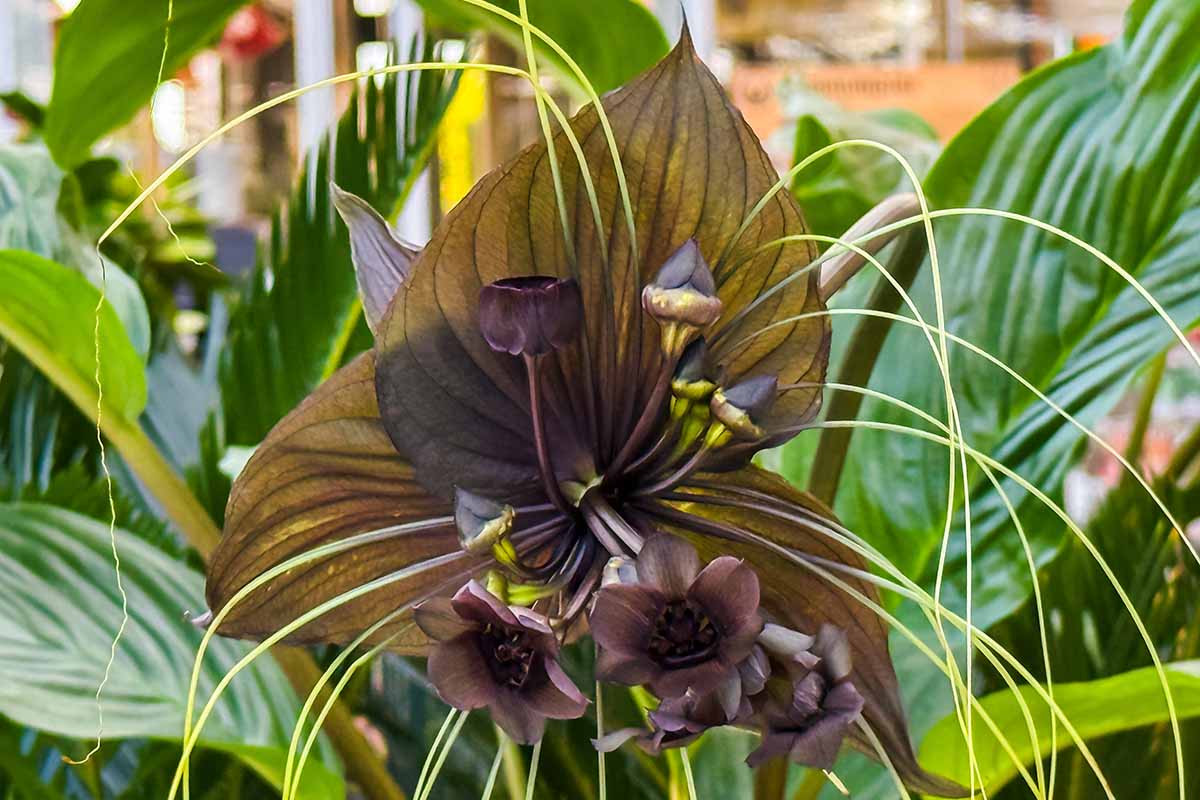
The large bracts that top the bloom do, in fact, look like bat wings. It’s wild.
It’s also commonly known as tiger beard or cat’s whiskers, which helps describe the other unusual aspect of the flowers.
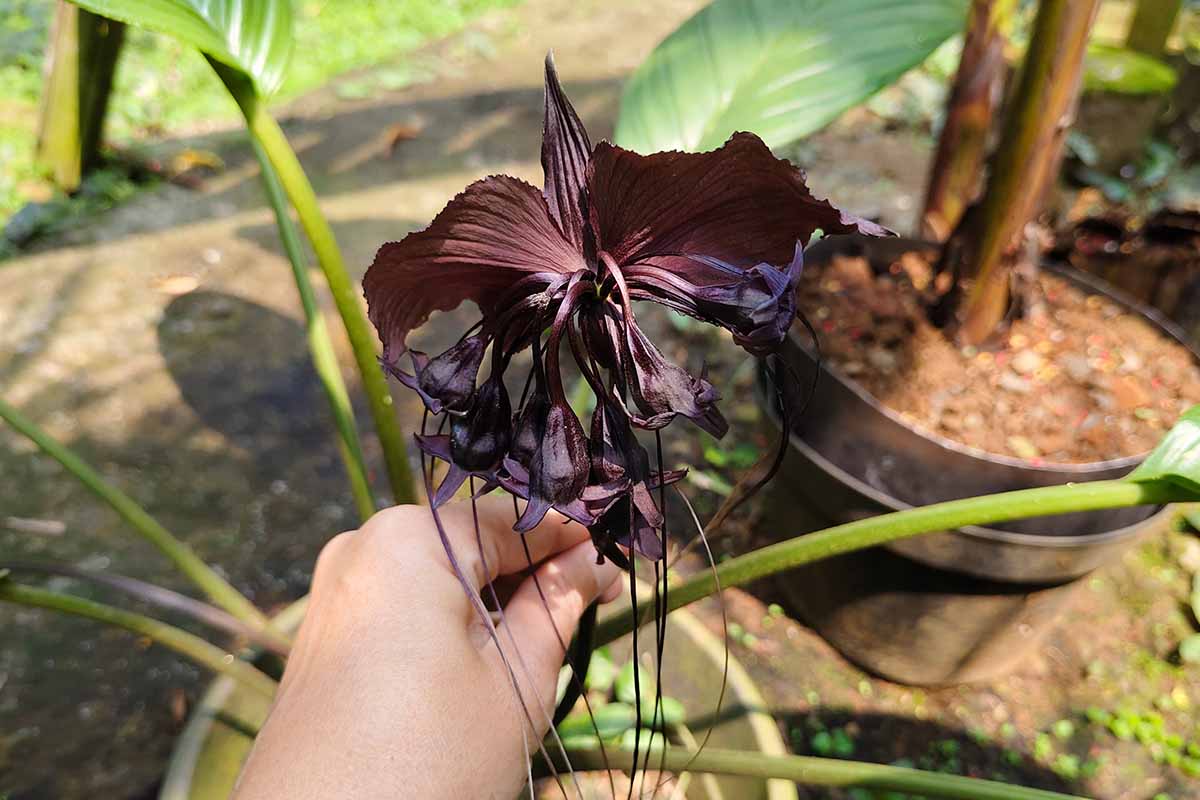
Each blossom has multiple “whiskers” called bracteoles draping down from the petals. The overall effect is like a swooping bat with a dramatic beard.
Plus, the blossoms can appear for months. And each one can be huge!
If you want a black flower or are thinking about a gothic-themed garden, this plant is the indisputable queen.
Even if you don’t live in its preferred hardiness range of Zones 9 to 11, you can grow the plant outdoors during the season then bring it indoors for the colder months.
Learn all about this and more in the upcoming guide, which also includes:
What You’ll Learn
Bat flowers grow in subtropical and tropical areas.
They’re indigenous to Southeast Asia, though the plants are disappearing from their natural habitat and are becoming more common in gardens, instead.
In the wild, they grow in the forest understory in low light.
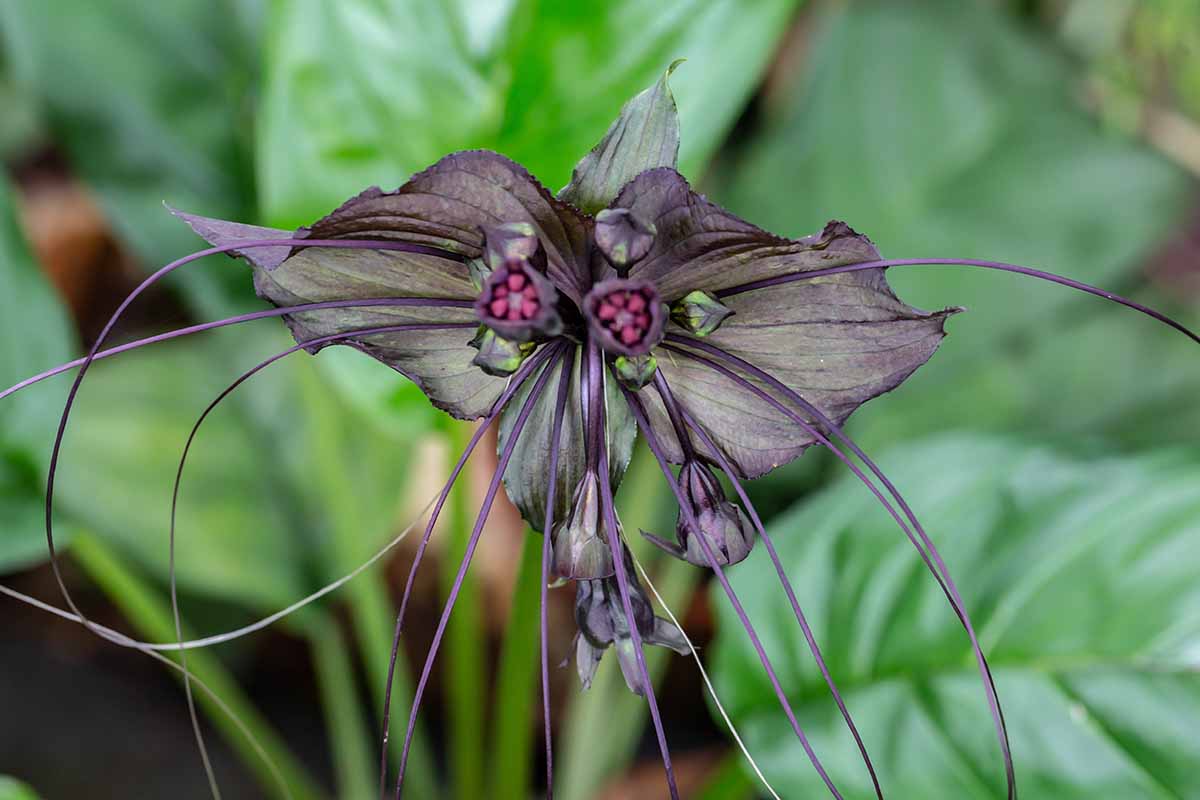
The blooms aren’t truly black. They are the deepest, darkest purple that reads as black in anything but direct light.
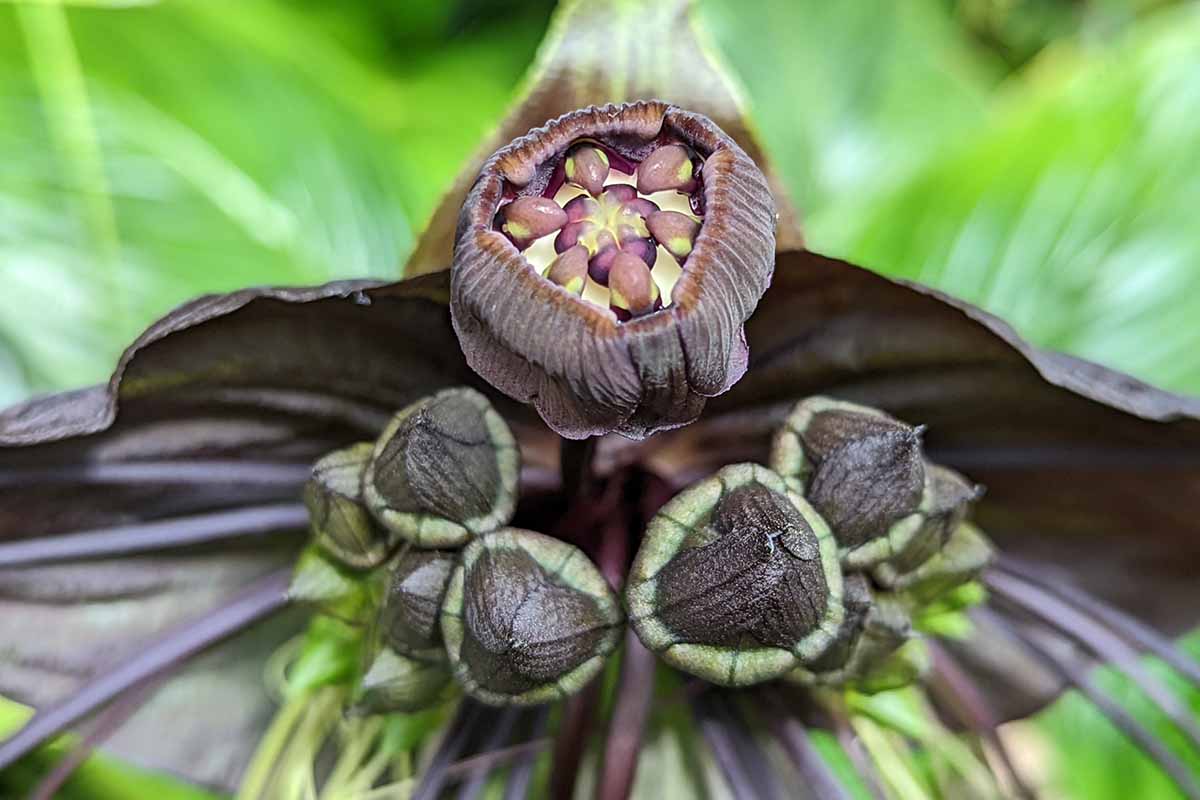
Actually, what we call the “flower” is a complex arrangement known as an umbel made up of large subtended bracts from which stems (known as cymes) tipped in the true flowers stand out.
Subtending means that the bracts act as a background to the rest of the umbel.
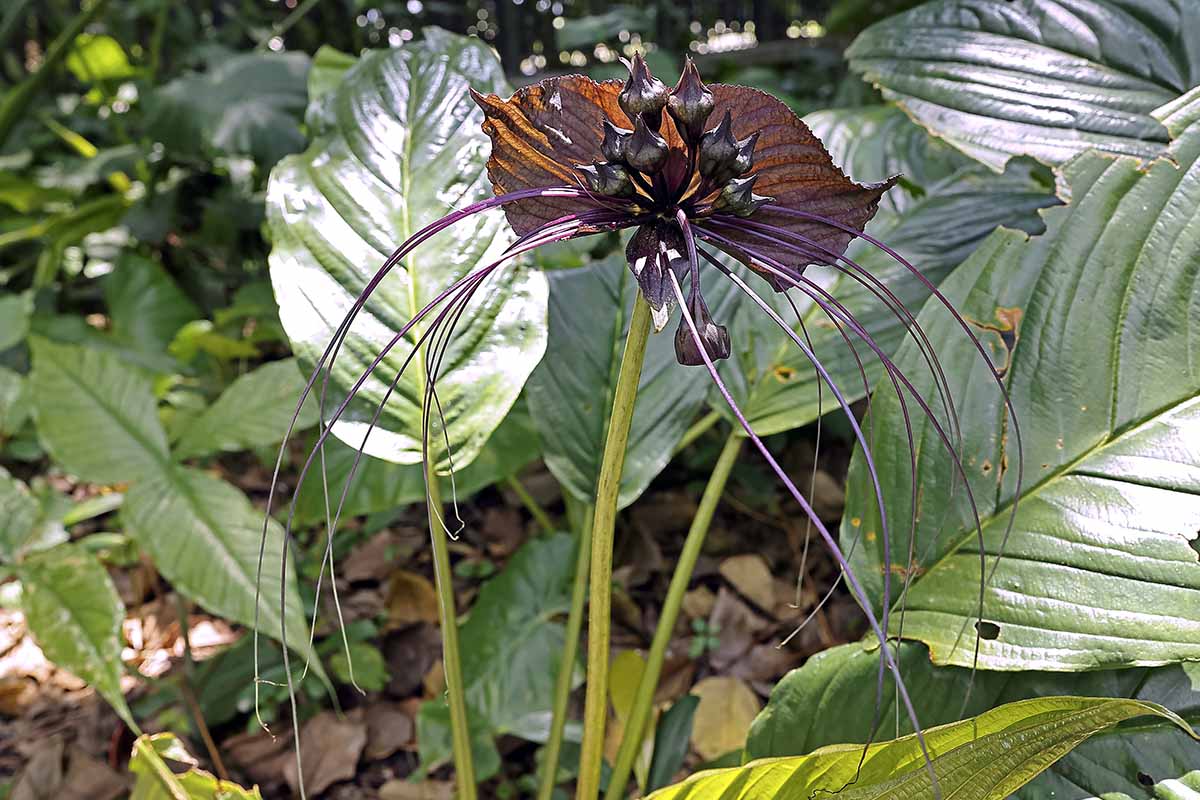
Below these are the long, whisker-like bracteoles. There can be dozens of them on each bloom. As the blooms fade, they eventually give way to seeds.
Quick Look
Common name(s): Bat flower, black arrowroot, black lily, black orchid, cat’s whiskers, devil flower, tiger beard
Plant type: Herbaceous, flowering geophyte
Hardiness (USDA Zone): 9-11 (outdoors)
Native to: Southeast Asia
Bloom time / season: Summer
Exposure: Dappled sun to shade
Soil type: Humus rich, loose, well-draining
Soil pH: 6.0-7.5, slightly acidic to neutral
Time to maturity: 1 year
Mature size: 54 inches tall by 24 inches wide
Best uses: Shade gardens, houseplant, specimen
Taxonomy
Order: Discoreales
Family: Dioscoreaceae
Genus: Tacca
Species: Chantrieri
There’s a closely-related species, T. integrifolia, that sports white bracts.
This species looks similar except that it grows a bit larger than its cousin, and the top bracts are white with mauve stripes.
Depending on the environment, the black version grows up to four and a half feet tall, though some stay more like 20 inches tall. The flowers themselves can be a massive 12 inches across.
It’s not really clear why the blooms have evolved the shape and color.
Some botanists think it’s an insect trapping mechanism, or that it developed to attract a specific pollinator – likely a dung or carrion fly – that is no longer around.
Whatever the original purpose, this species is mostly self-pollinating.
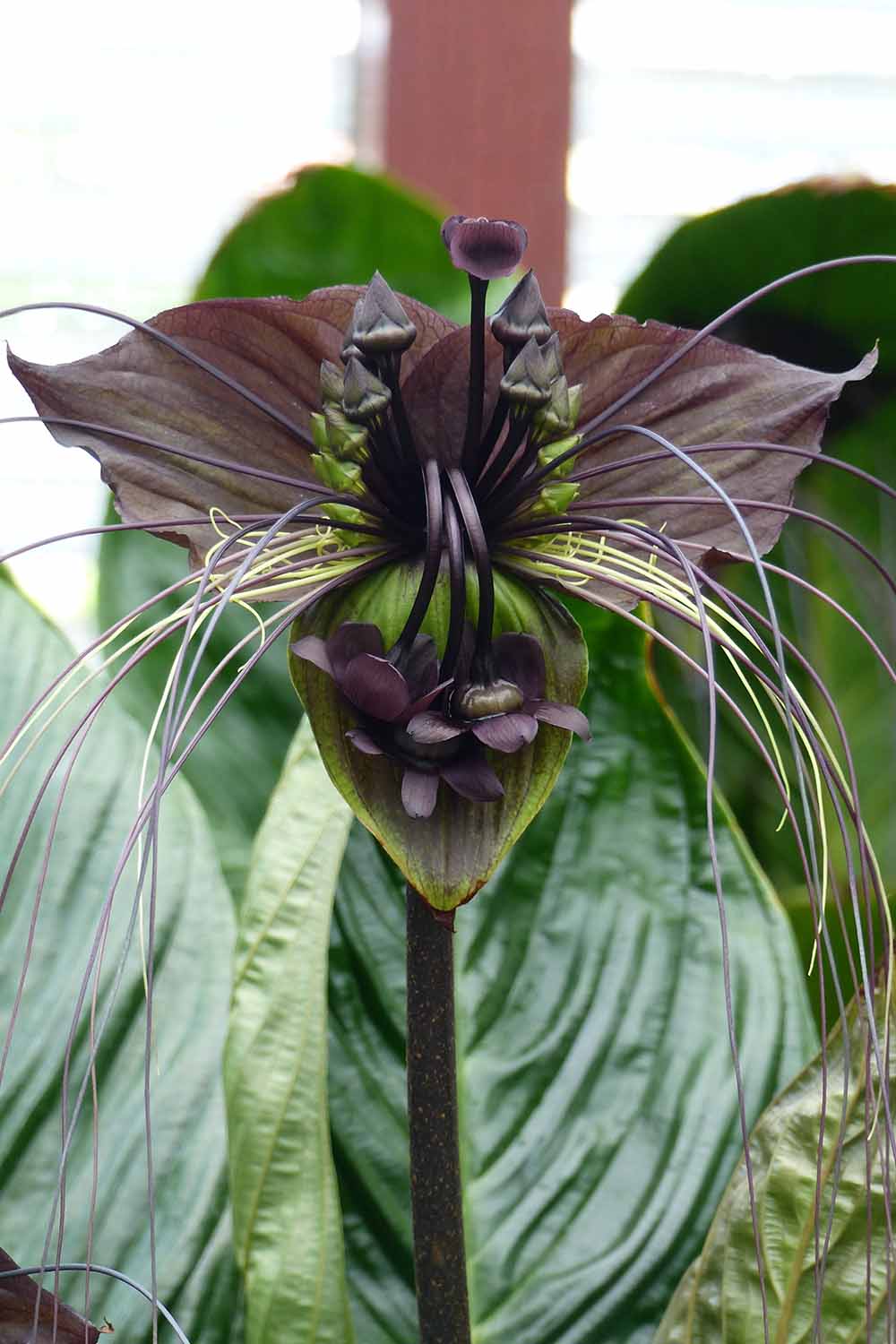
Not every bloom will be pure black. They can be more brown or sometimes somewhat green. This can be genetic or it can be influenced by the environment.
Too much or too little light, or not enough nutrients, for example, can change the hue.
The glossy green leaves are oblong-elliptical or lanceolate in shape with recessed vein tracks, up to 18 inches long, and sit at the end of long stems.
Underground is a thick rhizome that somewhat resembles a yam, to which this plant is closely related.
While we are on the topic, there is a closely related species, Fiji arrowroot (T. leontopetaloides) that is solely cultivated for the edible tubers.
It has similar blooms but they’re more of a yellowish-orange-brown color and don’t grow quite as large as those of our subject species.
How to Grow
If you can grow orchids, you can grow this species. It enjoys the same conditions as a terrestrial orchid – not the epiphytic types we grow as houseplants.
Here’s what you need to know:
Light
Outdoors, grow your plants in a shaded area that is either in full shade all day or just a bit of dappled sunlight in the morning.
Inside, grow it near a window but out of any direct light, or with only brief direct light in the morning.
Mine are in a spot that gets hit with direct morning sun for about an hour and then no direct light beyond that. It seems to work well.
If all of the leaves appear to be turned toward the sunlight, your plant probably wants more light.
Foliage that is pale or have splotches of yellow indicates that it is probably receiving too much sunshine.
Soil
In the wild, bat flower grows in the understory of tropical rainforests.
If you’ve ever dug your hands into the loamy soil of this type of environment, you know it’s extremely humus-rich, moist, and loose.
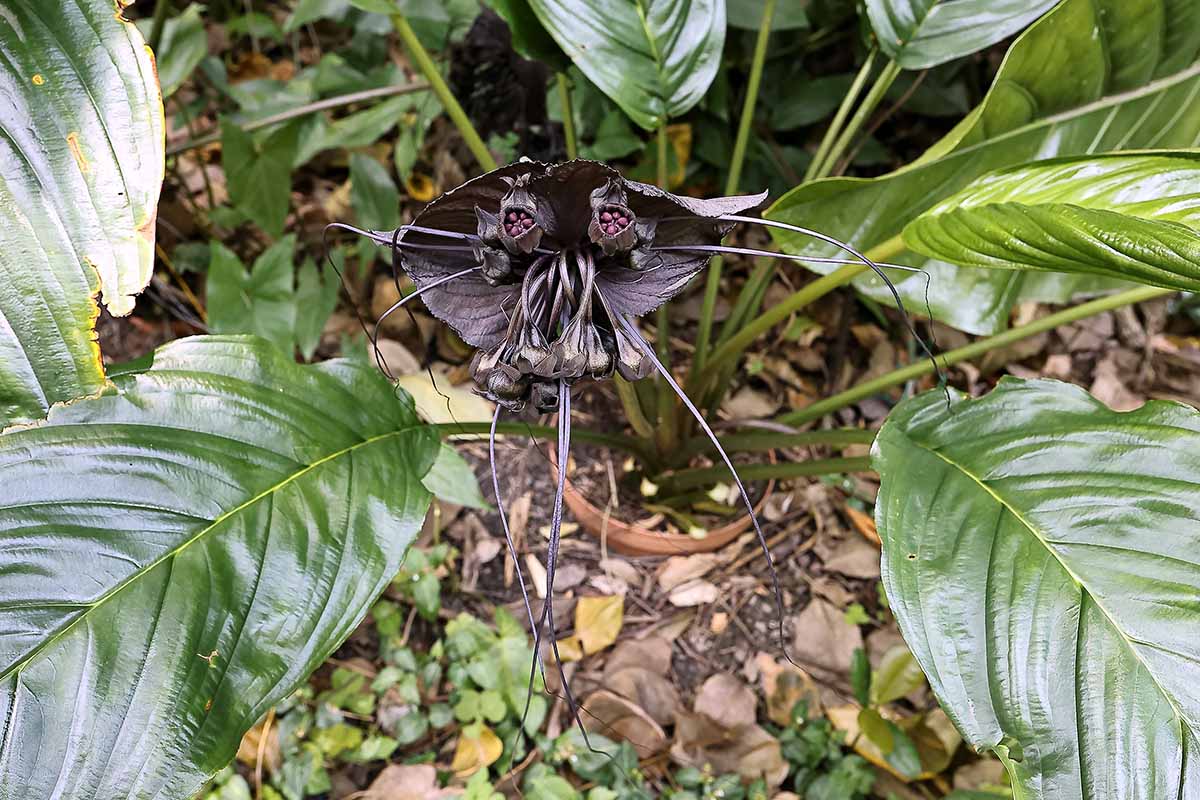
It drains well and basically looks and feels like the dreamiest, loveliest soil a plant could possibly want.
Give your bat flower soil as close to this description as you can.
Fortunately, that’s what many potting mixes are trying to replicate, so if you decide to grow in a pot, you can just fill it with one of those wonderful mediums out there.
I like to use Tank’s House Plant Potting Mix, which is made up of compost, coco coir, nutrients, volcanic rock and biochar. All my tropical plants seem to really thrive in it.
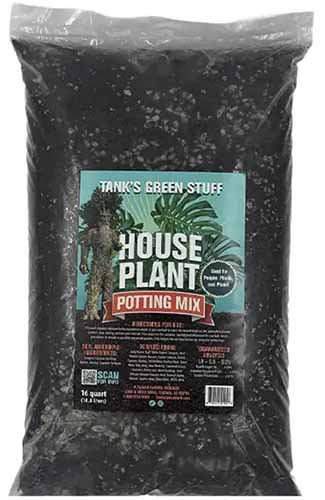
Pick up an eight- or 16-ounce bag at Arbico Organics.
In the garden, work in lots of well-rotted compost, pine bark, and a bit of sand to enrich your existing soil, depending on its normal composition.
The ideal soil will be slightly acidic to slightly alkaline with a pH from 6.0 to 7.5.
Water
The soil should remain moist but not wet at all times. It’s a careful balance, because you don’t want the roots to dry out, but you don’t want them to be soggy or waterlogged.
They also shouldn’t dry out. Basically, if you stick your finger into the soil, it should feel like a well wrung-out sponge.
I use a self-watering pot because I don’t want to have to constantly monitor the soil. You can also use a moisture meter to guide you.
Humidity
Bat flowers need lots of humidity. That’s one of the reasons they don’t do terribly well indoors. The dry indoor air can cause stunted or poor growth, and can suppress flowering.
If you keep the plants indoors, or if you have naturally dry conditions, use a humidifier or grow near (but not next to) a pond. Anything to help increase humidity.
I mist my outdoor plants a few times a day, if I remember, during very dry weather. In the cooler, humid fall and winter, I leave them to their devices.
Aim for 50 percent or higher humidity, but you don’t want water collecting on the foliage. That’s a sign of too much humidity.
Fertilizer
Remember, in the wild, these plants grow in humus-rich soil.
They’re used to lots of falling leaves and insect bodies falling onto the soil and decomposing to provide heaps of nutrients.
In the home garden, we typically have to add nutrients.
Unless your plants are in a spot with humus-rich soil and naturally-occurring nutrients to replenish everything, you’re going to want to add fertilizer.
Normally, I recommend you test your soil once a year or every other year before feeding, but with bat flower, I just assume they’re hungry.
This is doubly true for houseplants or those grown in containers. They always need food.
I feed in the spring just as new foliage growth is emerging and again midsummer to help sustain the continued blooming. Use an all-purpose or flower-focused fertilizer.
I’m a fan of Down to Earth’s fertilizers because they’re made using natural, high quality ingredients and come in biodegradable boxes.
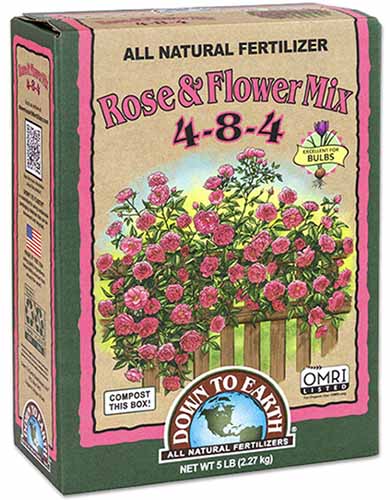
Down to Earth Rose and Flower Mix
Their Rose & Flower mix is ideal for this species. Grab some at Arbico Organics in one- or five-pound containers.
Container Growing
This plant is perfectly happy in a container. If you choose to grow it indoors as a houseplant, you should put it outside during nice weather.
Bat flowers are much happier outdoors than in, partially due to the humidity, as I mentioned above.
It’s also hard to get the light exposure right to encourage blooming indoors.
It’s much darker indoors than many gardeners realize, and a lack of light will slow or even stop the development of blossoms.
If you can avoid it, you shouldn’t keep the plant indoors year-round. It’s fine as a temporary houseplant, but it doesn’t thrive or bloom well indoors.
Where to Buy
Check out your local plant nurseries and garden centers to find potted nursery starts. As mentioned below in the propagation section, it’s difficult to grow these plants from seed.
If you decide to give it a go, be super cautious when purchasing seeds online. Much of the time, these seeds are either not viable or they aren’t actually Tacca seeds.
You can sometimes find bat flower available online. Wellspring Gardens Store has plants in three-inch pots available via Amazon.
Maintenance
Bat flower will keep blooming throughout the growing season, whether you remove the spent flowers or not. But if you don’t like the appearance, go ahead and remove them.
Don’t try to cut the blooms and take them inside, though. They’ll wilt and die rapidly when removed from the plant.
The leaves are evergreen, but they will die off as conditions change, the plant ages, or for reasons only the plant knows.
These dead leaves will be replaced by happy new ones, but feel free to cut off the dying leaves to tidy up the plant’s appearance.
As the plants age, dig them up and separate the tubers. Overcrowded plants don’t grow or flower well.
Container grown specimens don’t mind being a little root bound, but make sure to increase the pot size as the plant grows.
If you see roots coming out of any drainage holes or out the top of the soil, it’s time to go up a container size.
I generally repot every other year. When you repot, do it in the spring before the flowers begin to develop.
If, like me, you don’t live in a climate that stays warm enough for the plant to stay outdoors year-round, you can move it indoors when the temperature starts to drop.
When the low temperatures creep below 60°F, it’s time to move your plant inside.
Propagation
These plants are best propagated by root division. It’s technically possible to propagate them by seed, but it’s challenging for the home grower.
On the other hand, propagating by root division is a breeze. Have you ever grown a potato from an old tuber that started to sprout? That’s how easy it is to propagate bat flower.
By Division
You can divide the plant when it’s dormant in the winter or when it’s actively growing in the spring, before flowers start developing.
To do this, gently dig up the plant. The root ball is generally not much wider than the leaves, so you don’t need to dig wide. But you should dig fairly deep.
You might want to put your fingers into the soil and feel around for the rhizomes. Make sure you’re lifting them all.
Once you have the plant unearthed, gently tease apart the rhizomes, including any leaves attached. Replant the rhizomes individually.
Transplanting
If you purchase a live plant, dig a hole the size of the growing container and gently remove the plant from its pot.
Lower the root ball into the hole you made and firm the soil up around it. Water well.
Pests and Disease
Disease and pests are basically unheard of except for one exception: slugs and snails.
They will devour young plants in one night, and they’ll leave chunks missing out of the leaves of older specimens.
I use snail pellets, but use whatever method you like to best to keep your bat flowers safe. We have a whole guide to snail control if you’d like more options.
Go Batty for Bat Flowers
Bat flowers really are some of the most unusual plants I’ve ever seen.
The leaves may look classically unassuming, but then those strange blossoms start to emerge and suddenly you’re wondering if you’re in some sci-fi movie based on a weird alien planet.
The fact that they’re so easy to care for makes them seem all the more unreal.
Give them the right amount of water and humidity and you’ll be marveling at the unusual blooms all season long.
Will you be giving bat flower a spot in your garden? Or maybe a mobile houseplant? Let us know all about it in the comments section below!
If you’re looking for some other unusual flowers to grow at home, check out these guides next: