Bloomeria spp.
In the past, species in the Bloomeria genus were only known to native plant specialists and experts in the region where they grow indigenously.
With gardeners discovering a new passion for native plants, some of the species that have previously sat humbly in the background are now enjoying some time in the spotlight.

The first time I encountered bloomeria, I was out hiking in southern California with a native flowering plant book in my hand.
I’d picked the book, which was written and illustrated by a local author, in the hopes of gaining some insight into the plants I was seeing as I explored the chaparral, woodlands, and coastal hillsides.
In Southern California, bloomeria is a popular option at plant nurseries that specialize in native species.
Here’s hoping that more gardeners who are looking for an easygoing, reliable bloomer that will draw all the pollinators will try growing beautiful bloomeria.
If you’re thinking about adding it to your garden this guide will help you succeed. Here’s what we’re going to chat about:
What You’ll Learn
Bloomeria is a genus of plants endemic to dry areas of Southern California and the Baja peninsula.
Commonly known as goldenstar or golden stars, there are three species in the genus.
B. crocea is the most common, and is considered the type for the genus. There are three recognized varieties: var. aurea, var. crocea, and var. montana.

You really can only tell them apart by the size of the nectar cup and the size or shape of the filaments, so the difference doesn’t really matter unless you’re a botanist.
San Diego goldenstar (B. clevelandii) is rare and you’ll only spot it in the wild around San Diego. The flowers are more delicate and have separate filaments and anthers, whereas they are fused on the other two species.
Dwarf goldenstar (B. humilis) is a dwarf species that only reaches about a foot tall, with the flower scape about four inches tall at most.
All three species grow in coastal areas, sandy soils, dry woodlands, hilly spots, or grasslands.
Quick Look
Common name(s): Common goldenstar, golden stars, bloomeria
Plant type: Perennial flowering corm
Hardiness (USDA Zone): 6b-11a
Native to: Baja Mexico, California
Bloom time / season: Spring
Exposure: Full sun to partial shade
Soil type: Sandy loam, well draining
Soil pH: 6.0-8.0, slightly acidic to alkaline
Time to maturity: 4 years
Mature size: 2 ft wide x 2 ft high
Best uses: Mass planting, wildflower garden
Taxonomy
Order: Asparagales
Family: Asparagaceae
Genus: Bloomeria
Species: Aurea, crocea, montana
Bloomeria produces grass-like leaves that grow to about two feet tall from an underground corm. This corm acts as an underground storage system for the plant.
New leaves and flowers emerge from the corm each year, which allows the plant to survive even when an area is devastated by fire. That’s why you’ll often see them taking over regions impacted by fire.
Star-shaped flowers emerge in April and remain on the plant for a few weeks.
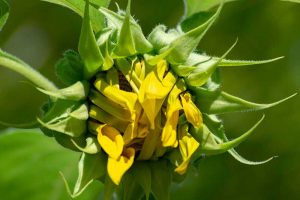
Bloomeria has clusters of yellow flowers that emerge in an umbrella-like shape called an umbel and there can be up to 100 flowers per plant, though not all flowers open at once.
If you look closely, you might notice blue pollen stuck to the anthers.
Though it comes from a fairly warm climate, goldenstar can tolerate temperatures that are relatively cold, down to 25°F. It can be grown in Zones 6b to 11a.
The genus has variously been classified as a member of the Alliaceae, Amaryllidaceae, and Liliaceae families. It was finally shuffled to a new family, Themidaceae, in 2001. It has since been moved to the Asparagaceae family.
Depending on who you ask, some botanists still classify it in one or other of its previous families.
The genus name honors Hiram Green Bloomer, a botanist in San Francisco who explored the local flora in the mid-1800s. He also helped found the California Academy of Sciences.
Bloomeria is not common in cultivation, though it’s gaining in popularity as a native option in California.
How to Grow
While the petite flowers are pretty, they aren’t all that impactful on their own. They’re really best displayed in mass plantings or sprinkled in amongst other wildflowers.

Since they disappear for part of the year, grow goldenstar with other species that will pick up the slack during their dormancy.
California poppy (Eschscholzia californica), western blue-eyed grass (Sisyrinchium bellum), lupine (Lupinus spp.), salvia (Salvia spp.), and milkweed (Asclepias spp) are just a few options.
Make sure you choose species with the same cultural requirements.
Light
Ideally, find a location in full sun. Bloomeria will tolerate any exposure from full sun to part shade, but don’t try growing goldenstar in full shade.
Soil
These plants are adaptable to any kind of soil from sandy to clay. The ideal soil would be somewhat loamy or silty with a bit of sand.
The pH can be anywhere, really, but between 6.0 to 8.0 is ideal. Good drainage is essential, but the plants will even grow in soil that has a bit of clay.
Water
During the growing season when the leaves and flowers are present, generally April through June, the soil should be consistently moist or just the top inch allowed to dry out.
Then, once the foliage dies back, the soil should be allowed to dry out completely.
It won’t hurt the plant if there’s occasional drought, but it’s best to keep it moist if you can. Still, if you aren’t sure, let the soil dry out rather than allowing it to get too soggy.
Fertilizing
There’s no need to fertilize these plants. They can tolerate depleted soil and too much food can actually harm growth.
Maintenance
You don’t need to do anything to maintain these plants. When the leaves and flowers die, you can prune them off, but make sure they’re fully brown and dry.
If you remove the foliage before it has died back, you will deplete the corm of nutrients that it needs to grow and develop the following year.
Where to Buy
This isn’t an easy plant to find. You’ll have to visit nurseries that specialize in native plants if you live in California or the southwest.
Outside of these areas, you’re going to have a challenge on your hands if you’re looking locally.
Otherwise, you might find specialty retailers online where you can purchase corms.
Propagation
You could technically grow golden stars from seed, but the process is challenging and it takes four years from seed to mature plant. Stick to planting corms.

Wait until the spring when the ground has warmed up a bit. Loosen up the soil where you intend to plant and poke a hole three inches deep and four inches apart.
Stick a corm in each hole and bury it. Gently tamp down the soil and water it well.
When the plants are four or more years old, you can dig up the corms and divide them. This is best done during dormancy.
Dig around the clump gently and if you encounter resistance, back up and dig further out. You don’t want to damage the corms you’re trying to reach.
When you find the corms, dig down underneath them and lift them up. Brush the soil away and then gently tease the corms apart. They should be distinctly separate, like bulbs of garlic.
Replant as needed.
If you don’t replant right away, brush off excess soil and store the corms in pine shavings in an area that maintains a temperature of 35 to 40°F.
Managing Pests and Disease
There really aren’t any serious pests or diseases that trouble bloomeria.
The roots may rot if they are in wet soil, so make sure that you’re planting in well-draining soil.
You’ve Been Awarded a Golden Star!
When I was a kid, getting a golden star sticker meant I’d really won the day. Now, I’d much rather have a goldenstar flower in my garden, instead.

No offense to all my delightful teachers who handed out stars like Olympic medals, but a bloomeria lasts longer and is much prettier than those little stickers.
The pollinators like them a lot more, too.
Are you growing bloomeria? Let us know what you love about it in the comments section below.
And for more information about growing flowers in your landscape, check out these guides next: