

In a perfect world, all of the plants in my garden would be easy to care for, fragrant, colorful, attractive to wildlife, and edible.
I realize that’s a tall order and that most plants will fall short on one or more of those criteria. Not agastache (Agastache spp.), though. It fits all my requirements and more.
On top of all that, the blooms last for months, and the plant returns year after year in Zones 4 to 10.

We link to vendors to help you find relevant products. If you buy from one of our links, we may earn a commission.
When you’re convinced you need to grow agastache in your garden, the hard part begins: deciding which type to settle on.
If you need a reminder about how to grow agastache, read our anise hyssop growing guide.
Whether you want a tall plant with sunset-like hues, a short cutie with vibrant purple flowers, or a plant to make tea and use to season dishes, you have many options.
We’re going to talk about 19 superb agastache varieties, from modern hybrids to classic native species. Here’s the list:
19 of the Best Agastache Varieties
1. Anise Hyssop
Anise hyssop (Agastache foeniculum) is perhaps the most well-known species in the genus.

It’s a popular herb that is used medicinally and appreciated for its licorice-anise flavor. But the plants are highly ornamental and attract pollinators from far and wide.
Since it is native to parts of North America, it can also be a beneficial plant to support local native insect populations.
It’s a short-lived perennial that is hardy in Zones 3 to 8 and grows up to four feet tall and three feet wide with stalks of white to blue-purple flowers.

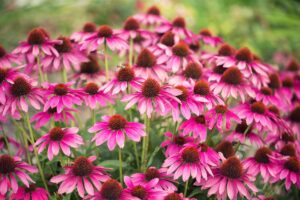
I’m particularly enamored with anise hyssop when it’s paired with other natives like purple coneflowers, milkweed, and coreopsis.
You can find anise hyssop seeds available at Botanical Interests.
2. Arizona Sun
‘Arizona Sun’ is a glorious Agastache hybrid that features stellar yellow blossoms on a petite little plant that only grows to about 10 inches tall and wide in Zones 6 to 9.
It starts shining in early summer and the blooms last until late fall.
In warmer climates, like Zones 8 and up, it might even stay evergreen, adding its gray-green foliage to the winter landscape.

For a cheerful plant as warming to the soul as a bright Arizona day, purchase 25, 100, or 500 seeds at True Leaf Market.
3. Blue Boa
This gorgeous hybrid has violet-blue blossoms held by burgundy calyxes on tall plants that grow up to 40 inches tall and 24 inches wide.
It grows happily in Zones 5b to 8, a somewhat more limited range than many others on this list, but if you’re one of the lucky people in the right climate, consider ‘Blue Boa.’
Part of what makes it so special are the huge flowers, which can be up to an inch in diameter.
It was rated as one of the top plants in the Colorado State University Perennial Trials in 2014 and I can see why.

‘Blue Boa’ blooms for months and months, providing food for hummingbirds, bees, and butterflies.
You can pick up a live plant at Burpee.
4. Blue Fortune
‘Blue Fortune’ produces long stalks of lavender blossoms and leaves that are medium green on top and silvery underneath.
At three feet tall and two feet wide, it’s big enough to be stately but not so large that it takes over the garden.
This plant is a hybrid between A. rugosa and A. foeniculum selected in 2004 by Gert Fortgens of the Arboretum Trompenberg in Rotterdam, Netherlands.

‘Blue Fortune’ nabbed the 2004 Great Plant Picks award from the Elisabeth Miller Botanical Garden. You can find plants available at Burpee.
5. Giant Mexican
Giant mexican agastache (A. mexicana) is not the easiest to grow, nor is it the showiest if you’re in the market for a bold ornamental.
This species produces highly fragrant, lemon-scented foliage. The large leaves are popularly made into tea or used to flavor foods.

The plant quickly grows to about three or four feet tall and one to two feet wide, and is topped with petite purple spikes. It’s hardy in Zones 6 to 10.
There are a handful of cultivars out there, and many are quite glorious.
If you have your heart set on having Mexican agastache in the garden but you also really want an ornamental, look for cultivars in the Summerlong™ series, which are more compact and floriferous than the species.
Or look for ‘Lavender Blue,’ which has lavender-blue spikes of blossoms that are much larger than those of the species.
I’m a particular fan of ‘Sangria,’ which has tons and tons of dense whorls of large, pinky-red blossoms.
6. Hummingbird Mint
Hummingbird mint (A. aurantiaca) hails from the high mountains of northern Mexico, and you’ll soon understand why it’s named “hummingbird mint.”

The hummingbirds will swarm your plants when they’re in bloom, which happens all summer long.
This species is not long-lived, but it produces an abundance of blooms – spikes of pinky salmon blossoms held by reddish-purple calyxes.
The plant grows to about three feet tall and wide in Zones 4 to 9.
Look for ‘Apricot Sprite’ if you prefer a brilliant, pure orange display on a more compact plant. ‘Coronado’ has a yellow tint to it, and ‘Coronado Red’ is, unsurprisingly, red toned.
7. Korean Mint
Korean mint, blue licorice, or purple giant hyssop (A. rugosa) grows to up to four feet tall and two feet wide with spires of purple blossoms that last for weeks or even months.
Native to eastern Asia, it’s a pest- and disease-resistant option with large leaves and intense mint flavor.

Look for some of the interesting cultivars in varying colors and sizes, such as ‘Golden Jubilee’ with its golden-hued foliage or ‘Licorice White’ with its white blossoms.
While this isn’t the first species I would pick if you’re growing agastache purely for the floral display, it’s exceptional if you want to harvest the leaves. It’s hardy in Zones 4 to 9.
You can find seeds available in a variety of packet sizes at True Leaf Market.
8. Kudos Ambrosia
You are going to see a lot of hybrids from the Kudos™ series on this list, and for good reason.
This series was bred by Dan Heims, owner of Terra Nova Nursery in Portland, Oregon, to have a compact, bushy growth habit and bright flowers.
They’re also more cold hardy and adaptable to hot climates than many other hybrids.
In this instance, the majestic ‘Ambrosia’ is petite at about 18 inches tall and wide, but its impact is impressive.

Thanks to its pink, rose, salmon, and purple flowers accented in creamy white, this option really sparkles and thrives in Zones 5 to 10.
You can find Kudos™ ‘Ambrosia’ available at Nature Hills Nursery.
9. Kudos Mandarin
‘Mandarin’ is another member of the Kudos™ series, and features sweet orange flowers.
This cultivar grows to about 18 inches tall and 16 inches wide in Zones 5 to 10.

For containers, borders, or whatever else you need, this hybrid is a sure-fire winner.
You can find Kudos ‘Mandarin’ plants available at Nature Hills Nursery.
10. Kudos Silver Blue
Kudos™ ‘Silver Blue’ is a particularly attractive option from this series.
It has oversized spikes of lavender blue blossoms held by reddish-brown calyxes over gray-green foliage. It’s hardy in Zone 5 to 10.

Nature Hills Nursery has ‘Silver Blue’ in #1 containers.
11. Kudos Yellow
A glowing bit of light in the garden, ‘Yellow’ grows two feet tall and wide, with big, sunny spikes of bright yellow blossoms that start in summer and last until the first frost.
It’s part of the Kudos™ series and is hardy in Zones 5 to 10.

Use this tidy perennial in a border, mass planting, or cottage garden.
You can find plants available in #1 containers from Nature Hills Nursery.
12. Mountain Hyssop
Mountain hyssop (A. pallidiflora) grows in the western deserts of North America, but it sticks to moist canyons at high altitudes, where the air is cool and there’s plenty of moisture available.
This species produces fantastic dark rose purple flowers all summer long on a plant that is about four feet tall.
Rose mint (A. pallidiflora var. neomexicana) is a naturally-occurring variety that is very popular in cultivation.
This compact little cutie has gray-green foliage topped with rose pink stalks of flowers that stick around from June through the first frost.
13. Peachie Keen
‘Peachie Keen’ is like a bowl full of fruit for your garden.
The apricot colored flowers are held by raspberry pink calyxes that persist on the flower stalks long after the blooms have faded, giving you color well into the fall.
The contrasting colors against the green foliage makes it look like sunset over a lush green hillside, all in miniature.

This hybrid grows to about 24 inches tall and wide, and is suitable for Zones 5 to 8.
You can find ‘Peachie Keen’ plants available at Burpee.
14. Poquito Orange
The Poquito® series lives up to its name, which means “little” in Spanish.
Plants in this series are lil’ cuties, but they certainly don’t sacrifice showiness for size. The flowers of ‘Orange’ are large, held on tall stalks covered in bright orange blossoms.

The plants have a mounding growth habit and medium green foliage. They top out at about a foot tall and wide in Zones 5 to 10.
You can find Poquito® ‘Orange’ available at Nature Hills Nursery in #1 containers.
15. Purple Haze
‘Purple Haze’ stands tall against the competition with more numerous and longer flower spikes than many other hybrids.
When in bloom, the plant is covered in clouds of lavender-blue blossoms held by violet-red calyxes.
The plant grows to a stately 32 inches tall and about 18 inches wide in Zones 6 to 9.

The rigid flower stems make it a good option for a cutting garden.
You can find ‘Purple Haze’ in #1 containers available at Nature Hills.
16. Rosie Posie
Hot pink and magenta blossoms hover like clouds of color over green foliage, making ‘Rosie Posie’ ideal for gardeners who want something bold in their landscape.
While some agastache can look a bit unruly, the leaves of ‘Rosie Posie’ are a bit more compact and refined, making it a nice garden addition even when not in bloom.
Even after the blossoms fade in the fall, the magenta calyxes remain to continue adding color and interest.

The petite hybrid grows to about 22 inches tall and wide in Zones 6 to 9.
You can find ‘Rosie Posie’ plants available at Burpee.
17. Royal Raspberry
‘Royal Raspberry’ is a hybrid in the Meant to Bee® series by Proven Winners, and the name says it all.
The stalks of raspberry pink flowers attract bees, butterflies, hummingbirds, and more.
When the young leaves emerge, they have a lovely burgundy hue that only adds to their charm. After the blossoms fade, the calyxes remain and their rosy-burgundy color persists well into fall.

Meant to Bee® ‘Royal Raspberry’
The Meant to Bee® series has plants that are larger and fuller than your average anise hyssop, and this particular one grows to three feet or more, both tall and wide, in Zones 5 to 9.
You can find ‘Royal Raspberry’ plants available at Burpee.
18. Tango
This hummingbird mint (A. aurantiaca) hybrid features incredibly colorful flowers that dance on tall stalks over fragrant, green leaves.
Each tubular blossom is peachy orange with a dusky rose calyx. While the plants are fairly petite at about 15 inches tall and wide, the flowers produce an outsized display.

This plant is hardy in Zones 5 to 9.
You can find ‘Tango’ in #1 containers available at Nature Hills Nursery.
19. Threadleaf
If I had to recommend one species of agastache to a new grower, it would absolutely, without a doubt, be threadleaf (A. rupestris) aka sunset hyssop.

This species is tough and robust. It’s native to dry areas of western North America, and as such is drought-tolerant and unbothered by pests and disease.
Threadleaf agastache features narrow, licorice-scented, blue-gray foliage and extremely tall, colorful spikes of tubular blossoms that butterflies, bees, and hummingbirds can’t resist.
The flowers look like a brilliant sunset with yellow, orange, salmon blossoms held by purple calyxes.
It will bloom all summer, and after the flowers fade, if you trim back the two foot tall and wide shrub, it will send out a second round of blossoms.
This species is hardy in Zones 5 to 9.
Easygoing Plants That Provide Color, Flavor, and Fragrance
I love growing agastache and knowing that there are so many varieties out there just makes me smile. I want to collect them all!

Are you growing agastache? Have I left off one or more of your favorite varieties? Let us know in the comments section below!
And for more information about growing flowers in your landscape, add these guides to your reading list next:



Thank you for this article! I LOVE Agastache, and it’s my favorite Genus of all plants! I have grown several different varieties: Anise Hyssop, Korean Hyssop, Kudos Yellow, Kudos Ambrosia, Purple Haze, Blue Boa, Blue Fortuna, Rosie Posie, Giant Mexican, Mango Tango, and probably a couple others that I’m forgetting. I’ve loved every one of them!
Hi Jamey, thanks for sharing! I’ll have to try some of those.